Caribbean Crabs - cangrejos del caribe
Caribbean Crabs: How to Identify 15 Species While Diving
23/06/2026
Show all

Scuba Diving Vacations in the Caribbean

Scuba diving Vacations in the Caribbean - main

Dressel Divers has been operating dive centers in the Caribbean for over 30 years. With more than 500,000 dives completed and a presence in Mexico, the Dominican Republic, and Jamaica, it is one of the most experienced operators in the region. Therefore, this guide is written by someone who has spent decades diving in Caribbean waters.

Ready to trade endless phone scrolling for the absolute silence of the ocean floor? Scuba diving vacations in the Caribbean are exactly that: a total disconnect. Crystal-clear water, perfect temperatures, and reefs that leave you speechless, literally, you’re underwater.

This guide covers everything. No filler. No unnecessary technical jargon. Just what you need to know to plan the best scuba vacations of your life.

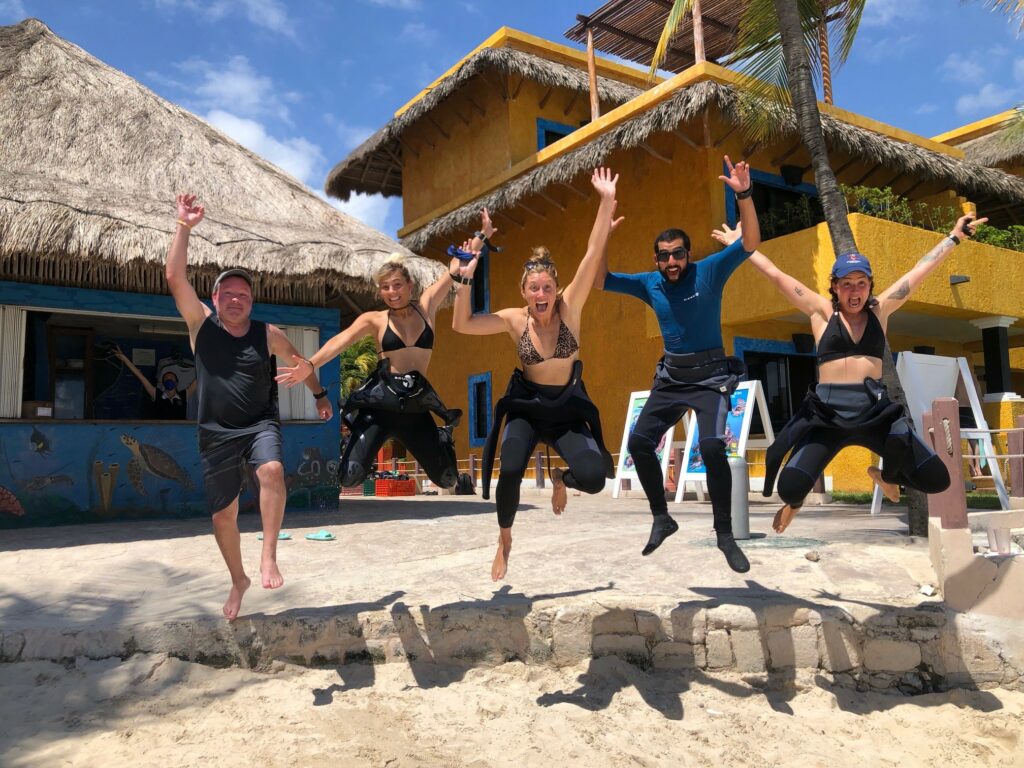
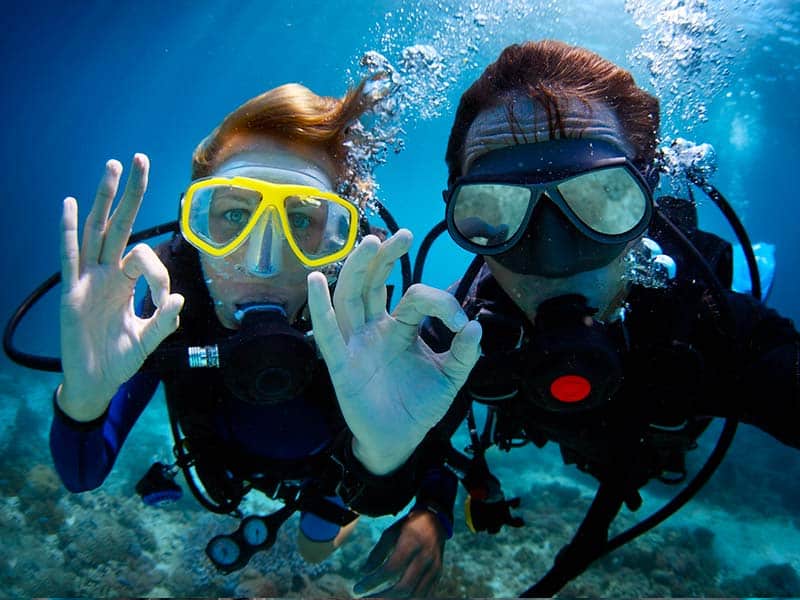
scuba diving vacations in the Caribbean - girls - vacaciones de buceo en el Caribe

1. What Exactly Are Scuba Diving Vacations?

A “trip with some diving” and a real scuba diving vacation are not the same thing.

  • A trip with some diving can be anything: a Saturday at sea, a couple of scattered dives, managing your own gear.
  • Scuba diving vacations put diving front and center. Multiple days. Everything integrated. Zero logistical friction.

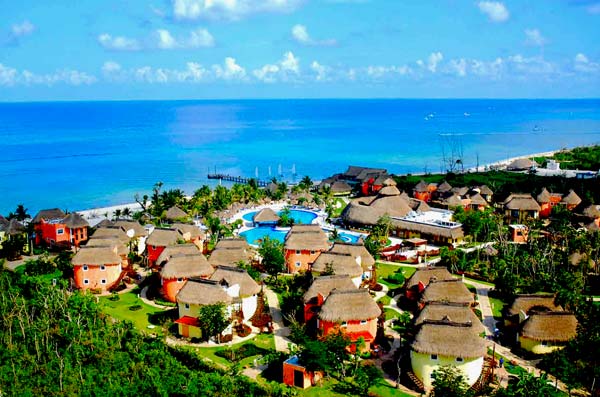
The model that works best is called Stay & Dive (accommodation + diving). The dive center is inside the hotel. You step out of the water, drop onto a sun lounger, order a mojito, and you’re done. No searching for a dock, no arranging transport, no stress.

Resort or Liveaboard?

Feature Resort (Stay & Dive) Liveaboard
Base of operations Land-based hotel Specialized boat
Schedule flexibility High, dives on demand Low, fixed itinerary
For families and non-divers Perfect Very limited
Access to local culture Daily Only after the trip
Rest between dives Pool, spa, bar Boat deck
Cost per dive Varies by package According to volume


If not everyone in the group dives, the resort wins hands down. Boat trips to the reef in Mexico or the Dominican Republic take between 10 and 15 minutes (6–9 miles / 10–15 km approximately, depending on site). Maximum efficiency, maximum comfort.


2. Who Are Scuba Vacations in the Caribbean For?

More people than you’d think. Scuba diving vacations in the Caribbean aren’t just for experts in drysuits with a permanent serious expression.

Certified divers (Open Water and above) They want quality, efficiency, and healthy reefs. They value small groups (maximum 6–8 divers per guide), spacious boats, and free Nitrox, an enriched oxygen mix that extends bottom time and improves safety on consecutive dives. No overcrowding. No herding.

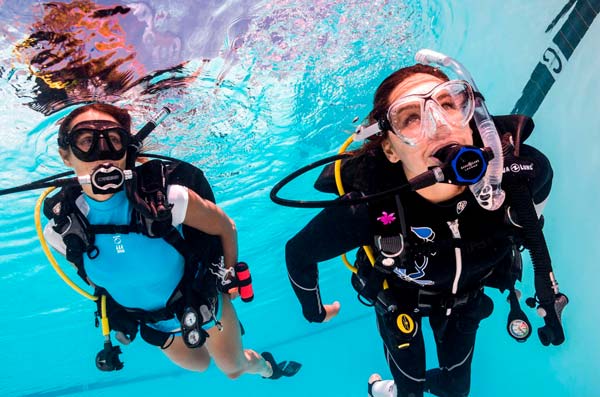
Beginners and curious first-timers (Discover Scuba Diving) The Caribbean is the best place in the world to take the first step. The Discover Scuba Diving (DSD) program lets you dive to 39 feet / 12 meters with an instructor, no certification required. Visibility of 82–98 feet / 25–30 meters, water at 82–88°F / 28–31°C, and calm reefs. Fear disappears fast.

Advanced divers (Advanced Open Water and above) Endless walls, strong currents, wrecks at 98–131 feet / 30–40 meters, or venturing into the earth itself through cenotes. The Caribbean has it all for those seeking technical challenge and big-animal encounters.

Couples and honeymooners Diving is pure connection. No phone, no noise, just the two of you and the ocean. Many resorts offer special packages: private dawn dives, seaside dinners after a day underwater, post-dive spa treatments.

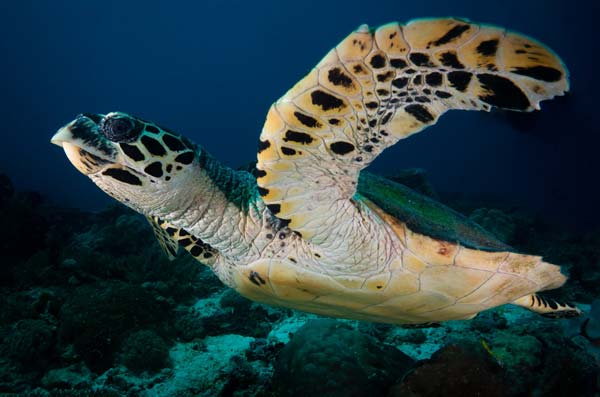
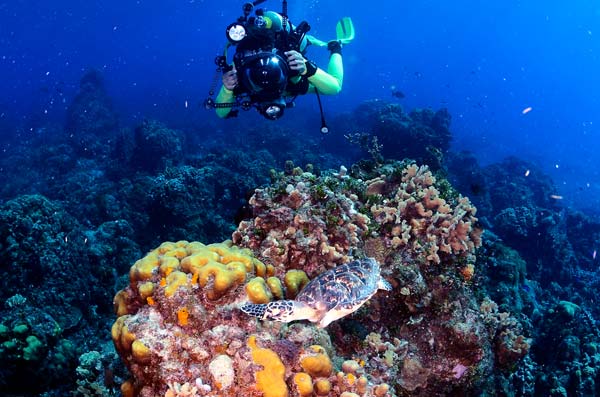
scuba diving vacations in the Caribbean - turtle - vacaciones de buceo en el Caribe

3. Why the Caribbean and Not Another Dive Destination?

This is the question most people ask before booking. Why not the Maldives, Thailand, or the Canary Islands?

The Caribbean vs. Other Dive Destinations Worldwide

The Red Sea wins on visibility and relatively short flight times from Europe. The Maldives wins on exclusivity. Thailand wins on price. But the Caribbean still wins overall: warmer water year-round, broader ecosystem variety, easier access from the US, and stronger tourism infrastructure. For a week of scuba diving vacations in the Caribbean, the quality-to-experience ratio remains hard to beat.

Factor Caribbean Maldives Thailand Red Sea
Average visibility 82–131 ft / 25–40 m 66–98 ft / 20–30 m 33–66 ft / 10–20 m 98–131 ft / 30–40 m
Water temperature 79–88°F / 26–31°C 82–86°F / 28–30°C 81–86°F / 27–30°C 72–82°F / 22–28°C
Flight from Europe 9–11 h (direct) 10–12 h (connection) 13–15 h (connection) 4–6 h
Flight from the US 3–5 h (direct) 18–22 h 20–24 h 12–16 h
Avg. package/week €€€ €€€€ €€ €€
Beginner-friendly Excellent Good Acceptable Excellent
Ecosystem variety Very high Medium Medium High
Logistical infrastructure Very high High Medium High


The Conditions Are Unrivaled

Average visibility of 82–98 feet / 25–30 meters (on good days, up to 40). Water temperature between 79–88°F / 26–31°C year-round. A 0.12 in / 3 mm wetsuit is all you need. In summer, many divers go with just a rash guard.

The Biodiversity Is Extraordinary

The Mesoamerican Barrier Reef is the second largest coral reef system on the planet, with over 500 recorded fish species and more than 65 species of coral. Scuba vacationers encounter everything from macro life (nudibranchs, seahorses, octopus) to large pelagics like bull sharks, eagle rays, and sea turtles.

The region offers a uniquely diverse range of ecosystems within a compact geographical area:

  • Coral reefs, underwater gardens teeming with tropical life, with extraordinary biological density.
  • Abyssal walls, vertical drop-offs that disappear into the blue deep, home to pelagic species.
  • Cenotes, cave systems and underground rivers with visibility up to 131 feet / 40 meters and geological formations thousands of years old.
  • Shipwrecks, sunken vessels transformed into vibrant artificial reefs, rich in nautical history and concentrated biodiversity.

Getting There Is Easy

From Europe and the United States, there are daily direct flights to Cancún (for Mexico), Punta Cana (for the Dominican Republic), and Montego Bay (for Jamaica). In one week you can comfortably complete 12–15 dives. Zero logistics.

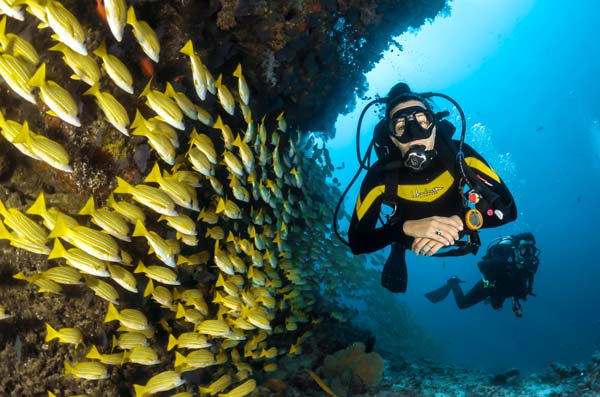
scuba diving vacations in the Caribbean - fish - vacaciones de buceo en el Caribe

4. The Best Destinations for Your Scuba Diving Vacations with Dressel Divers

Here are the destinations where Dressel Divers operates. Each has its own personality. Choose the one that matches what you’re looking for.

Cozumel (Mexico), The Drift Diving Capital

The crown jewel. Cozumel is world-famous for its consistent currents that enable drift diving: you let the water carry you while the boat follows from above. It’s like flying underwater.

Key facts:

  • Airport: Cozumel International (CZM), 9 mi / 15 km from the dive center.
  • Water temperature: 79–84°F (Dec–May), 84–88°F (Jun–Nov).
  • Average visibility: 100–130 ft / 30–40 m. Recorded record: 197 ft / 60 m.
  • Average dive depth: 40–100 ft / 12–30 m.
  • Common species: Eagle rays, Nassau grouper, hawksbill turtles, barracuda, parrotfish.

Standout dive sites:

  • Palancar Gardens (26–66 ft / 8–20 m), Spectacular coral columns. Suitable for all levels.
  • Palancar Caves (49–100 ft / 15–30 m), Tunnels and passageways.
  • Santa Rosa Wall (49–131 ft / 15–40 m), Abyssal wall with current.
  • Colombia Deep (82–131 ft / 25–40 m), Monumental coral formations.

Ideal level:

Intermediate and advanced. Buoyancy control in currents is essential. There are sites for beginners who will have a great time in Cozumel, they can even learn to dive here during their scuba vacation, but Cozumel truly shines for those who already have skills.

Non-diving activities:

Snorkeling on shallow reefs, visits to Mayan ruins, kayaking through mangroves, local markets in San Miguel.


Playa del Carmen (Mexico), Cenotes + Bull Sharks

Playa del Carmen is a destination with a double identity. In the morning, the mystique of an underwater cave. In the afternoon, face-to-face with a bull shark. There aren’t many places in the world that offer both in the same trip.

Key facts:

  • Airport: Cancún (CUN), 40 mi / 65 km, approx. 45–60 min by transfer.
  • Water temperature: 81–86°F on the reef; 75–79°F constant in cenotes.
  • Average visibility: 82–115 ft / 25–35 m on the reef, 100–130 ft / 30–40 m in cenotes.
  • Average dive depth: 20–82 ft / 6–25 m.
  • Bull shark season: November to March.
  • Common species: Bull shark, nurse shark, turtles, moray eels, nudibranchs.

Standout dive sites:

  • Cenote Chikin Ha (13–49 ft / 4–15 m), More intimate and atmospheric than Dos Ojos. Ideal for beginner cave diving.
  • Tortugas Reef (59 ft / 18 m), Outer reef with turtles and moray eels.
  • Bull shark dive (59 ft / 18 m), Seasonal only. Open Water certification required.

Ideal level:

All levels for cenotes; advanced for bull sharks.


Puerto Aventuras (Mexico), Calm Waters and Learning

South of Playa del Carmen, Puerto Aventurasis the perfect retreat for families and new divers. Conditions here are the most controlled on the entire Riviera Maya.

Key facts:

South of Playa del Carmen, Puerto Aventuras is the perfect retreat for families and new divers. Conditions here are the most controlled on the entire Riviera Maya.

Key facts:

  • Airport: Cancún (CUN), 56 mi / 90 km, approx. 60–75 min by transfer.
  • Water temperature: 81–86°F year-round.
  • Average visibility: 66–100 ft / 20–30 m.
  • Average dive depth: 26–59 ft / 8–18 m.
  • Best season: Year-round. Minimal seasonal variation.
  • Common species: Sea turtles, parrotfish, angelfish, grunts, giant sponges.

Standout dive sites:

  • Cuevitas (59 ft / 18 m), Near-guaranteed sea turtle encounters. Beginner-friendly.
  • Canyons (98 ft / 30 m), A unique site, famous for massive coral formations and diverse marine life. Open Water and above.
  • Cenote Dos Ojos (20–39 ft / 6–12 m), The world’s most famous cenote. Crystal visibility, stalactite formations. Open Water and above.

Ideal level:

Beginners and families. The best Caribbean destination for completing a full Open Water course with your kids during your scuba vacation.


Punta Cana (Dominican Republic), Wrecks and History Underwater

Punta Cana isn’t just mega-resorts and buffet dining. For scuba diving vacation enthusiasts, it offers the country’s longest reef system and shipwrecks with genuine history.

Key facts:

  • Airport: Punta Cana International (PUJ), 12–22 mi / 20–35 km to the dive center.
  • Water temperature: 79–84°F (Dec–Mar), 84–88°F (Apr–Nov).
  • Average visibility: 50–100 ft / 15–30 m (seasonal variation).
  • Average dive depth: 26–115 ft / 8–35 m.
  • Common species: Turtles, rays, parrotfish, barracuda, moray eels, wreck fauna.

Standout dive sites:

  • The Astron Wreck (39 ft / 12 m), A Russian cargo ship broken in two. One of the most impressive wrecks in the Caribbean. Advanced level.
  • Coral Garden (39 ft / 12 m), Canyon-style formations with coral gardens. Intermediate.
  • Coco Loco Reef (39 ft / 12 m), Accessible beginner reef with high marine life density.

Ideal level:

Intermediate for wrecks, beginner for the reef. Ideal for combining resort luxury with accessible dives.

Bayahibe (Dominican Republic), Maximum Biodiversity

Many experts consider Bayahibe the best dive destination in the Dominican Republic. Protected by the Parque Nacional del Este, its reefs are in exceptional health.

Key facts:

  • Airport: La Romana (LRM), 9 mi / 15 km, approx. 20 min. Also accessible from Punta Cana (PUJ), 56 mi / 90 km.
  • Water temperature: 79–84°F (Dec–Apr), 84–88°F (May–Nov).
  • Average visibility: 66–115 ft / 20–35 m.
  • Average dive depth: 33–131 ft / 10–40 m.
  • Common species: Seahorses, turtles, snappers, barracuda, moray eels, wreck fauna.

Standout dive sites:

  • St. George Wreck (98–131 ft / 30–40 m), A 240-ft / 73-m cargo ship. One of the best wrecks in the Caribbean. Advanced level.
  • Atlantic Princess (49–82 ft / 15–25 m), Shallower wreck, accessible to all levels.
  • Isla Catalina (20–98 ft / 6–30 m), Reef and wall with exceptional biodiversity. All levels.

Ideal level:

All levels. Especially recommended for underwater photographers and divers who value ecosystem health.

Montego Bay (Jamaica), Conservation and Authentic Caribbean

Jamaica offers a more relaxed and authentic scuba diving vacation experience, with a strong commitment to active marine conservation.

Key facts:

  • Airport: Sangster International (MBJ), 9–12 mi / 15–20 km to the dive center.
  • Water temperature: 79–82°F (Dec–Apr), 82–86°F (May–Nov).
  • Average visibility: 66–100 ft / 20–30 m.
  • Average dive depth: 26–98 ft / 8–30 m.
  • Common species: Elkhorn coral, parrotfish, surgeonfish, barracuda, moray eels, turtles.

Standout dive sites:

  • Airport Wall (33–98 ft / 10–30 m), Impressive wall with healthy corals and exceptional visibility. Intermediate/advanced.
  • Widowmaker’s Cave (20–59 ft / 6–18 m), Cavern with natural light. Open Water and above.
  • Jamaica Reef (26–66 ft / 8–20 m), Excellent for beginners with high sponge density and tropical life.

Ideal level:

Beginner and intermediate. The Montego Bay Marine Park guarantees virtually pristine reefs.


Quick Destination Comparison


Destination Visibility Water Temp. Signature Dive Key Species
Cozumel 100–130 ft / 30–40 m 79–88°F / 26–31°C Drift & Wall Eagle rays
Playa del Carmen 82–130 ft / 25–40 m 75–88°F / 24–31°C Cenotes & Bull Sharks Bull shark
Puerto Aventuras 66–100 ft / 20–30 m 81–86°F / 27–30°C Calm reef diving Sea turtles
Punta Cana 50–100 ft / 15–30 m 79–88°F / 26–31°C Wreck diving Astron Wreck
Bayahibe 66–115 ft / 20–35 m 79–88°F / 26–31°C Biodiversity & wrecks St. George Wreck
Montego Bay 66–100 ft / 20–30 m 79–86°F / 26–30°C Marine Park / Walls Airport Wall
scuba diving vacations in the Caribbean - pictures - vacaciones de buceo en el Caribe

5. What Does a Scuba Vacation Package Include?

A professional operator like Dressel Divers offers far more than just tanks and fins. Here’s what’s typically included in the package:

  • Guided dives led by certified SDI or PADI Divemaster, usually with a maximum ratio of 6–8 divers per guide. Their local knowledge of currents, marine life, and reef formations makes every dive smoother and safer.
  • Complete scuba equipment rental, including mask, fins, regulator, BCD, and a 0.10 ft (3 mm) wetsuit. All gear is regularly serviced, disinfected, and maintained by the dive center. Many divers still prefer bringing their own mask or wetsuit for extra comfort, and personal gear storage is usually available.
  • Purpose-built dive boats, catamarans or trimarans equipped with GPS navigation, VHF radio communication, emergency oxygen kits, and generous space for equipment and diver comfort.
  • Complimentary Nitrox, one of the major advantages offered by Dressel Divers. Enriched Air Nitrox blends such as EANx32 or EANx36 help reduce nitrogen absorption, extend no-decompression limits, and improve comfort during repetitive dives. Nitrox-certified divers can normally use it at no additional charge.
  • Training courses and specialty certifications available during the holiday, from beginner to professional levels, including Nitrox, wreck diving, underwater photography, and Peak Performance Buoyancy. A dive vacation can also become an opportunity to upgrade your skills and certifications.
  • Strong safety standards, including support for local hyperbaric chambers, plus detailed dive briefings before every immersion.
  • Convenient logistics, the dive center is located directly inside the resort.


6. When to Go on Scuba Diving Vacations in the Caribbean

The Caribbean is diveable 365 days a year.


7. Scuba Diving Vacations vs. Classic Beach Vacations

This isn’t a competition. It’s a different category of experience.

  • A week of pool and sun loungers is great. But by day three, most people are bored.
  • Diving has a concrete daily goal. Every dive is different. Every day you discover something new.
  • Diving is active meditation: breath control, total environmental awareness, zero digital stimulation. The brain disconnects from work in a way that lying in the sun simply can’t achieve.
  • At a dive resort, you make friends from around the world during surface intervals. The strangers you share the boat with become the best travel companions you’ve ever had.
  • Constant learning, new techniques, new species, new sites, generates a psychological satisfaction that passive vacations don’t deliver.
scuba diving vacations in the Caribbean - inspiration - vacaciones de buceo en el Caribe

8. Frequently Asked Questions About Scuba Diving Vacations in the Caribbean

Do I need certification to enjoy a scuba diving vacation in the Caribbean?

Not necessarily. Programs like Discover Scuba Diving (DSD) allow beginners to dive to depths of 40 ft / 12 m under direct instructor supervision, even without previous experience.

However, accessing the Caribbean’s most iconic dive sites, deep wrecks, vertical walls, technical cenotes, or bull shark dives, requires at least an Open Water Diver certification. Many travelers complete their certification during the vacation itself, since the full Open Water course typically takes 3–4 days.

Can I complete a diving course during the vacation itself?

Yes. Most Caribbean dive destinations offer beginner, advanced, and professional-level courses directly at the resort.

The PADI or SSI Open Water Diver certification generally requires 3–4 days and includes theory sessions, confined-water training, and 4 certification dives in open water. Many guests arrive with zero experience and leave fully certified.

Dressel Divers provides multilingual instructors across all its Caribbean dive centers.

How many dives per day are typical on a scuba vacation?

The standard schedule at most dive resorts includes 2 morning dives, commonly called a “two-tank dive”, plus an optional afternoon immersion.

Night dives are usually available several times per week. During a one-week diving vacation, active divers commonly complete between 10 and 16 dives.

How deep do divers go during Caribbean scuba vacations?

Depth depends on certification level and the dive site selected:

  • No certification (DSD): up to 40 ft / 12 m, always with an instructor.
  • Open Water Diver: up to 60 ft / 18 m during certification. This covers the majority of Caribbean dive sites.
  • Advanced Open Water: training dives reach 100 ft / 30 m, while certified limits extend to 130 ft / 40 m.
  • Rescue Diver / Divemaster: 130 ft / 40 m is the standard recreational depth limit.

How long should I wait before flying after diving?

This is one of the most important aspects of dive-trip planning:

  • Single no-decompression dive: wait at least 12 hours before flying.
  • Multiple dives in one day: wait at least 18 hours.
  • Dives involving decompression stops: wait a minimum of 24 hours.

Both PADI and DAN strongly recommend avoiding diving during the final day before your flight. Ideally, your last dives should take place at least one full day before departure.

What is Nitrox, and is it worth using on a scuba vacation?

Nitrox, also called Enriched Air (EANx), contains a higher oxygen percentage and reduced nitrogen concentration, typically between 32–40% oxygen.

The practical advantage is longer allowable bottom times and reduced post-dive fatigue. On trips involving multiple dives per day over consecutive days, the difference can be significant.

Nitrox use requires a short certification course, usually completed in half a day. At many Dressel Divers locations, certified Nitrox divers receive it free of charge.

Can I travel alone on a scuba diving vacation?

Absolutely.

At Dressel Divers, solo travelers are paired with divers of similar certification and experience levels, or accompanied by a Divemaster during dives. Scuba vacations are actually one of the easiest types of travel for meeting people quickly.


9. The Final Recommendation: Which Scuba Vacation Fits You Best?

There’s no single “best” Caribbean diving destination. The ideal choice depends on your experience level, travel style, and the type of underwater environment you want to explore.

  • Cozumel or Bayahibe → ideal for divers seeking pristine reefs, reliable conditions, excellent infrastructure, and strong biodiversity. Bayahibe also adds outstanding wreck diving.
  • Playa del Carmen → the most unique option in the region, thanks to cenotes, bull shark encounters, wrecks, and reef diving combined in one destination.
  • Puerto Aventuras or Montego Bay → perfect for beginners, families, or relaxed diving holidays with easy logistics and calm conditions.
  • Punta Cana → ideal for combining large all-inclusive resorts with comfortable diving and famous wreck sites.

The key is always the same: choose an operator like Dressel Divers that integrates diving with accommodation, eliminates logistical friction, and lets you focus on the only thing that matters. Weightlessness. Silence. Wonder. Scuba diving vacations in the Caribbean aren’t just another trip. They’re the most direct way to rediscover the planet from the inside. Have questions about which destination suits your level or situation? Contact the Dressel Divers team, we’ve spent over 30 years helping divers of all levels find their perfect dive in the Caribbean.

CONTACT US FOR
PERSONALIZED ASSISTANCE

Ready to improve your dive skills?
Need more information about the next certification level?

WE ARE HERE TO HELP

contact

    I consent to receiving commercial communications and promotions from Dressel Divers.