

Columbia Reef, The Story of a Wonderful Dive
28/09/2022
Commercial Diving Certifications or How to Become a Commercial Diver?
11/10/2022
Divers are witnesses and documentarians of Caribbean Sea life. With every dive, every photograph we take, and every dive story we tell, we inform the world about wonderful Caribbean animals.
Let’s be honest. No Adventure in the world can inspire us more than our intimate desire to discover sea life and identify it.
At Dressel Divers, we help in this task from our Caribbean bases. Here we leave you these Caribbean Sea life classifications and the table of contents in which we divide them.
Types Of Caribbean Sea Life
The Caribbean Sea has more than 6,213mi 10,000 km2 of reefs, 13,670mi 22,000 km2 of mangroves, and 20,500mi 33,000 km2 of seagrass. More than 1,300 species of fish reside in these extensive ecosystems. Mollusks and crustaceans amount to 3000 species, without counting mammals, amphibians, reptiles, and corals.
It is a fact. The Caribbean is a critical point of global biodiversity. So much so that the documents consulted do not agree on the number of species that harbor its waters.
But we are divers, so we do not pretend to make a scientific document, only a guide to help identify the marine life of the Caribbean.
Seagrass

Seagrass grows near reefs and offers a different habitat. Animals often use them to hide from predators.
Algae

The most common Caribbean algae are coralline algae, which grow as crusts on corals, and calcareous algae, which grow vertically.
Mangroves

Mangroves make up an ecosystem in themselves giving support to species of marine and terrestrial animals at the same time.
Animals in the Caribbean
– Fish in the Caribbean Sea –
To make the Caribbean fish identification system easier and understandable, we have divided the different families into 11 groups differentiated by their shape and color. According to the book “Reef Fish Identification” by Paul Humann.
1. Disk And Ovals Colorful Caribbean Fish
Angelfish

Surgeonfish

Butterflyfish

2. Silvery Caribbean Fish
This group consists of Caribbean fish that are silver to a gray color and generally unpatterned. In addition to those we show you in pictures, we should add the Rainbow Runner, Lookdown, Mackerel, Halfbeak, Tarpon, Bonnetmouth, Snook, Mullet, Flying fish, and Cobia as other species included in this Identification group.
Permit

Needlefish

Jack

Porgy

Spadefish

Barracuda

Southern Sennet

Chub

Mojarra

3. Sloping Head Tapered Body Fish in the Caribbean
We can see these Caribbean fish in schools they are shaped with relatively large mouths and notched tails.
Snapper

Grunt

4. Small Ovals Caribbean Fish
Tiny (3-6 inches) and colorful Caribbean fish with an oval profile.
Chromis

Hamlet

Dameselfish

5. Heavy Body
These Caribbean fish have a strong body mouth with long lips and jutting lower jaw lips. Their long continuous dorsal fin is remarkable and is divided into two parts. The fore part has sharp spines that can be held erected or lowered.
Seabass

Marbled Grouper

Grouper

6. Swim with Pectoral Fins and Obvious Scales
These Caribbean fish use their pectoral fins to swim and have rows of large scales and mouths similar to beaks.
Creole Wrasse

Parrotfish

Hogfish

7. Reddish Big Eyes
This identification Group consists of fish that range in color from pale red to reddish brown and have large eyes. They are generally nocturnal feeders and hide in dark recesses during the day.
Squirrelfish

Bigeye

Blackbar Soldierfish

8. Bottom-Dwellers
These kinds of Caribbean Fish spend most of their time perched on the bottom. Some of them are experts at camouflage.
Flounder

Toadfish

Scorpionfish

Lizardfish

Flying Gurnard

Blenny

9. Odd-Shaped Swimmers
These Caribbean fish have weird shapes but they are good swimmers.
Trumpetfish

Balloonfish

Triggerfish

Drumfish

Boxfish

Filefish

10. Caribbean Sea Eels
Long snake-like bodies of fish in the Caribbean Sea love to hide in dark reef recesses or the sand.
Moray

Conger

Snake Eel

11. Sharks and Rays in the Caribbean Sea
All these Caribbean fish have skeletons composed of cartilage and hard scales. Usually, It is difficult to distinguish some species and they are easier to identify thanks to their appearance.
Nurse shark

Whale Shark

Pointed-Nose Shark

Stingray

Eagle Ray

Manta Ray

– Caribbean Corals –
Corals are an essential part of the Caribbean Sea life, not only because they are animals themselves but also because habitats are created on the reefs that favor an explosion of life. In the Mexican Caribbean alone, 60 species of hard corals and 20 species of soft corals have been recorded.
Hermatypic corals or hard corals

Ahermatypic corals or soft corals


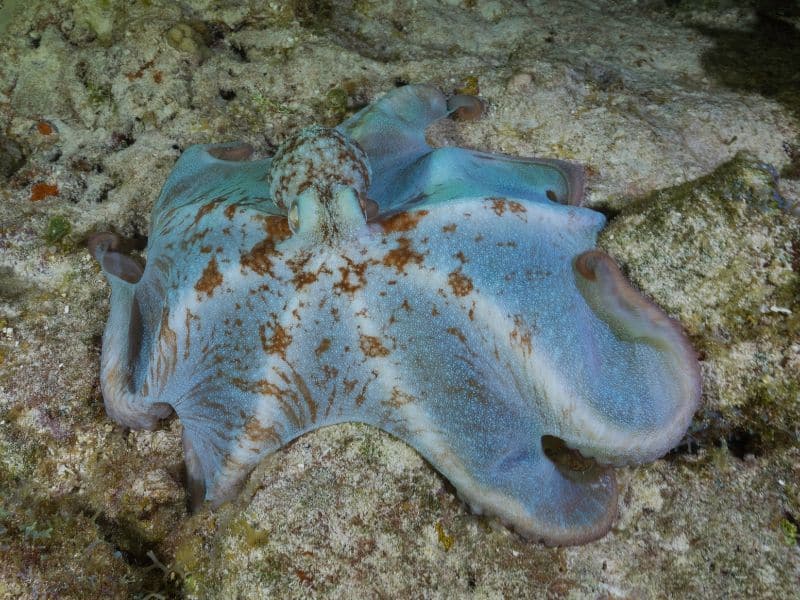
Octopuses

Nudibranch

Crustaceans

Reptiles

Worms

Echinoderms

This is a short and simple classification of the marine Caribbean Sea life that is home to more than 627 animal species. We are aware that many of them were left out. What marine life in the Caribbean would you like us to expand information on?