
CESA scuba diving (4) CESA en buceo
CESA in Scuba Diving: What It Is, How to Do It, and Why It Matters
15/04/2026
Honeycomb Cowfish (1) pez vaca hexagonal
Honeycomb Cowfish: The Square-Head Fish Ultimate Guide
22/04/2026
Show all

Reef Diving: The Definitive Guide

Reef diving… how would I describe it?

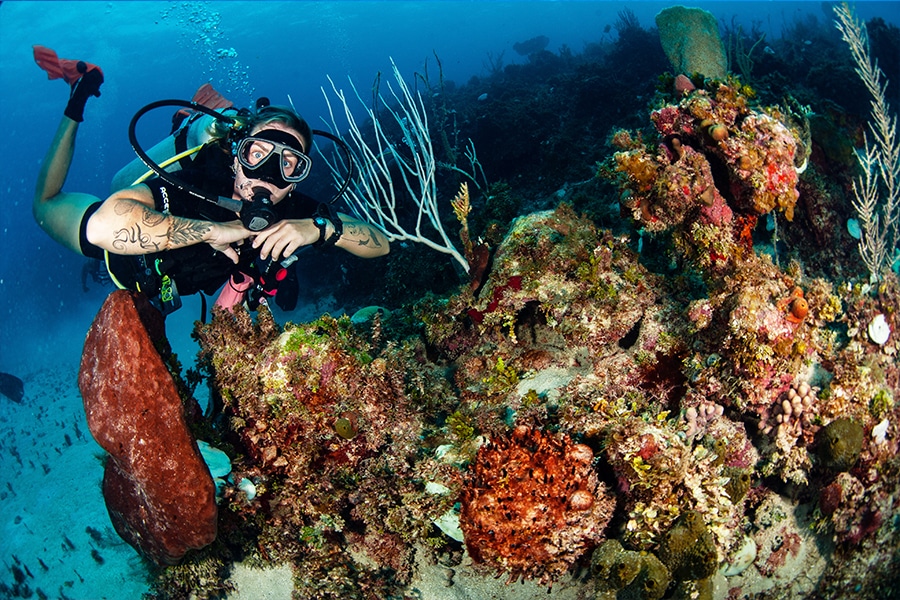
Picture this: you’re suspended in the water, weightless, silent, free from the stress of the world above, the only sound is the gentle hiss of your own bubbles.

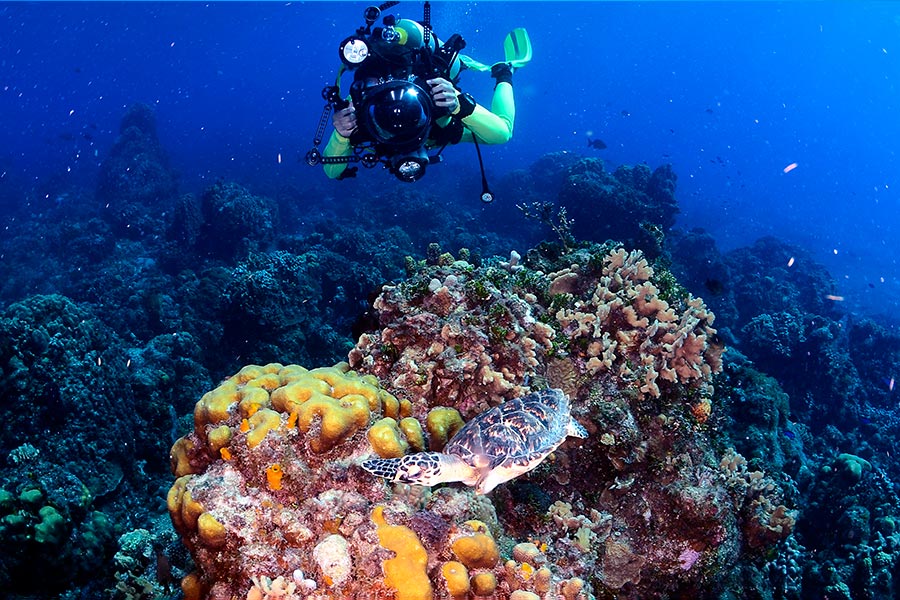
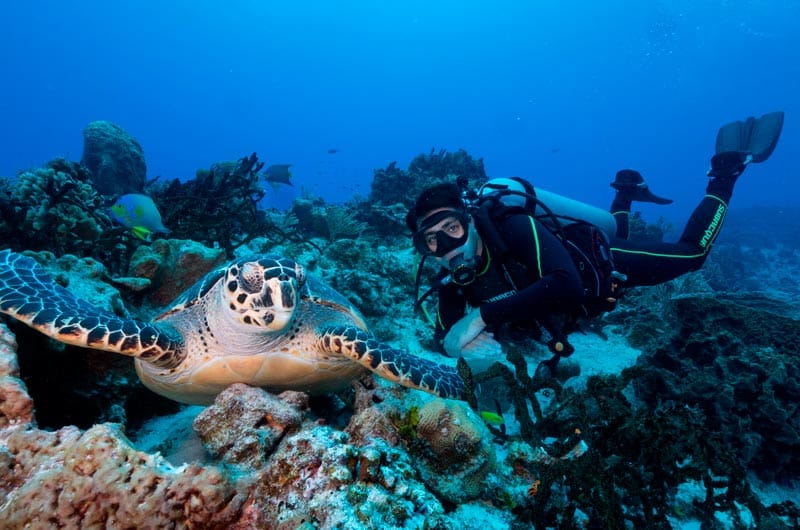
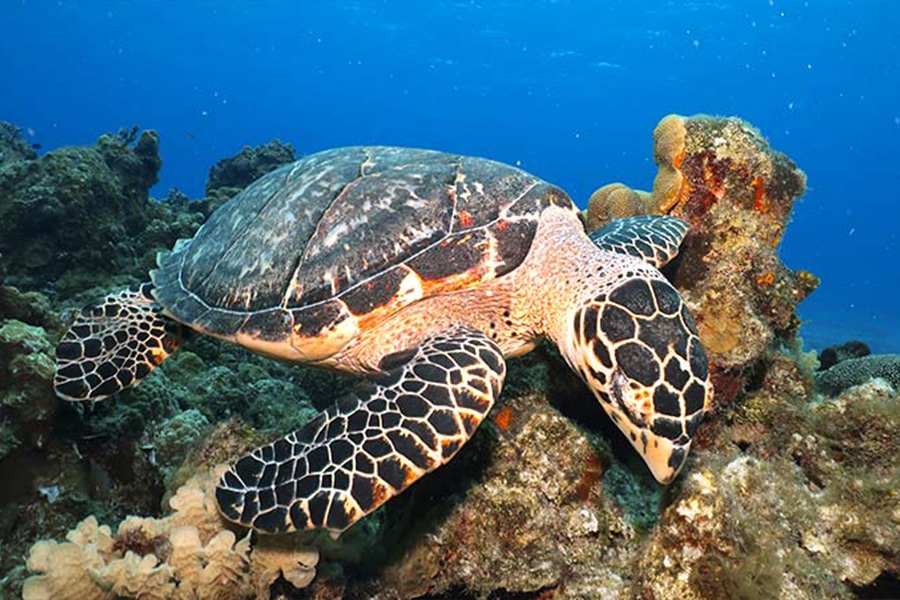
To your left, a sea turtle glides past so close you could almost reach out and touch it. To your right, a school of parrotfish in impossible colors vanishes into the coral. Below you, the reef unfolds like an underwater city, teeming with life, color and constant movement.

That’s reef diving. And once you try it, nothing is ever quite the same again.

Diving in coral reefs is one of the most spectacular experiences you can have underwater. It doesn’t matter if you’re a beginner on your first certification or a diver with hundreds of dives under your belt, every reef dive is different, every reef has its own personality, and the feeling of floating above that living ecosystem never, ever gets old.

In this guide you’ll find everything you need to get the most out of your next reef dive:

  • The 5 diver profiles, find out which one you are
  • The best destinations in the world for coral reef diving
  • How to dive without leaving a trace, and enjoy it even more
  • What to look for in a reef dive resort that’s actually worth it
  • Tips for bringing home the photos of your life

If you’re planning your next dive trip, searching for the perfect destination, or just want to know what’s happening in the world of scuba diving reef in 2026, keep reading. It’s about to get good.
reef diving cozumel - buceo de arrecife

1. Do You Reef Dive? The 5 Reef Diver Profiles

The reef diving community has become increasingly specialized. Knowing your profile isn’t just a fun exercise in self-discovery, it helps dive centers give you the experience you actually want. Which one sounds like you?

The Marine Life Observer (Bird Watcher)

For this profile, reef diving is almost meditative. These are infinitely patient divers who can spend 20 minutes watching a nudibranch go about its business without getting bored for a single second.

  • Main goal: species identification and observation of complex biological behaviors
  • They use apps connected to their dive computers to log sightings and contribute to global biodiversity databases
  • They prefer low-current sites where they can practice static buoyancy
  • Their specialty: the cryptic macrofauna hiding in the crevices of the coral reef

The Adrenaline Seeker (Shark)

For this profile, scuba dive reef means strong currents and megafauna. The more intense, the better.

  • They seek out reef channels where the current is at its peak
  • Comfortable with technical gear in dynamic environments
  • They want sharks, rays, turtles and pelagic species, not pretty little fish
  • They value fast boats and gear with minimum hydrodynamic drag
  • They require a higher level of physical and technical preparation than the average diver

The Reef Guardian (Eco-Guardian)

The Eco-Guardian doesn’t dive for fun, they dive with a mission. For them, diving in coral reefs is an active restoration tool.

  • They take part in invasive species control programs (like the controlled hunting of lionfish in the Caribbean)
  • They remove ghost fishing gear from the seabed
  • They’re usually certified in conservation specialties
  • They monitor coral health using scientific protocols like Reef Check

The Visual Storyteller

Their underwater camera setup rivals a film production. They’re on a mission to document the majesty of the reef and inspire others to protect it.

  • In 2026, their best friend is smart lighting that eliminates backscatter (those annoying particles that ruin photos)
  • They use cameras with AI-assisted tracking sensors that lock focus on moving subjects
  • They perform even in low-visibility conditions during coral reef dives
  • Their impact: inspiring millions of people who will never set foot in the ocean

The Actualizer (Performance Diver)

The most technical profile of all. For the Actualizer, every reef dive is an exercise in physiological optimization.

  • They use advanced biometrics to understand how their body responds to depth and stress
  • They push the limits of coral reef diving with gas mixes (Nitrox, Trimix) and custom decompression profiles
  • They pursue continuous education to overcome “imposter syndrome” in technical diving
  • They don’t dive, they execute high-performance immersions
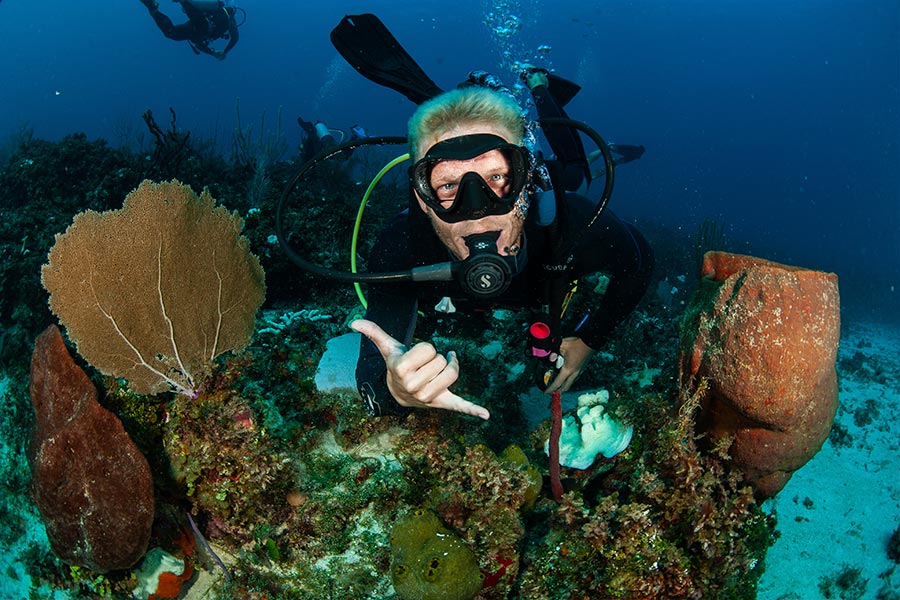
reef diving playa - buceo de arrecife

2. The Best Destinations for Coral Reef Diving

Choosing the right destination is the heart of any reef diving plan. In 2026, we’re looking for places that offer not just natural beauty but also the infrastructure to support ethical, high-quality diving. These are the ones that never disappoint:


2.1. Top Global Destinations

🇮🇩 Bali, Indonesia from the iconic USAT Liberty wreck in Tulamben to the pristine reefs of West Bali National Park. Resorts like The Menjangan blend luxury with conservation inside a national park setting. Biodiversity like nowhere else on earth.

🇲🇽 Riviera Maya and Cozumel, Mexico Drift dives along coral walls that seem to drop into infinity. Coral reef diving here is heavily regulated to protect the Cozumel Marine Park. A firm favorite for the Shark profile and the Visual Storyteller.

🇧🇿 Belize Home to the second largest coral barrier reef in the world and the iconic Great Blue Hole. Belize pioneered the removal of UNESCO’s “in danger” status thanks to strong reef protection laws and a ban on single-use plastics. Real conservation in action.

🇦🇺 Great Barrier Reef, Australia the largest reef system in the world. Yes, climate change has hit it hard, but intensive crown-of-thorns starfish control programs have allowed many areas to bounce back strongly by 2026.


2.2. Reef Diving Destinations with Dressel Divers (5-Star Resorts)

Cozumel, Mexico Palancar and Santa Rosa reefs. Widely considered the best reef diving destination in the world for its biodiversity and extreme visibility. No debate.

Riviera Maya and Playa del Carmen Turtle reefs and the perfect combo with crystal-clear cenote diving. Two unique experiences in one single trip.

Punta Cana and Bayahibe, Dominican Republic Catalina and Saona Island, the spectacular “The Wall,” the sunken wreck Astron and ,  this is the gem ,  an on-site coral laboratory actively protecting local biodiversity.

Montego Bay, Jamaica Lush reefs in Montego Bay Marine Park with iconic sites like Airport Wall: vertical dives packed with life and absolutely underrated.

reef diving cozumel (3) buceo de arrecife

3. How to Choose Your Ideal Reef Dive Resort

The reef dive resort concept has evolved into “Luxury with Purpose.” VIP divers are no longer satisfied with nice rooms, they want a genuine connection with local conservation efforts. Here’s what an elite resort needs to offer in 2026:

  • Local reef health, prioritize resorts with their own conservation concession or on-site coral nurseries
  • Education programs, talks given by resident biologists on reef diving ecology and current threats, for example, the Dressel Divers Go Green program.
  • Real operational sustainability, zero single-use plastics, biodegradable and reef-safe personal care products
  • Access to specialties, night diving, Project AWARE Specialist, coral restoration, purpose diving


4. Conservation: The Future of Scuba Diving Reef

Reef diving cannot exist without healthy reefs. That’s why the industry has shifted from a defensive stance to a fully proactive one. It’s no longer just about “not causing damage”, it’s about actively restoring.


4.1. Purpose Reef Diving

“Purpose Diving” is the dominant movement in 2026. Initiatives like the Iberostar Coral Laboratory in Playa del Carmen and its Coral Conservation Program allow everyday divers to participate directly in ecosystem restoration. This is exactly what our students do during Dressel Divers’ professional Divemaster and Dive Instructor courses.

How do these laboratories work?

  • Scientific fragmentation, you learn to create genetic copies of corals that grow up to 50 times faster than under natural conditions.
  • Nursery maintenance, you clean growth structures of algae and sediment so coral juveniles have the best chance of survival before being transplanted back to the reef.
  • Data collection, every restoration dive generates data on survival and growth rates that inform global conservation policy. Your dive has real scientific impact.


4.2. The Reef Diver’s Ethics: The 4 Golden Rules

A single fin kick can destroy decades of coral growth. Decades. That’s why committed dive centers run rigorous environmental briefings before every reef dive. The rules are simple:

  1. Buoyancy control, the number one conservation skill You need to hold your position without using your hands, with your fins always clear of the substrate. This is not optional, it’s the first thing to master before entering any reef.
  2. “Don’t Touch” policy, no exceptions No marine species, alive or dead, should ever be handled. Human contact removes the protective mucus layer from fish and corals, leaving them exposed to infection.
  3. Reef-safe sunscreen, Minerals only mineral filters with zinc oxide or titanium dioxide. Oxybenzone, found in most conventional sunscreens, bleaches coral even at minimal concentrations. And yes, that includes the cream you put on before getting in the water.
  4. Ethical reef hook, Hook only on rock or dead coral Not sure what a reef hook is? Find out in our article Reef Hooks, How to Use Them Properly?

5. Frequently Asked Questions About Reef Diving

What is reef diving and why is it so popular? Reef diving is scuba diving on coral reefs, where you explore ecosystems full of tropical fish, corals and unique species. It’s popular because it combines adventure, nature, underwater photography and, increasingly, a conservation purpose that makes it so much more meaningful.

When is the best time for coral reef diving? It depends on the destination, but generally you’re looking for calm, clear water with good visibility. In the Caribbean scuba diving is ideal all year around. Always check with your local operator.

What experience level do I need to dive coral reefs? Many sites are perfect for beginners with an Open Water certification. Reefs with strong currents require Advanced Open Water or a certified guide. Always check the difficulty level of the site beforehand.

What equipment do I need for scuba diving reefs? The basics: mask, snorkel, fins, wetsuit (or Yulex), regulator, BCD, tank and dive computer. Add an underwater camera if you plan to shoot. Always check your gear before every dive.

How do I protect corals while reef diving? Controlled buoyancy, don’t touch anything, don’t feed fish, use mineral sunscreen and, if there’s current, use the reef hook responsibly. Four rules, massive difference.

What animals can I see when diving coral reefs? On a typical reef dive you can encounter: tropical fish of every kind, sea turtles, rays, seahorses, small reef sharks, parrotfish, moray eels and, if you’re lucky, manta rays. Hard and soft corals create underwater landscapes that look like another planet.

Is reef hook scuba diving safe for beginners? Yes, under the supervision of a certified guide and following the protocol. It’s especially useful in moderate currents and, used correctly, is far safer than trying to fight the current with fin kicks and prayers.

Ready for your next coral reef dive? The reef is calling, answer by filling in the form. 

CONTACT US FOR
PERSONALIZED ASSISTANCE

Ready to book a reef diving vacation?
Need more information?

WE ARE HERE TO HELP

contact

    I consent to receiving commercial communications and promotions from Dressel Divers.