scuba diving certification levels - main picture
12 Scuba Diving Certification Levels From Beginners to Professional
16/06/2026
Show all

What Do Remoras Eat? The Truth About the Ocean’s Hitchhiker Fish

What Do Remoras Eat - que comen las remoras

You’re diving.

Visibility is incredible. A reef shark glides past you, slow, majestic, like it owns the place. Because it does.

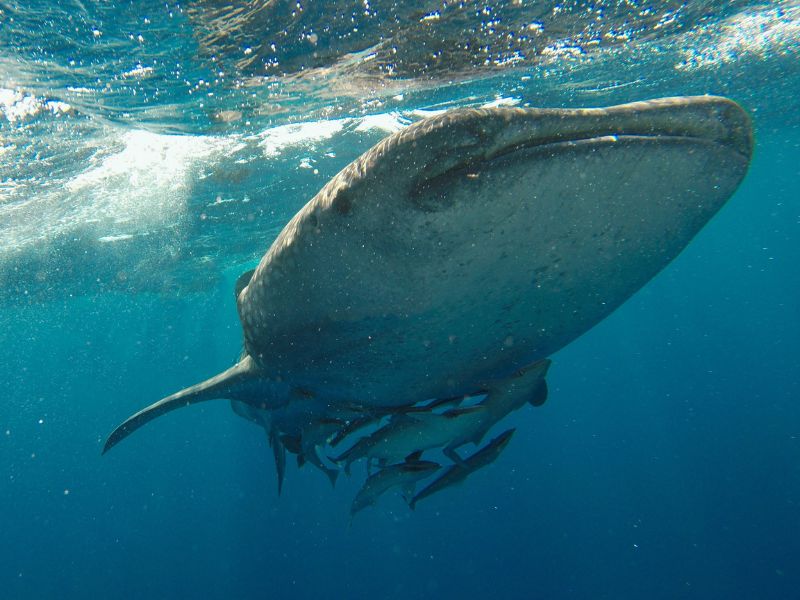
And then you see it. Firmly attached to the belly of a massive shark, there’s a strange fish: elongated, dark, flat-headed, and with the most relaxed attitude you’ve ever seen.

That’s a remora. And if you’ve ever spotted one, you’ve probably wondered: what exactly do remoras eat? Are they parasites? Are they helping the shark? Are they just ocean freeloaders?

The answer is way more interesting than you’d think. Let’s get into it.


Quick Answer: What Do Remoras Eat?

Remoras eat scraps from their hosts’ kills, parasites they pick off their skin, plankton, small fish, and crustaceans. They’re famous for hitching rides on sharks, but they don’t just sit there waiting for leftovers, they also hunt independently, both in open water and on the reef. They’re basically the most efficient hitchhikers in the ocean.

Food Source Part of Diet? Description
Host prey scraps Yes Flesh fragments released during the host’s attacks
Ectoparasites Yes Parasitic copepods, dead skin, and bacteria removed from host’s skin
Plankton Yes Passive consumption of planktonic organisms while swimming open-mouthed
Small fish Yes Active hunting of smaller pelagic species, sometimes cooperatively
Crustaceans Yes Small crabs, free-living copepods, and shrimp caught on reefs
Host feces Yes Direct coprophagy of the host’s metabolic waste
What Do Remoras Eat (2) que comen las remoras

1. What Do Remoras Eat in the Wild?

The truth is, remoras are not picky eaters. Their diet is remarkably varied, which explains why they’ve been thriving in the world’s oceans for millions of years.

Here’s the full menu:

Host prey scraps

When a shark hunts, it’s organized chaos. Chunks of fish, pieces of flesh, bits floating everywhere. The remora is right there, cleaning up the mess.

It’s literally food delivery. No chasing required. Just wait, nibble, and get on with your day.

  • The most energy-efficient feeding strategy in the ocean
  • Minimum effort, maximum reward
  • Zero hunting risk

But here’s the catch, what happens when a remora latches onto a whale shark, which only eats plankton?

Parasites

Remoras consume ectoparasites, external parasites that live on the skin, fins, and gills of larger marine animals. They also nibble on:

  • Dead or flaking skin
  • Mucus (sounds gross, but to a remora it’s a delicacy)
  • Bacterial tissue around wounds

For the host, this is genuinely useful. A shark covered in parasites is an uncomfortable shark. The remora acts as a cleaning service.

Does it do this out of kindness? Absolutely not. It does it because it’s food.

But the result is that the host ends up with healthier skin. Everybody wins. Scientists call this mutualism.

Feces

Okay. This is the part they never mention in documentaries.

Remoras eat feces. This isn’t a rumor or an exaggeration, it’s scientifically documented and has a technical name: coprophagy.

And if you think that’s already pretty extreme, wait until you hear how they do it.

For now, here’s the thing: large marine animals don’t fully digest everything they eat. Their waste still contains:

  • Undigested proteins
  • Lipids and fats
  • Microorganisms
  • Remnants of crustaceans and soft tissue

To a remora, that’s a nutritional package. It’s not glamorous, but in the ocean, nothing goes to waste.


2. Do Remoras Only Eat from Their Host?

No. Absolutely not.

This is the biggest misconception about remoras. People assume they’re just scavengers glued to a bigger animal. But that’s only part of the story.

They also:

  • Hunt independently when they’re not attached to anything
  • Feed on plankton while swimming freely

They’re opportunistic eaters. They eat what’s available, wherever they are. Which, when you think about it, is a pretty solid life philosophy.

Plankton and microorganisms

Remoras also filter plankton, especially when they’re swimming freely without a host. Plankton-rich water means snack time. Simple as that. This is also how juveniles feed before they figure out the whole hitchhiking thing.

Small fish and crustaceans

Don’t underestimate them. Remoras hunt (more on that in a moment). They go after:

  • Small reef fish
  • Shrimp and prawns
  • Small crustaceans
  • Squid

They’re not helpless. When they need to eat, they hunt without hesitation.

What Do Remoras Eat (4) que comen las remoras

3. How the Host Relationship Shapes What Remoras Eat

Here’s something textbooks don’t usually explain well: a remora’s relationship with its host isn’t fixed. It shifts. It fluctuates. It depends on context.

Marine biologists call this fluid symbiosis, and it’s one of the most sophisticated characteristics of these fish.

When the relationship is mutualistic

The remora eats the host’s parasites. The host deals with fewer infections and less irritation. Both benefits.

This happens frequently with sharks that carry a high parasite load, or with manta rays visiting cleaning stations.

When the relationship is commensal

The remora eats scraps and gets a free ride. The host doesn’t notice its presence.

This is the default mode when the host is healthy and well-fed, and the remora is simply along for the ride without giving much back.

When the relationship edges toward facultative parasitism

This is where it gets complicated. In extreme food scarcity, remoras have been observed nibbling on living host tissue, excess mucus, the edges of fresh wounds, and in rare cases even healthy tissue.

This isn’t typical behavior. But it happens.

In these cases, the remora temporarily becomes a facultative parasite, even though that’s not its nature.

What makes this so fascinating for marine biology is that it shows rigid categories, parasite, commensal, mutualist, don’t always hold up in nature. Animals do what they need to do to survive. Remoras are just very, very good at it.


4. Differences Between the 4 Main Remora Species

Not all remoras behave the same way. There are 8 species, and they have distinct preferences. Here are four of them:

Remora remora, The most well-known. Prefers large pelagic sharks. Diet based primarily on prey scraps and ectoparasites.

Echeneis naucrates, The most generalist. Attaches to almost anything: sharks, rays, turtles, boats, divers. Greatest dietary variety and the most tendency toward independent hunting.

Remora australis, Cetacean specialist. Associates mainly with whales and dolphins. Diet more focused on parasites specific to marine mammals.

Phtheirichthys lineatus, The smallest species. Prefers smaller fish as hosts. More plankton, fewer large prey scraps.

This diversity among species is part of why remoras as a group have colonized virtually every tropical and subtropical ocean on the planet.


5. How Do Remoras Hunt?

Here’s something that surprises most people: remoras are competent hunters. They don’t need a shark to eat. When they’re not attached to a host, they fend for themselves, and they do it pretty well.

Active hunting techniques

When a remora decides to hunt, its behavior changes completely. In seconds, it goes from a relaxed fish glued to a shark to an active predator.

Its techniques include:

  • Bottom ambushes, staying motionless among rocks or coral, then striking when prey passes close. Classic and effective.
  • Short explosive chases, not built for endurance swimming, but they have notable acceleration over short distances.
  • Taking advantage of confusion, in areas with heavy fish traffic, remoras move into the chaos and hunt opportunistically.

Open-water speed isn’t their strong suit, which is why they prefer the element of surprise. But when the situation calls for it, they’re perfectly capable of getting their own food.

Cooperative hunting in open water

This is less well-known, but equally fascinating. Remoras have been documented making cooperative catches in open water, essentially coordinating movements to corner small prey like crustacean clusters or tiny schools of fish.

It’s not as dramatic as dolphin hunting, but for a fish that supposedly just eats scraps, it’s pretty impressive.


6. Coprophagy and Cloacal Diving: The Extreme End of Their Diet

Brace yourself, because this is wild.

Recent studies have confirmed something that left more than a few marine biologists speechless: some remoras partially insert themselves into the cloaca of their hosts, mainly large sharks and cetaceans.

They do it for two simultaneous reasons:

  1. Direct feeding, the cloacal area is rich in organic matter, mucus, and digestive remnants. It’s a highly concentrated food source.
  2. Temporary shelter, the cloacal opening provides physical protection, especially for juvenile remoras facing external threats.

This behavior is still being studied. Not all species do it with the same frequency, and the exact conditions that trigger it aren’t fully understood.

What is clear is that remoras have zero hesitation about exploring any available food source, no matter how unconventional.

Biological efficiency taken to the extreme. You’ve got to give them credit.


7. Cool Remora Facts

Because you came for the diet, but you’re staying for the biology:

  • Their suction disc can withstand up to 11 kg of force per square centimeter, an absurd grip strength for a fish.
  • There are 8 species of remora, each with slightly different host preferences and behaviors.
  • Remoras can detach and switch hosts in seconds. If a better ride comes along, they’re gone without a second look.
  • Some cultures historically tied remoras to lines to catch sea turtles. The remora would attach to the turtle, and the fisherman would pull it up. Completely true.
  • Juvenile remoras develop their suction disc very early, it’s one of the first things to grow.
  • Remoras have been found in the stomachs of larger sharks, proving that not every host relationship ends well.


8. What Divers Can Learn by Watching Remoras

Watching a remora in action is a masterclass in marine ecology. Here’s what you’re actually seeing:

Symbiosis in real time. The textbook concept comes to life when you watch a remora cleaning parasites off a manta ray at fifty feet down.

Observing remora behavior lets you understand how energy flows efficiently through different levels of the food chain.

Adaptive behavior. Remoras switch hosts, swim freely, hunt, and hitch new rides — all within a single dive. They’re incredibly flexible.

The ocean as an ecosystem. Nothing exists in isolation.

Divers with a scientific bent or an interest in underwater photography can document complex behavioral interactions — like the exact moment a remora detaches from a shark to make a quick catch, or the way hosts alter their swimming pattern, deliberately slowing down to let remoras return to their attachment position.

Pro tip: If you want to see remoras, stay calm and move slowly near large animals. The remoras will be right there. You just have to look.

9. Where Can Divers See Remoras?

Good news: remoras are everywhere in tropical and subtropical waters. Better news: Dressel Divers operates in some of the best destinations on the planet to see them.

Cozumel. The nurse sharks and reef sharks here almost always come with a remora escort.

Playa del Carmen. Bull shark season (November through March) is prime time for remora watching. These sharks carry several remoras and come in close.

Punta Cana and Bayahibe, Dominican Republic. Along the spectacular Dominican coast, coral reefs and sunken ships provide first-class habitat for marine life. Divers exploring the Saint George wreck in Bayahibe or the Astron in Punta Cana can spot remoras swimming freely around the structures, or associating with large rays and sea turtles.

Jamaica. Great diversity of sharks and rays. Remoras spotted on nearly every deep dive around the reef walls.


10. FAQ: What Do Remoras Eat?

Why don’t sharks eat remoras? They usually don’t, though remoras have been found in shark stomachs. In general, remoras pose no threat, and can actually benefit the shark by removing parasites and organic debris from its skin. The relationship tends to be neutral or beneficial for the host.

Why do remoras attach to sharks? Remoras attach to sharks for three main advantages: transportation, food, and protection.

Are remoras parasites? No. Remoras are not considered parasites. Unlike true parasites, they don’t harm the animals they attach to.

Can remoras survive without sharks? Yes, perfectly well. They can hunt on their own, feed on plankton, and attach to other animals. Sharks make their lives easier, but they’re not essential for survival.

What other animals do remoras follow? Remoras can attach to a wide variety of marine animals, including all types of sharks, whale sharks, manta rays, sea turtles, dolphins, and whales. They generally prefer large animals that provide transportation, protection, and access to food.

Are remoras dangerous to divers? Not at all. Remoras have no jaw structure capable of tearing living tissue. They occasionally attach to people out of curiosity, but they’re not aggressive and pose no real danger. At worst, their suction disc might catch you off guard for a few seconds.

Does a remora’s diet change as it grows? Yes, there’s a clear dietary shift by age. Younger, smaller remoras rely almost exclusively on ectoparasites from their host and coprophagy. As they reach adulthood, they begin to hunt actively.

Do remoras eat algae and bacteria? Yes. Their cleaning role goes beyond just parasites. Remoras also consume bacterial biofilms and opportunistic algae that grow on harder surfaces of their hosts, including the shells of sea turtles.

So, What Do Remoras Eat?

Remoras feed on food scraps, parasites, plankton, small fish, crustaceans, and other marine organisms. Far from being parasites, remoras are extraordinarily well-adapted fish that have developed one of the most effective survival strategies in the ocean.

For divers, watching a remora alongside a shark, manta ray, or sea turtle is one of the most fascinating demonstrations of how life works underwater.