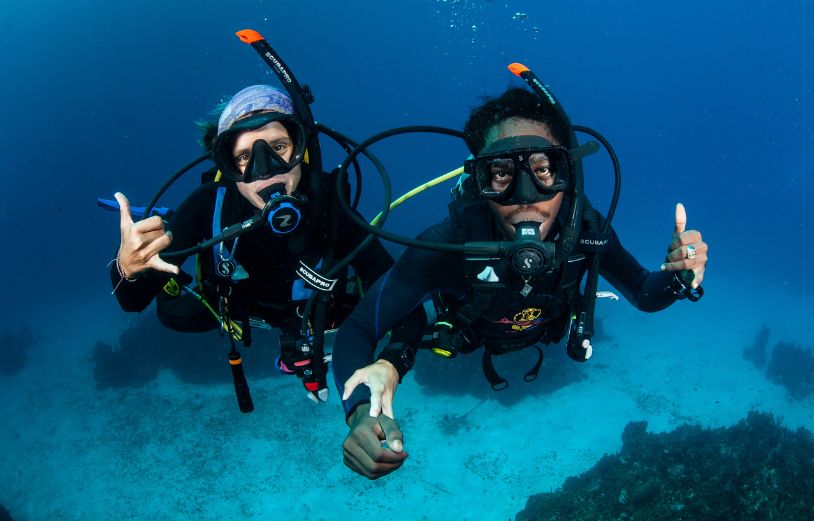

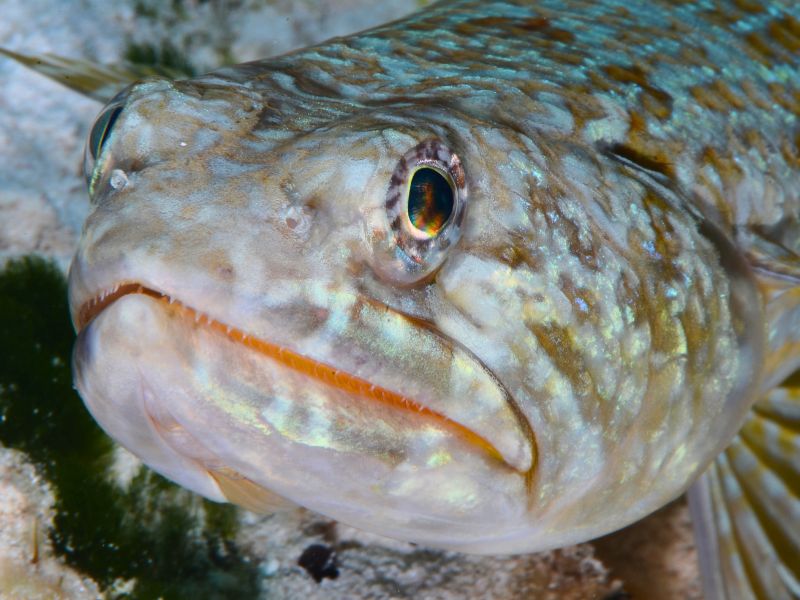
You’re scuba diving over a sandy patch. Nothing’s moving. Then you look closer… and there it is: a little dragon staring back at you. That’s the reef lizardfish for you, one of the most bizarre, most overlooked, and most photogenic fish on any Caribbean reef. It’s got a reptile face. Bulging periscope eyes. And a stillness so complete it borders on spooky. This guide breaks down exactly how to spot one, where to look, why it never moves, and how to get the shot everyone will ask about back on the boat.

Best Cozumel Dive Spots: 15 Must-See Diving Spots
21/07/2026
How Does SCUBA Work? A Beginner-Friendly (and Actually Fun) Guide to Breathing Underwater
19/08/2026Table of Contents
2. How to Identify a Reef Lizardfish
3. Where Does the Reef Lizardfish Live?
4. At What Depth Can Divers Find a Reef Lizardfish?
5. Why Does the Reef Lizardfish Stay So Still?
6. What Does the Reef Lizardfish Eat?
7. Is the Reef Lizardfish Dangerous?
8. Reef Lizardfish Behavior Every Diver Should Know
9. Lizardfish Species You’ll See While Diving in the Caribbean
10. Fun Facts About the Reef Lizardfish
11. The Best Dive Sites in the Caribbean to See a Reef Lizardfish

1. What Is a Reef Lizardfish?
Quick answer: it’s a bottom-dwelling ambush predator with a lizard-shaped head, and its scientific name is Synodus synodus.
The reef lizardfish belongs to the family Synodontidae, a group of old-school bony fish nicknamed “lizardfishes” for one obvious reason. Look at that head. Flat. Wide. Toothy. Total lizard energy.
A quick naming note, because divers mix this up constantly:
- In the Caribbean, “reef lizardfish” usually points to Synodus synodus (called chile rojo in Mexican waters).
- Divers also loosely use the name for close cousins like the sand diver (Synodus intermedius).
- In the Indo-Pacific, the true reef lizardfish is a different species: Synodus variegatus.
Body-wise, think cigar. Long, cylindrical, covered in small smooth scales. The snout is rounded, the eyes sit high on the skull, and the mouth stretches way past the eyes, packed with needle-thin see-through teeth. Coloring runs beige-gray-rusty brown, broken up with crossbars and diamond blotches that scream “camouflage.”
Here’s the ecological cameo nobody talks about: this fish is basically the middle-manager of the reef food web. Small enough to snack on gobies and shrimp, tasty enough that groupers, snappers, and barracuda snack on it. Its presence is honestly a good sign, it means the reef has enough small fish to support a mid-level predator.
Fun fact: adult reef lizardfish are strict bottom-dwellers. But as babies? Total drifters. Eggs and larvae float freely in the plankton before metamorphosing and dropping down to the reef to start their sedentary lifestyle.
Quick Facts
| Field | Info for Divers |
| Scientific Name | Synodus synodus |
| Average Size | 6–10 in / 15–25 cm |
| Maximum Size | Up to 17 in / 43 cm |
| Habitat | Sand patches, reef edges, rubble zones, rocky bottoms |
| Depth Range | 10–390 ft / 3–120 m (most common 16–100 ft / 5–30 m) |
| Diet | Small fish, shrimp, crabs |
| Danger to Divers | None, completely harmless |
| Distribution | Western Atlantic, Gulf of Mexico, Caribbean, eastern Atlantic |
2. How to Identify a Reef Lizardfish
Quick answer: look for a cigar-shaped body, a flat reptile head, periscope eyes, a tripod-style resting posture, and a small black dot at the tip of the snout.
This is the section that actually matters. Spotting a reef lizardfish is a skill, you’re basically training your brain to notice the thing evolution specifically designed to be unnoticeable. Here’s what to scan for.
Body Shape and Size
Long. Round in cross-section. Basically, it looks like a cigar with fins. Juveniles run 2–4 in (5–10 cm); adults on the reef average around 8 in (20 cm). No spiky dorsal drama here, it’s sleek and built for stillness, not showing off.
Color Pattern and Camouflage
Base tone: sandy beige or light gray, matching coral rubble almost perfectly. Layered on top: 8–10 reddish-brown crossbars running down the back, widening into diamond-shaped blotches along the sides. The giveaway feature? A small, sharp black dot right behind the tip of the snout, this is your golden ID clue for Synodus synodus specifically.
Head and Eyes
Big head, flat, triangular. Eyes are huge, bulging, and mounted high, like a built-in periscope that lets it scan the water column without moving an inch. Often rimmed with subtle red or gold detailing.
Mouth and Teeth
The mouth stretches way past the back of the eye, genuinely one of the biggest mouths on the reef relative to body size. When the fish opens it, you’ll see rows of needle-sharp teeth lining the jaws, the roof of the mouth, and even the tongue. All angled backward so nothing that goes in comes back out.
Resting Posture
Unlike flatfish that bury flush with the sand, the reef lizardfish props itself up. It rests on its pelvic and pectoral fins like a tiny tripod, lifting its front end off the bottom. That angle gives it a wider field of view, and a better launch position for ambush attacks.
Quick Identification Checklist: Spot One in 10 Seconds
- Cigar silhouette, long cylindrical body, dead still on the bottom
- Reptile head, flat, triangular, unmistakably lizard-like
- Periscope eyes, bulging, mounted high on the skull
- Tripod posture, propped up on its fins, head slightly raised
- Needle teeth, visible even with the mouth mostly closed
- Snout dot, a distinct black spot at the tip of the mouth (Synodus synodus signature)

3. Where Does the Reef Lizardfish Live?
Quick answer: sand patches and rubble zones right next to coral reefs, across the western and eastern Atlantic, including the whole Caribbean basin.
Geographically, this species covers a lot of ground. From North Carolina and the Bahamas, down through the Gulf of Mexico and the Caribbean, all the way to Brazil and Uruguay. On the other side of the Atlantic, it shows up around the Canary Islands, Azores, Madeira, and the Gulf of Guinea.
Habitat-wise, it likes the in-between zones, sandy corridors that cut through coral formations, protected reef lagoons, dead coral rubble, and seagrass edges. And here’s a neat quirk: unlike relatives that bury in loose sand, Synodus synodus actually prefers parking on hard surfaces, volcanic rock, limestone ledges, algae-covered coral heads.
Why does that matter for divers? Because this fish lives exactly where sand meets reef, the best of both worlds. Sand gives it cover. Reef gives it a steady buffet of small prey passing by.
Recently, scientists have now documented Synodus synodus setting up shop in the central Mediterranean, around Malta and Libya. Nobody put it there. It’s a natural range expansion, likely tied to warming Mediterranean waters.
Distribution map concept: Caribbean basin, Gulf of Mexico, Bahamas, Florida, and the Macaronesia islands (Canary, Azores, Madeira) highlighted as reef lizardfish hotspots.
4. At What Depth Can Divers Find Reef Lizardfish?
Quick answer: anywhere from 3 to 30 meters, with the sweet spot for divers sitting between 5 and 25 meters.
Technically, records exist down to 144 m for Synodus synodus and even deeper for close relatives. But recreational sightings cluster in much shallower, sunnier water, right where reefs are thriving and light still hits the sand.
Open Water divers and snorkelers regularly spot juveniles in calm, shallow bays at 2–10 meters. On deeper wall dives, like the ones in Cozumel, bigger adults tend to hang out on sandy ledges around 15–30 meters.
Below 30 meters, red light basically disappears from the water column. That reddish-brown coloring? It reads as pure black down there, near-perfect camouflage against prey looking down from above.
Depth vs. Sighting Probability
| Depth | Likelihood | Typical Habitat |
| 0–10 ft (0–3 m) | Medium | Shallow lagoons, sandy beaches, protected bays, mostly juveniles |
| 10–40 ft (3–12 m) | High | Reef patches, seagrass beds, shallow rubble flats |
| 40–100 ft (12–30 m) | Very High | Sand corridors between reefs, base of walls, algae-covered rock |
| 100–165 ft (30–50 m) | Low | Recreational dive limit; open sandy platforms |
| 165+ ft (50+ m) | Very Low | Deep mesophotic zone, beyond typical recreational range |

5. Why Does It Stay Completely Still?
Quick answer: it’s not sick, it’s not lazy, it’s strategy. Camouflage, ambush hunting, and energy savings, all in one motionless package.
First time seeing this fish, it can feel almost wrong. It lets you get close. Really close. No flinching. Here’s what’s actually going on:
- Camouflage through stillness: most reef predators hunt by detecting movement. Freeze completely, and the skin pattern does the rest.
- Ambush hunting: as a classic ambush predator, it relies entirely on surprise. Staying still lets prey wander into striking range without noticing the danger.
- Energy savings: active swimming burns serious calories. Going sedentary drops its metabolic needs way down, meaning fewer meals needed to survive.
On a competitive reef, that’s a genuinely smart niche. While other fish hide in dark crevices all day, the reef lizardfish just… sits in the open, in broad daylight, protected by nothing but stillness and pattern-matching skin.
And its trust in that camouflage is wild, a diver with solid buoyancy control can bring a camera lens within a few centimeters before anything happens. Cross an invisible line (usually around 10–20 cm), though, and it explodes off the bottom and reburies itself a few meters away, instantly.
6. What Does a Reef Lizardfish Eat?
Quick answer: small reef fish first, shrimp and crabs second, classic ambush-predator menu.
Top of the menu: small bottom-dwelling fish like gobies, small wrasses, juvenile grunts, damselfish, and silversides. It also happily grabs decapod crustaceans, cleaner shrimp, small sand crabs, anything moving within range.
The hunt itself is a masterclass in underwater physics. The fish holds its tripod pose, eyes locked on the water column. The second prey crosses into range, usually under a meter away, powerful pectoral fins and a violent tail-flick launch it forward like a torpedo. The strike takes milliseconds. Needle teeth clamp down. Prey gets swallowed whole, immediately.
Wild fact: its mouth and stomach are ridiculously stretchy. There are documented cases of lizardfish attempting, and sometimes succeeding, to swallow prey nearly twice their own body length, leaving them visibly bulging while they digest on the sand.
7. Are Reef Lizardfish Dangerous?
No. Full stop. This fish is completely harmless to divers, snorkelers, and pretty much any human in the water.
Yes, it looks like a tiny toothy dragon. No, it can’t hurt you. It has no venom, shows zero aggression toward people, and simply doesn’t have the jaw strength to do any real damage to something human-sized.
Those needle teeth exist for one job only: gripping small, slippery prey. Faced with a diver, its go-to move is freezing (camouflage first, always) and, if you get too close, darting away low over the sand. No lunging. No biting. No drama.
Ironic twist: this harmless little fish has become one of the favorite snacks of the invasive lionfish across the Caribbean. Its whole “stay perfectly still” strategy, which works great against native predators, makes it an easy target for a lionfish that doesn’t play by the reef’s usual rules.

8. Reef Lizardfish Behavior Divers Should Know
Quick answer: solitary, territorial, lightning-fast when it counts, and quietly loyal to the same patch of sand.
Bottom Territoriality
Adults are strict loners, defending a small hunting patch. If another lizardfish wanders in, the resident flares its pectoral fins, opens its mouth wide to look bigger, and chases the intruder off, briefly but firmly.
Rapid Burial
On loose sand or fine gravel, a spooked lizardfish can vanish in under two seconds, a rapid side-to-side vibration buries the whole body except the eyes and the top of the head, which stay up top to keep watch.
Instant Attack Speed
Hours of total stillness, then a burst of tail-powered speed that ranks among the fastest reactions on the reef. Patience and violence, back to back.
Behavior also shifts with the clock: bright daylight means resting out on open sand watching for passing prey. At dusk and overnight, they tend to shift toward coral bases or half-bury themselves to dodge nocturnal predators.
Bonus for the romantics: during spawning season, the usual loneliness rule gets suspended. Attentive divers sometimes spot pairs resting close together on the sand. Mating happens at dusk, the pair rockets up together through the water column, releases gametes simultaneously, then dives straight back down before anything hungry notices.
9. Lizardfish Species You’ll See While Diving in the Caribbean
Quick heads up before we start: one of the names on your list, Red Lizardfish, is actually just another nickname for the star of this whole article, Synodus synodus. Same fish, different alias. So, the real mix-ups happen with these three:
Sand Diver (Synodus intermedius)
The Caribbean’s most common lizardfish, and the #1 case of mistaken identity. Look for a rectangular black patch right at the top of the gill slit. Thin gold lines often run along the sides too.
Bluestriped Lizardfish (Synodus saurus)
No snout dot on this one, that’s the giveaway. Instead of reddish crossbars, it rocks bluish, turquoise, or gold longitudinal stripes running the length of the body. Sticks to cleaner, sandier bottoms than our reef-loving star.
Snakefish (Trachinocephalus myops)
The odd one out. Shorter, stockier body. Blunter head, less “flattened lizard,” more “compact torpedo.” Big round eyes with a golden iris, and a shimmery striped pattern that almost looks painted on. Buries fast in open sand, eyes poking out like a periscope.
Comparison Table
| Feature | Reef Lizardfish | Sand Diver | Bluestriped Lizardfish | Snakefish |
| Scientific name | Synodus synodus | Synodus intermedius | Synodus saurus | Trachinocephalus myops |
| Snout dot | Present | Absent | Absent | Absent |
| Shoulder patch | Absent | Present (black, rectangular) | Absent | Absent |
| Body pattern | Reddish-brown crossbars | Gold longitudinal lines | Blue/turquoise/gold stripes | Painted-looking shimmer stripes |
| Body shape | Long, slender cigar | Long, slender cigar | Long, slender cigar | Shorter, stockier, blunt head |
| Preferred substrate | Rocks, hard reef, rubble | Clean sand near reef | Open sandy bottoms | Open sand, buries fast |
How to Photograph a Reef Lizardfish
Quick answer: get low, move slow, light from the side, and shoot eye-to-eye instead of from above.
For underwater photographers, this fish is basically a dream model, cooperative, sculptural, and endlessly patient with a lens.
Gear and Settings
A dedicated macro lens (60mm or 90/105mm) is ideal. Use a tighter aperture, f/8 to f/16, for sharpness across the whole head. Single-point autofocus, locked on the eye, is non-negotiable for a punchy portrait.
Slow, Low Approach
Because this fish trusts its camouflage completely, it’ll tolerate a close approach, as long as you’re painfully slow about it. Skip the direct swim-up. Instead, settle onto the sand a few meters out and glide in low, keeping buoyancy tight so you don’t kick up a silt cloud and ruin the shot.
Composition: Eye-to-Eye
Skip the top-down shot, it flattens the fish into the sand and kills the impact. Drop your camera to substrate level instead, shooting a side profile or three-quarter angle. That perspective shows off the jawline and scale texture, turning an everyday fish into a mini underwater sculpture.
Side Lighting
White sand acts like a giant mirror, so front-on flash tends to bounce back and blow out the shot. Angle your strobes to the side and slightly behind the port, with diffusers softening the beam. That sculpts real shadow and depth into the scales.
Bonus tip for night divers: swap in a yellow barrier filter and blue excitation strobes for fluorescence photography. Under those conditions, the reef lizardfish glows a genuinely wild neon green.

10. Fun Facts About Reef Lizardfish
- The tripod stance: it props itself up on its lower pelvic and pectoral fins, mimicking an actual camera tripod.
- Teeth on its tongue: yes, really, backward-facing teeth line the tongue too, so nothing slips out once it’s in.
- The “necessary yawn”: divers often catch it yawning wide, not from sleepiness, but to stretch and realign its jaw bones before the next strike.
- Neon glow-up: under UV light on night dives, it lights up in seriously bright neon green, one of the reef’s strongest fluorescence signatures.
- A submarine named after it: during WWII, the US Navy commissioned a Balao-class submarine called USS Lizardfish (SS-373), a nod to its stealthy ambush style.
- A secret double life: juveniles look so different from adults that scientists originally classified them as an entirely separate species.
- A passport-holding fish: Synodus synodus is naturally expanding into the central Mediterranean as waters warm, no human introduction involved.
- No eyelids, no problem: to clear sand from its lidless eyes, it just blinks with water pressure or gives its body a quick shake.
- The ultimate macro model: one of the few reef fish that tolerates a lens just centimeters from its face, as long as you don’t move fast.
11. The Best Caribbean Dive Sites to See Reef Lizardfish
Quick answer: Cozumel, Playa del Carmen, Puerto Aventuras, Bayahibe, Punta Cana and Montego Bay are reliable bets for a sighting.
Cozumel, Mexico
World-famous for wall dives and drift currents. Shallower sites like Paradise Reef and the sandy stretches of Palancar Gardens hold a healthy population of lizardfish resting in the sand corridors. Visibility regularly over 30 m makes their silhouettes easy to pick out against the white sand.
Riviera Maya, Mexico
You can spot the reef lizardfish in Playa del Carmen, Playa Paraíso, Puerto Aventuras, and along much of the Riviera Maya coastline. Dive sites such as Jardines Reef and Tortugas Reef are relatively shallow, at depths of 12–20 m (40–66 ft), with excellent natural light—ideal conditions for spotting these masters of camouflage lying in wait among coral rubble and sponges.
Bayahibe, Dominican Republic
Calm water and shallow reefs make this a solid bet. Sand corridors between coral patches, plus the areas around the region’s famous wrecks, are reliable hotspots, often pointed out by local guides as a textbook example of reef camouflage during Open Water courses.
Montego Bay, Jamaica
Protected reef lagoons here offer wide seagrass beds and shallow rubble flats, prime nursery habitat for juveniles and subadults, easily spotted by snorkelers in under 3 meters of water.
A knowledgeable local guide makes a real difference here. An untrained eye can swim right past a dozen of these fish in a single dive; an experienced guide knows exactly which sand patch or dead coral head to check.
Bonus in Cozumel: the same sandy zones that host reef lizardfish are also home to the endemic splendid toadfish, hiding under coral ledges, meaning one dive can knock two only-here species off your list.

12. Frequently Asked Questions About the Reef Lizardfish
Is a reef lizardfish poisonous?
No. It has no venom glands or venomous spines, making it completely harmless to divers and snorkelers underwater.
Can a reef lizardfish bite?
Physically, yes, its teeth can nick skin if handled roughly out of water. Underwater, though, it will never bite or attack a diver voluntarily.
Is reef lizardfish aggressive?
No, it’s remarkably peaceful and indifferent to humans. It relies on camouflage to stay hidden and will simply swim away fast if approached too closely.
Where are reef lizardfish found?
On sand flats and coral reefs across tropical and subtropical waters worldwide, especially abundant in the western Atlantic, Caribbean, Bahamas, Florida, and the Canary Islands.
How big do reef lizardfish get?
Average size on the reef runs 6–10 in (15–25 cm), though mature adults can reach up to 17 in (43 cm).
What do reef lizardfish eat?
Efficient carnivores that feed on small reef fish, like gobies and wrasses, plus mobile crustaceans such as shrimp and small crabs.
Are reef lizardfish rare?
No, they’re extremely common on most Caribbean reefs. Their camouflage and stillness are just so good that most divers swim right past without noticing.
Can you see reef lizardfish while snorkeling?
Yes. It’s commonly seen while both scuba diving and snorkeling in sheltered lagoons, seagrass beds, and shallow sandy areas, often in just 1–3 m (3–10 ft) of water.
On your next dive, try this… pause for a moment. Stop looking for bright colors among the reef. Study the sand. Look closely at the rubble. Give yourself a few extra seconds.
Chances are, a reef lizardfish is right there, perfectly still, watching you the whole time.
That’s how you start seeing what everyone else misses.
CONTACT US FOR
PERSONALIZED ASSISTANCE
Ready to improve your dive skills?
Need more information about the next certification level?
WE ARE HERE TO HELP