10. FAQ: Frequently Asked Questions About Caribbean Crabs
What is the largest crab in the Caribbean?
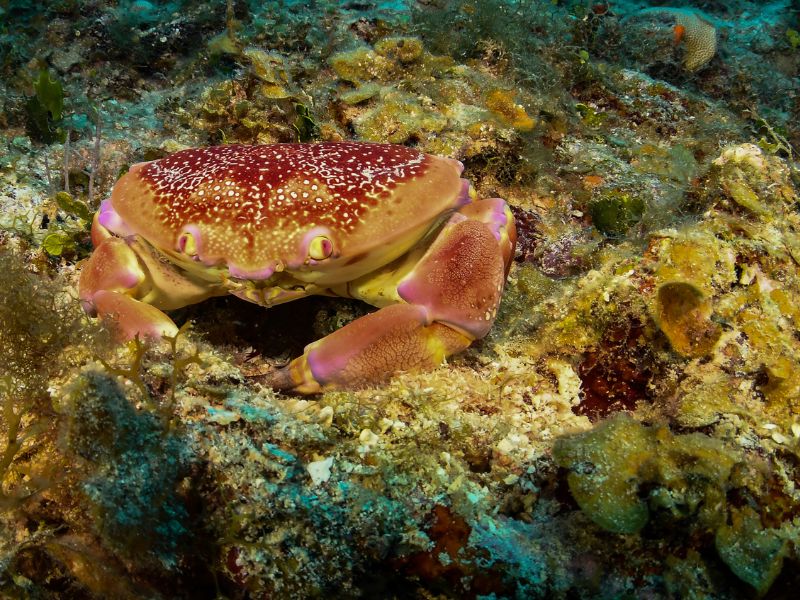
The largest true crab in the region is the Caribbean King Crab, also known as the Channel Clinging Crab (Maguimithrax spinosissimus), which can reach a carapace width of 20 cm (8 inches) and weigh up to 3 kg.
Are Caribbean reef crabs dangerous to divers?
No. They’re peaceful, shy animals. However, if you try to catch or handle one, it can deliver a painful pinch with its powerful claws.
What is the most common Caribbean crab?
The Yellowline Arrow Crab (Stenorhynchus seticornis) is the crab divers spot most often on the reef, while the Atlantic Ghost Crab (Ocypode quadrata) is the most common species on sandy beaches.
What is the strangest Caribbean crab?
The Speck-claw Decorator Crab is one of the strangest. It uses hook-like hairs on its shell to attach living algae and sponges, walking around disguised as a moving piece of reef.
Can you eat Caribbean crabs?
Yes. Several species are local delicacies, especially the blue land crab (Cardisoma guanhumi) and the Atlantic blue crab (Callinectes sapidus), the star ingredient in Tobago’s famous Curry Crab and Dumplings.
Can divers touch crabs?
No. Divers should never touch or disturb marine life. Touching crabs can damage their shells, stress them, disrupt feeding, or result in a painful pinch.
Are there regulations on catching land crabs in the Caribbean?
Yes. Florida and Puerto Rico enforce closed seasons, minimum capture sizes (for example, 64 mm carapace width for Cardisoma guanhumi), and ban harvesting within natural reserves.
What are the main threats to Caribbean crabs?
Coastal development, overharvesting, forest fires, invasive predators like raccoons, and vehicle traffic during mass spawning migrations are the major threats to land and shoreline crab populations.
Ready to Spot Them Yourself?
From the spindly-legged Yellowline Arrow Crab to the armored Caribbean King Crab, the crabs of the Caribbean prove that the reef’s smallest residents often steal the show. They’re reef janitors, food-chain linchpins, and proof that slowing down underwater pays off. Next time you’re near a sponge, an anemone, or a shadowy crevice, take an extra thirty seconds to look closer, you might spot a neon-eyed hermit crab, a sponge that walks, or a “rock” with legs.
Ready to find them for yourself? Book your next dive with Dressel Divers in Cozumel, Bayahibe, or Montego Bay and let our dive guides help you uncover the Caribbean’s best-kept crustacean secrets.