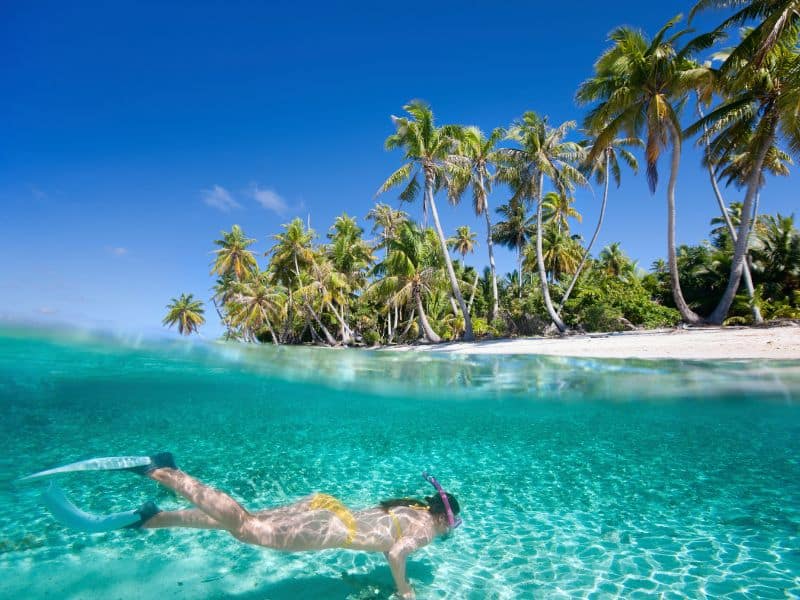
Snorkeling in the Caribbean looks simple: mask, snorkel, water. And yet most people barely scratch the surface. This guide is about how to actually feel it, because there is a big difference.

Underwater Habitats for Humans: Is It Really Possible to Live Beneath the Sea?
18/05/2026
Fish That Swim with Sharks: Why Some Fish Follow Ocean Predators
27/05/20261. What Is the Best Snorkeling in the Caribbean?
2. Why Snorkeling in the Caribbean Is Worth It
3. Best Caribbean Islands for Snorkeling
4. Shore Snorkeling vs Guided Experience
5. Top Snorkeling Experiences & Excursions
6. Snorkeling Tips to Maximize Your Experience
1. What Is the Best Snorkeling in the Caribbean?
Quick answer
The best snorkeling in the Caribbean is found in Cozumel (Mexico), Bonaire, the Cayman Islands, and the Dominican Republic, destinations with water visibility of up to 30 m, year-round temperatures of 25–28°C, and access to the Mesoamerican Reef, the second-largest barrier reef system in the world at 963 km.
But the real answer depends on two factors: where you go, and how you experience it. The sections below break both down.
2. Why Snorkeling in the Caribbean Is Worth It
The Caribbean is one of the most complete snorkeling regions on the planet, combining warm, clear water with exceptional biodiversity and easy access from shore in many locations.
Water temp 25–28°C year-round
Visibility up to 30 m
Mesoamerican Reef 963 km
Over 500 fish species recorded
Dry season Dec–Apr clearest conditions
Sources: MBRS Programme (UNEP), NOAA Caribbean Coral Reef Monitoring, UNESCO World Heritage data.
3. Best Caribbean Islands for Snorkeling
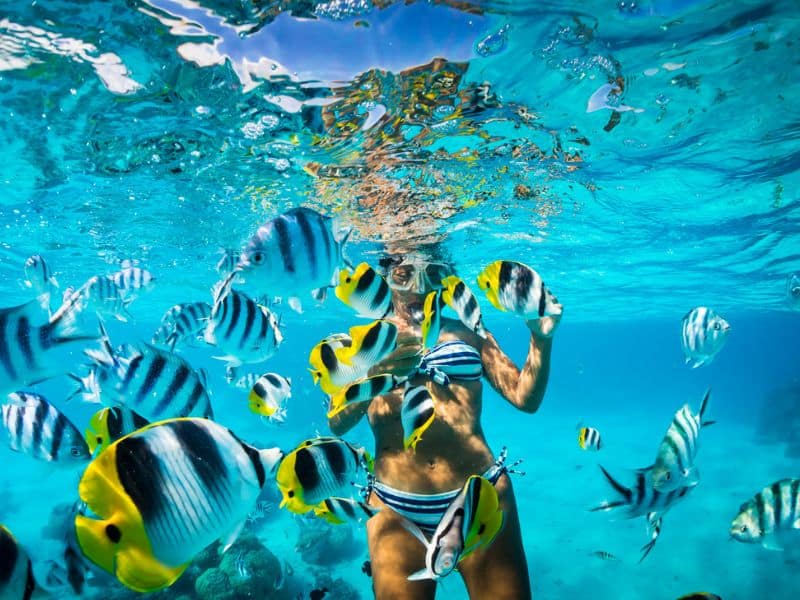
Not all Caribbean beaches are equal. Some look extraordinary on the surface and are lifeless below it. The destinations below are selected based on reef health, visibility, marine biodiversity, and accessibility.
Cozumel, Mexico Top pick
Visibility: 20–30 m Reef: Mesoamerican (2nd largest globally) Temp: 26–28°C Shore access: Yes
Cozumel is where snorkeling stops being an activity and becomes something else. The island sits on the Mesoamerican Reef, stretching 963 km across Mexico, Belize, Guatemala and Honduras, and offers drift snorkeling at Palancar Reef and Colombia Reef, where currents carry you through dense coral formations without effort. Hawksbill turtles, spotted eagle rays and hundreds of reef fish species are routine encounters.
Palancar Reef is a UNESCO-designated natural heritage site within the Arrecifes de Cozumel National Park (established 1996).
Bonaire Best shore access
Visibility: 20–30 m Protected area: Bonaire National Marine Park (since 1979) Shore access: Excellent
No boats needed. Bonaire’s west coast has over 60 marked dive and snorkel sites accessible directly from shore. The Bonaire National Marine Park, one of the oldest marine reserves in the world, protects 2,700 hectares of reef. Visibility rarely drops below 20 m.
Source: Bonaire National Marine Park / STINAPA.
Cayman Islands Wildlife encounters
Visibility: 25–30 Depth at Stingray City: 1–2 m Shore access: Yes
Stingray City, a sandbar in the North Sound of Grand Cayman, is one of the most famous shallow-water wildlife interactions in the world. Southern stingrays gather here naturally, attracted by fishing activity that began in the 1980s. Visibility in Grand Cayman consistently reaches 25–30 m thanks to the island’s position away from river runoff.
Barbados Shipwrecks + turtles
Visibility: 15–25 m Notable site: Carlisle Bay Marine Park Shore access: Yes
Barbados surprises people because it combines reef snorkeling with historic shipwrecks and regular hawksbill and leatherback turtle encounters. Carlisle Bay holds at least six wrecks at shallow depths (5–14 m), now colonized by corals and sponges. The Barbados Sea Turtle Project, running since 1987, has documented over 900 individual turtles in local waters.
Source: Barbados Sea Turtle Project, University of the West Indies.
Bahamas Exotic marine life
Visibility: 20–25 m Protected area: Exuma Cays Land and Sea Park Shore access: Limited
The Exuma Cays Land and Sea Park, the first land and sea protected area in the Caribbean (designated 1958), spans 456 km² of shallow reefs, seagrass beds and mangroves. Nurse sharks, Caribbean reef sharks and large schools of snapper are common. Most sites require boat access.
Source: Bahamas National Trust.
Jamaica Easy access
Visibility: 15–20 m Protected area: Montego Bay Marine Park (since 1992) Shore access: Yes
The Montego Bay Marine Park, covering 15.3 km² of reef, seagrass and mangrove, has protected local marine life since 1992, making it one of Jamaica’s key conservation successes. Easy reef access from multiple beach points and calm conditions makes this an excellent choice for families and first-time snorkelers.
Dominican Republic Beginner-friendly
Visibility: 10–20 m Key islands: Catalina Island, Saona Island Shore access: Yes
Saona Island sits within the 820 km² Parque Nacional del Este (established 1975), one of the largest protected marine areas in the Dominican Republic. Shallow seagrass beds attract rays and sea turtles. Catalina Island features a wall dive/snorkel site that drops from 3 m to over 30 m, offering dramatic visibility contrasts.
Source: Ministerio de Medio Ambiente y Recursos Naturales, Dominican Republic.
Destination Comparison
| Destination | Best for | Visibility | Shore access | Ideal for |
| Cozumel, Mexico | Coral reefs & variety | 20–30 m | Yes | All levels |
| Bonaire | Shore snorkeling | 20–30 m | Excellent | Independent snorkelers |
| Cayman Islands | Stingrays & clear water | 25–30 m | Yes | Families, wildlife |
| Barbados | Shipwrecks & turtles | 15–25 m | Yes | History + nature |
| Bahamas | Exotic marine life | 20–25 m | Limited | Guided excursions |
| Jamaica | Easy access reefs | 15–20 m | Yes | Beginners, families |
| Dominican Republic | Relaxed, shallow reefs | 10–20 m | Yes | First-timers |
4. Shore Snorkeling vs Guided Experience
Shore snorkeling
- Easy and flexible
- No booking required
- Limited reef access
- Predictable encounters
- No orientation in water
Guided snorkeling
- Better reef locations
- More marine life sightings
- Expert orientation
- Less effort, more flow
- Safety backup
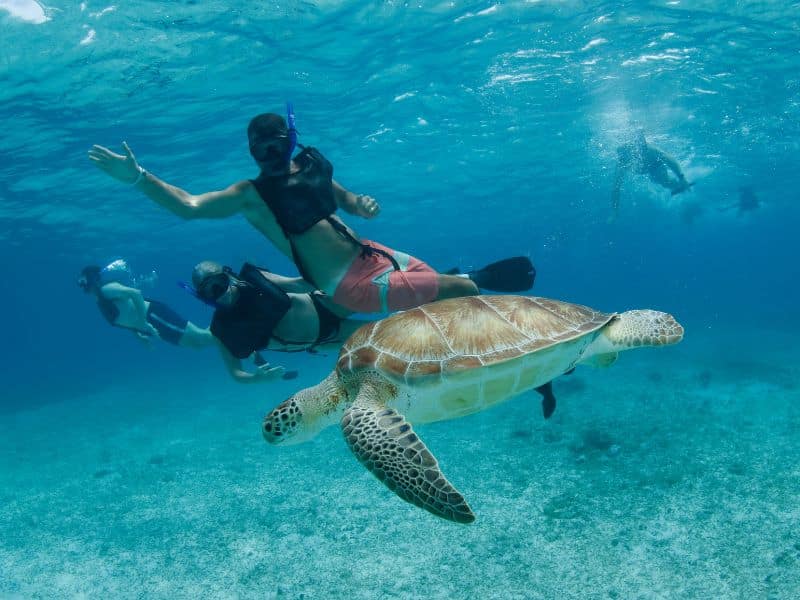
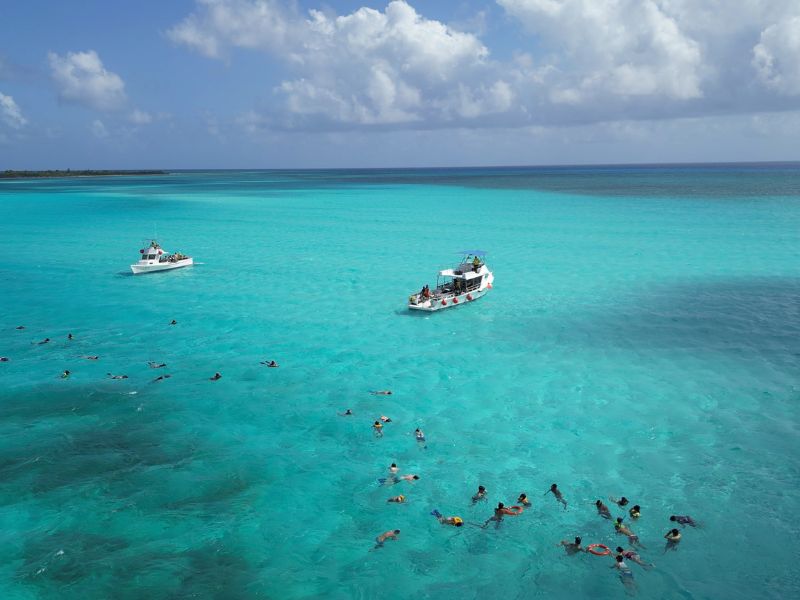
People who try both rarely go back to doing it alone, not because shore snorkeling is bad, but because the jump in marine life encounters is significant when a guide knows where to look.
5. Top Snorkeling Experiences & Excursions
Cozumel Reef Snorkeling
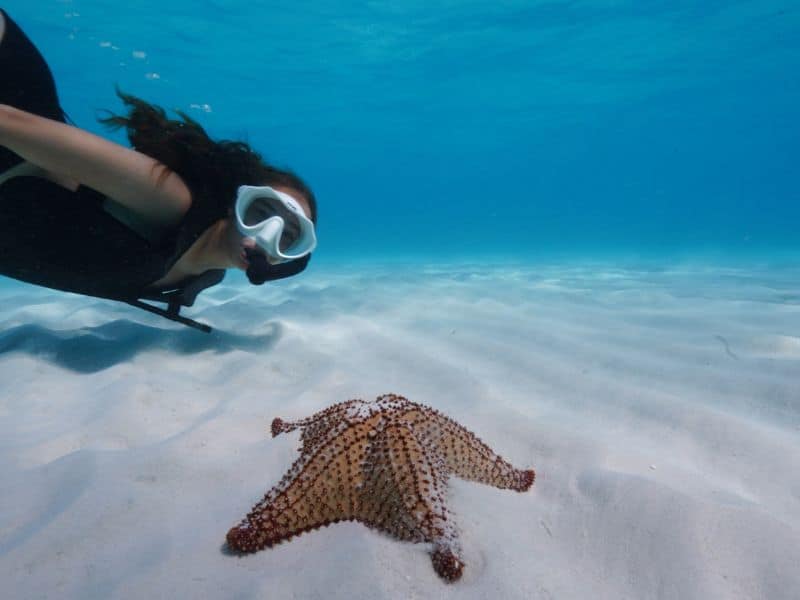
Access to protected sections of Palamar Reef and Colombia Reef with professional guides. The Mesoamerican Reef supports over 500 fish species and 65 stony coral species, the highest diversity in the Atlantic basin.
Cenote Snorkeling, Yucatán (Mexico)
The Yucatán Peninsula contains an estimated 6,000–10,000 cenotes, natural sinkholes formed by the collapse of limestone bedrock, fed by an underground river system stretching over 1,400 km (Sistema Sac Actun, the world’s longest flooded cave system). Snorkeling inside cenotes offers visibility often exceeding 40 m in freshwater, with stalactites and halocline effects where fresh and salt water meet.
6. Snorkeling Tips to Maximize Your Experience
Tip 01
Choose the right gear
Anti-fog mask, comfortable snorkel, short fins, optional flotation vest. Proper mask fit is the single most important factor, a leaking mask ruins the experience regardless of location.
Tip 02
Go early
Morning sessions (before 10 am) offer the best visibility, calmer winds and fewer people in the water. Marine life is also more active at lower light levels.
Tip 03
Don’t touch marine life
Physical contact with coral transmits bacteria and removes the protective mucus layer corals need to survive. A single touch can kill coral tissue. Observe with your eyes only.
Tip 04
Stay aware of currents
Check conditions before entering. Note your entry point and a fixed landmark onshore. Currents in reef areas can change with tide cycles, always ask local guides about that day’s conditions.
Tip 05
Relax your breathing
Slow, deep breaths improve buoyancy and reduce energy consumption. Tense snorkelers use 40–60% more energy than relaxed ones and miss most of what’s around them.
Tip 06
Use reef-friendly sunscreen
Oxybenzone and octanoate, common in standard sunscreens, are toxic to coral larvae at concentrations as low as 62 parts per trillion (NOAA). Use mineral-based sunscreen or a rash guard.
7. How to Choose a Snorkeling Operator in the Caribbean
The difference between a decent snorkeling experience and an unforgettable one is almost always the quality of guidance, not the location. When evaluating operators, look for:
- Guided experience that helps you spot marine life more easily.
- Reef access, operators with permits to access protected reef zones reach areas unavailable to independent snorkelers.
- Equipment condition, well-maintained snorkels, correct fin sizing. Ill-fitting gear is the most common cause of a poor experience.
- Safety protocols, flotation options, briefings on currents, and guides trained in first aid.
- Environmental practices, reef-briefing for guests, no-touch policies enforced, reef-safe sunscreen provided or required.
Dressel Divers
Dressel Divers has operated snorkeling and diving experiences in the Caribbean since 1993, with bases in Cozumel, Jamaica and the Dominican Republic. Their guides are trained to locate and identify marine life in real time, and their routes are designed to maximize flow over open reef rather than crowded entry points.
Their approach is straightforward: less logistics, more ocean. Everything is organized so guests focus entirely on what’s underwater.
8. FAQs About Snorkeling in the Caribbean
Do I need diving experience to snorkel in the Caribbean?
No. Snorkeling happens at the surface, so no certification or prior training is required. Basic comfort in the water is enough to enjoy the experience.
What is the best time of year for snorkeling in the Caribbean?
The Caribbean offers snorkeling year-round. Water temperatures stay between 25–28°C regardless of season.
What marine life can you see while snorkeling in the Caribbean?
Depending on destination and season: sea turtles (green and hawksbill), southern stingrays, eagle rays, parrotfish, angelfish, barracudas, lobsters, octopus, and nurse sharks. In some seasons: dolphins and whale sharks off the Yucatán coast (June–September). The Mesoamerican Reef alone supports over 500 fish species and 65 stony coral species.
What should I wear for snorkeling in the Caribbean?
Swimsuit, rash guard or UV-protection shirt (recommended over sunscreen for reef protection), reef-friendly mineral sunscreen on exposed areas, and optionally water shoes for rocky entries. Comfort matters more than equipment complexity.
Can children participate in snorkeling in the Caribbean?
Yes. Many locations offer shallow entry points (1–2 m depth), gentle conditions, and flotation support for younger children. It is often one of the most accessible ocean activities for families. Recommended minimum age for most guided snorkeling experiences is 6–8 years, depending on the operator.
How long should a snorkeling session last?
The ideal range is 45 minutes to 1.5 hours. After that, concentration and energy drop and the experience becomes less engaging. Guided excursions are typically structured within this window.
What is reef-friendly sunscreen and why is it important?
Reef-friendly (mineral-based) sunscreen avoids oxybenzone and octanoate, chemicals toxic to coral larvae at extremely low concentrations. NOAA research has shown these compounds can cause coral bleaching, DNA damage, and death in coral at concentrations as low as 62 parts per trillion. Hawaii and several Caribbean destinations have banned non-mineral sunscreens for this reason.
Should I bring my own snorkeling gear or rent it?
Both options work. Personal gear offers better fit and comfort, especially for the mask. Rental gear is convenient and eliminates packing concerns. The critical factor is mask fit, a well-fitted rental mask is better than a poorly-fitted personal one. Dressel Divers provide well-maintained, sanitized rental equipment.
Snorkeling in the Caribbean is easy to try but hard to truly experience. Most people stay on the surface. A few go deeper, not physically, but in terms of attention, knowledge, and connection. Once you do, you don’t look at the ocean the same way again.
CONTACT US FOR
PERSONALIZED ASSISTANCE
Ready to improve your dive skills?
Need more information about the next certification level?
WE ARE HERE TO HELP