How does scuba work (11) como funciona el buceo
How Does SCUBA Work? A Beginner-Friendly (and Actually Fun) Guide to Breathing Underwater
19/08/2026
Show all

Scuba Diving Apparel: Much More Than Scuba Clothing

Scuba Diving Apparel (6) indumentaria de buceo

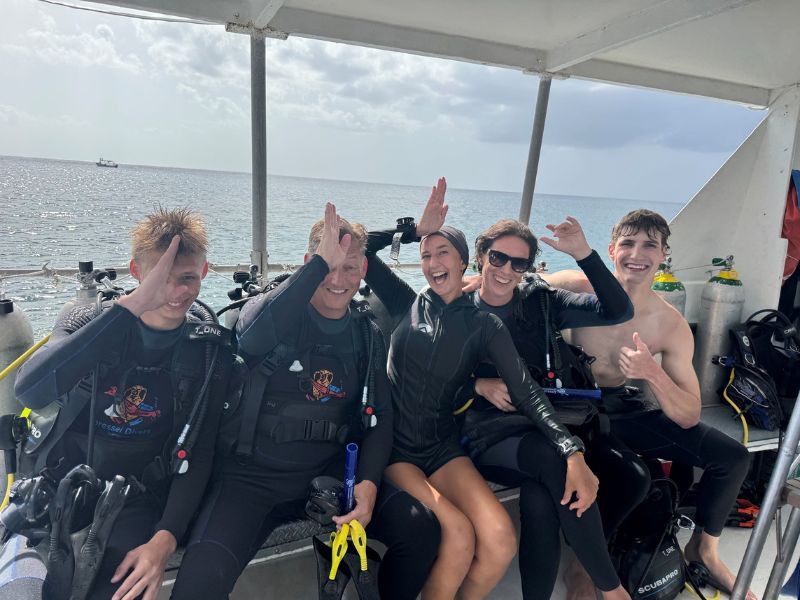
It’s 9:00 a.m. in the Caribbean. Even though it’s winter, the sun is blazing, the water is 27°C, and you’re wearing the wrong scuba diving apparel without even knowing it yet.

You get in the water. Everything’s perfect, until the metal clasps on your swimsuit dig in underneath, and your neck starts chafing against the neoprene.

Back on the boat, the wet suit and the wind do the rest: you go from sweating to shivering in ten minutes, while the rest of the group, with their rash guard, their hardware-free swimsuit, and their windbreaker at hand, stays perfectly comfortable.

Here, what makes the difference isn’t your regulator or your BCD: it’s what you’re wearing against your skin.

This guide tells you exactly what scuba clothing to wear, before, during, and after every dive.

Scuba Diving Apparel (4) ropa de buceo

1. What Is Scuba Diving Apparel? (The Real Answer)

Quick answer: scuba diving apparel (or scuba clothing) is all the specialized gear you wear before, during, and after a dive: rash guard shirts, wetsuits, dive skins, thermal base layers for drysuits, dive booties, hoods, gloves, and quick-dry garments for the boat.

Its mission? Protect you from the sun, preserve your body heat, prevent chafing, and shield you from stings, scrapes, and those brutal chills during the surface interval. It’s not the same as a swimsuit. And it’s definitely not that stretchy “scuba fabric” used to make dresses.

Let’s be honest: your regulator gets all the glory. Your BCD gets all the budget. But what’s actually touching your skin for the next hour underwater? That’s your scuba diving apparel. And it deserves a lot more love than it gets. Grab a coffee (or a post-dive snack). Let’s break this down, piece by piece, no detours.


2. Scuba Clothing vs. Everything Else It Gets Confused With

Three myths we’re busting before we go further:

  • It’s not your beach swimsuit. Regular swimwear has no abrasion resistance, inconsistent UV protection, and degrades quickly with salt and chlorine.
  • It’s not the fashion “scuba fabric.” In the fashion world, “scuba fabric” is just a double-knit polyester used in structured dresses. Stylish. But not dive-worthy.
  • It’s not your hard gear. Regulators, BCDs, tanks, and dive computers are life support. Scuba diving apparel is the textile layer that protects your actual skin.


3. Why Scuba Diving Apparel Is Necessary (A Scientific but Fun Explanation)

Here’s the fact that basically explains every rule in this guide: water pulls heat from your body 20 to 27 times faster than air at the same temperature. Water is simply better at stealing your warmth. That’s why even “warm” tropical water at 26°C can chill you on a long dive.

Your body loses heat through four mechanisms. Understanding them tells you exactly what to wear and when:

Mechanism What Happens How Scuba Clothing Solves It
Conduction Direct heat transfer from skin to water or to wet fabric in contact with skin. Neoprene or trapped air layers slow this down cold.
Convection Cold water (or wind) constantly circulating over your skin. Snug-fitting suits prevent this; windbreakers block moving air on deck.
Evaporation Sweat or water on skin turning to vapor, the #1 cause of surface-interval chills. Dry off quickly, switch to dry synthetic layers in cold settings, add a windproof layer.
Radiation Body heat radiating from exposed skin into the surroundings. Matters most at the surface, in sun or cold: cover up, especially your head.

Cold, Heat, and the Danger Zones In Between

If you get too cold, your body enters vasoconstriction and shivering. Below 35°C core temperature, we’re talking hypothermia. In the Caribbean this isn’t usually an issue, but it’s exactly why cold-water divers never skimp on hood and gloves.

And if you overcorrect, bundled up under a blazing sun, you enter hyperthermia territory: heavy sweating, dehydration, and potentially heat stroke. So yes: overdressing on deck is also a real risk.

The Cold–Decompression Connection (Nerdy, But Important)

Here’s a detail almost nobody talks about: your thermal state directly affects how your body handles dissolved nitrogen. Getting cold during the dive causes peripheral vasoconstriction, which is fine on descent. But if you’re still cold during ascent and your safety stop, that same vasoconstriction slows nitrogen elimination from your tissues. Translation: staying warm isn’t just about comfort. It’s a genuine safety factor. Staying warm specifically during the ascent matters most.

Scuba Diving Apparel (7) ropa de buceo

4. The Only Scuba Clothing Checklist You Need

Item Essential or Optional? What It Actually Does Who It’s For
Rash guard / UV shirt Essential UPF 50+ sun protection, prevents BCD chafing All divers
Swimsuit (hardware-free) Essential Snug base layer under the wetsuit All divers
Neoprene dive booties Essential Foot protection, fin retention Open-heel fin users
Wetsuit / shorty Essential (or rent it) Thermal insulation, skin protection All divers
Dive skin / lycra suit Optional Eases suiting up, sting protection Tropical and vacation divers
Windbreaker / deck parka Optional (but you’ll want it) Blocks evaporative cooling on deck Boat and liveaboard divers
Neoprene hood and gloves Essential in cold water Prevents major heat loss from head and hands Cold-water and technical diving
Quick-dry shorts/pants Essential Comfort on deck after diving Travelers and resort divers
Dive cap / beanie Optional Prevents wind-driven heat loss Cold water and night diving
Drysuit + thermal underwear Essential below 14°C Full thermal system for cold/technical diving Cold water and technical diving


5. Scuba Diving Apparel for Before Your Dive

Before diving, it’s all about sun protection, easy changing, and not slipping on a wet deck.

  • Base layer (swimsuit): snug-fitting, no metal zippers or thick buckles; nothing that will dig in under the BCD harness.
  • Rash guard or UPF 50+ shirt: keeps you cool while gearing up and saves your shoulders from the sun before you get in the water.
  • Non-slip, non-marking boat shoes: wet decks are slippery, especially carrying weight. Skip smooth-soled sandals.
  • Polarized sunglasses + UPF 50+ cap: because squinting against glare an hour before diving isn’t a great plan.


6. What Scuba Clothing to Wear During Your Dive

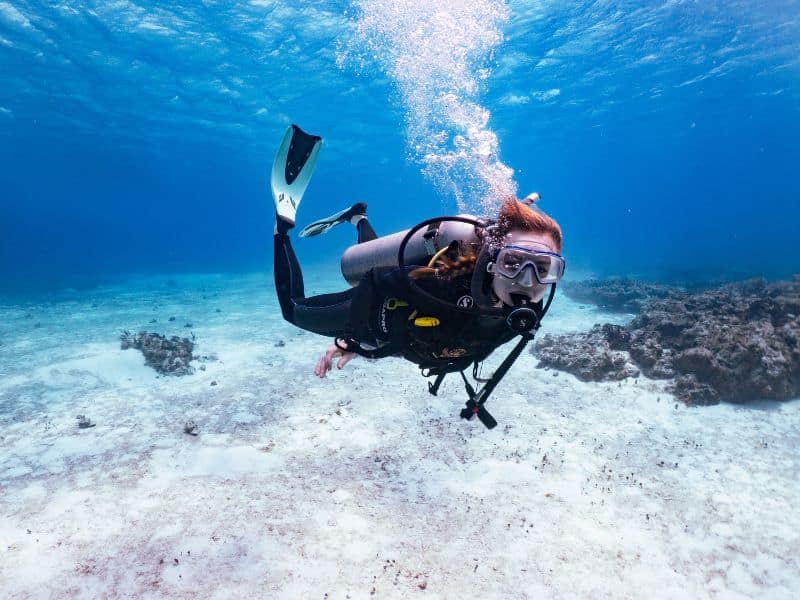
Underwater, your scuba diving apparel is your main defense against heat loss, stings, and chafing. Layer it like this, head to toe:

  • Neoprene hood: up to 40% of body heat loss happens through the head in cool water. Don’t skip it.
  • Rash guard or dive skin (base layer): flat-lock seams eliminate BCD strap chafing and make suiting up much easier.
  • Full wetsuit or drysuit: your main thermal insulation layer, chosen based on water temperature (more on thicknesses below).
  • Neoprene gloves: hand protection on entries/exits, plus some warmth in temperate water.
  • Neoprene dive booties: mandatory for open-heel fins, and they save your feet on hot sand, rocks, and boat ladders.

Quick myth check: wetsuits are NOT waterproof. They work by trapping a thin layer of water against your skin that your body then warms up. Only drysuits (and surface windbreakers) actually keep you dry.

7. What Scuba Diving Apparel to Put On After Your Dive

Here’s an underrated fact: more divers get cold during the surface interval than during the dive itself. Wind over wet skin equals evaporative cooling equals rapid heat loss, even in the tropics. Your recovery plan:

  • Take the suit off immediately. Peel it down to your waist or remove it entirely as soon as you’re back on the boat. Standing around in a wet suit in the wind is basically inviting a chill.
  • Dry off fast. A towel does more for your comfort right now than you’d think.
  • Put on a windproof layer. A fleece-lined boat parka (in cooler locations) or a windbreaker is one of the best pieces of scuba clothing you can own: it stops evaporative cooling cold.
  • Cover your head. A dry cap protects damp ears and scalp from the wind on the ride back.
  • Change into dry synthetic layers. Quick-dry shirts, shorts, or pants, never cotton (more on why below).


8. Thermal Matrix: What Scuba Clothing to Wear Based on Water Temperature

This is the table worth saving. Choose your suit based on actual water temperature at your maximum depth, not the surface reading.

Water Temperature Category What to Wear
Above 82°F (28°C) Tropical UPF rash guard, dive skin, or a 1.5–3 mm shorty wetsuit
75–81°F (24–27°C) Warm 3 mm full wetsuit with a rash guard base layer
68–73°F (20–23°C) Temperate 5 mm full wetsuit, neoprene vest, 3 mm booties, and a light hood
57–66°F (14–19°C) Cold 7 mm or semi-dry wetsuit, hood, gloves, and 5 mm booties
Below 57°F (14°C) Very Cold / Technical Drysuit with thermal undergarments and dry gloves


9. Drysuit Scuba Apparel 101 (When Things Get Serious)

Drysuit diving below 14°C isn’t just “wear a thicker suit.” It’s a full layering system, somewhat like winter mountaineering, but wet. Here’s the breakdown:

Layer 1: Base Layer (Moisture Management)

  • Its job: wick sweat and any minor leakage away from your skin.
  • Technology to know: fabrics with 3D wicking structures that trap a thin layer of air against the skin while pushing moisture outward; some even use antimicrobial silver ions, technology inherited from cave-diving expeditions.
  • Powerstretch-type fabrics (NASA-derived technology) keep insulating even if fully soaked by a suit leak, a huge safety factor in cold water.
  • Cotton is banned here. Period. It absorbs water, clings to skin, and actively conducts heat away from your body.

Layer 2: Insulating Mid-Layer (Trapping Air)

  • Compressed Thinsulate-type insulation absorbs less than 1% of its weight in water and holds its loft even under pressure at depth.
  • Continuous-filament synthetics (Climashield-type) flex in every direction, breathe well, and bounce back after repeated compression cycles.
  • Aerogel-panel systems are the luxury option: serious warmth with minimal added buoyancy, meaning less lead on your belt.

Layer 3: Active Electric Heating (For Real Cold)

  • Heated vests typically run around 55W at up to 12V, through a sealed bulkhead connector.
  • Built-in thermal safety switches cap internal temperature at around 45°C to prevent skin injury.
  • Flexible silicone wiring withstands constant bending without cracking or shorting out.
  • Batteries stay outside the drysuit, never inside the sealed volume, for safety.
scuba clothing (4) ropa de buceo

10. Pack Smart: Scuba Clothing for Popular Destinations

Overpacking bulky street clothes while underestimating your actual scuba diving apparel is divers’ #1 travel mistake. Here’s your destination cheat sheet:

Destination Water Temperature What to Pack
Caribbean & Bahamas 79–84°F (26–29°C) 2 UPF shirts, a 3 mm shorty or full wetsuit, a hardware-free swimsuit, and a lightweight windbreaker
Maldives (Liveaboard) 81–84°F (27–29°C) Full dive skin, dive leggings, 2 rash guards, and a quick-dry deck jacket
Red Sea 72–79°F (22–26°C) 5 mm full wetsuit, rash guard base layer, 3 mm hood, and an insulating boat parka
Indonesia / Coral Triangle 70–82°F (21–28°C) 3–5 mm wetsuit (depending on the season and dive sites), neoprene vest, and a 3–5 mm hood for thermoclines


General 7-day trip packing list: 2 long-sleeve rash guards, 2 swimsuits, 1 main wetsuit or dive skin, 1 pair of booties, 2 pairs of quick-dry shorts, and 1 windbreaker. Rotate your rash guards so one is always dry while the other dries out.

  • Cut cotton entirely. It holds water, dries slowly, and chafes under the BCD.
  • Roll your soft layers (rash guards, swimsuits, skins) inside your wetsuit legs to save space and protect your gear.
  • Choose multi-purpose pieces: swimsuits and UV shirts that work for both the boat and lunch on land.


11. Common Scuba Diving Apparel Mistakes (Don’t Be That Diver)

  • Cotton shirts on the boat: they soak up salt water, dry painfully slowly, and chill you fast once wet. Don’t even.
  • Swimsuits with metal hardware: back zippers, rings, or thick drawstrings dig in under the weight of the BCD and tank. Ouch.
  • Buying for looks instead of function: prioritize thickness and seam type (flat-lock or sealed) over the print.
  • Ignoring the size chart: scuba clothing should fit like a second skin. Too loose means cold water flooding your suit nonstop.
  • Skipping the hood in cool water: below 72ºF/ 22°C, without a hood you lose core heat fast through your head.
  • Standing around in a wet suit on deck: you’re basically asking to get chilled. Take it off, dry off, and layer up even if it’s just a windbreaker.


12. Frequently Asked Questions About Scuba Diving Apparel

What is scuba diving apparel?

It’s every specialized garment worn before, during, and after a dive, wetsuits, rash guards, dive skins, thermal undergarments, neoprene boots, hoods, gloves, and quick-dry boat wear, built for UV protection, thermal regulation, and marine safety.

What should I wear scuba diving?

A snug swimsuit or rash guard under an exposure suit matched to the water temp (dive skin, shorty, or full wetsuit), plus neoprene boots and open-heel fins. Add a hood and gloves in cooler water.

Can I wear a swimsuit under my wetsuit?

Yes, a snug, flat-front swimsuit with no bulky hardware works great. A thin rash guard on top helps even more, cutting chafing and making the wetsuit slide on easier.

Do I need specialized scuba clothing to start diving?

You can rent basic exposure suits when starting out. But owning your own rash guard, well-fitting swimsuit, and boots gets you better hygiene, sun protection, and comfort from day one.

Is scuba clothing waterproof?

Mostly no. Wetsuits, rash guards, and dive skins are designed to get wet, wetsuits actually work by trapping a thin water layer against your skin. Only drysuits and windproof surface jackets keep you fully dry.

What’s the difference between a rash guard and a wetsuit?

A rash guard is a thin synthetic shirt for UV protection and chafe prevention, minimal warmth. A wetsuit is thick neoprene foam built to trap and warm a layer of water for real thermal insulation.

How many scuba outfits should I pack for a 7-day trip?

Two rash guards, two swimsuits, one wetsuit or dive skin, one pair of boots, two pairs of quick-dry shorts, and one windbreaker. Alternate so something’s always dry.

Why does water cool your body faster than air?

Water conducts heat 20–27 times faster than air at the same temperature, thanks to its much higher thermal conductivity and heat capacity. That’s why even ‘warm’ water chills you over time.

Does staying cold really affect decompression sickness risk?

Yes. Cold-induced vasoconstriction that persists into your ascent and safety stop slows nitrogen clearance from your tissues, which raises DCS risk. Staying warm during ascent specifically matters.

Can I rent scuba clothing at dive shops?

Most shops rent wetsuits, shorties, and boots. Personal items like rash guards, swimsuits, dive skins, and post-dive wear are hygiene items you should bring yourself.

What’s the best scuba clothing for the Caribbean?

A long-sleeve UPF 50+ rash guard, a 3mm full wetsuit or shorty, snug flat-front swimwear, neoprene boots, and a light windbreaker for the boat.

The Bottom Line

Scuba diving apparel isn’t an afterthought; it’s a full system. Get your before-dive sun layer right, your during-dive thermal layer matched to the water, and your after-dive windproof layer ready to go, and you’ll dive longer, warmer, and way more comfortably. Your regulator keeps you breathing. Your scuba clothing keeps you diving.


PLAN YOUR DIVE TRIP
TO COZUMEL TODAY

Ready to visit the best dive sites in Cozumel?
Need more information about Cozumel dive spots?

WE ARE HERE TO HELP

contact

    I consent to receiving commercial communications and promotions from Dressel Divers.