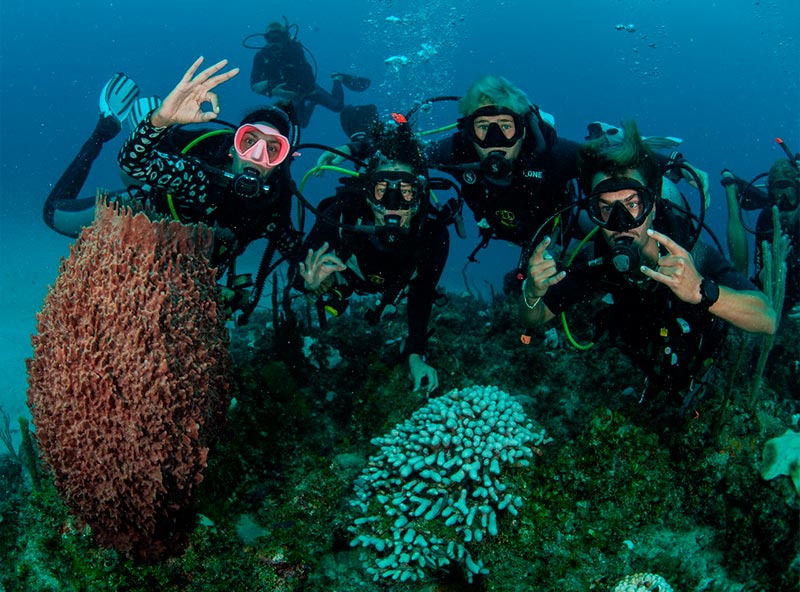
dive sites in Cozumel - dive spots in cozumel - sitios de buceo en cozumel
Best Cozumel Dive Spots: 15 Must-See Diving spots for Every Level
26/05/2026
Show all

Fish That Swim with Sharks: Why Some Fish Follow Ocean Predators

Title Fish That Swim with Sharks (12) Peces que nadan con tiburones Caption Description File URL: https://www.dresseldivers.com/wp-content/uploads/Fish-That-Swim-with-Sharks-12-Peces-que-nadan-con-tiburones.jpg Copy URL to clipboard Required fields are marked * Slide link Shortcodes Ultimate Use this field to add custom links to slides used with Slider, Carousel and Custom Gallery shortcodes Replace media Upload a new file To replace the current file, click the link and upload a replacement file. Remove background Remove background To remove the background, click the link. Imagify Optimizing... Set featured image

Quick summary: The fish that swim with sharks, mainly the remora (Remora remora), the pilot fish (Naucrates ductor), and the cleaner wrasse (Labroides dimidiatus), have developed symbiotic relationships of mutualism and commensalism with sharks. They get protection, transportation, and food; in return, they clean the shark’s parasites, skin, and teeth. An evolutionary alliance millions of years in the making that defies the ocean’s predator-eat-predator logic.

You know what sharks eat? Fish. So… why do some fish choose to swim with sharks?

Spoiler: it’s no accident. We’re talking about a survival strategy millions of years in the making.

Some fish spend their entire lives swimming with sharks. And the shark doesn’t just refrain from eating them, it actually tolerates them, even seeks them out. Why? Because it needs them.

Or more accurately: they need each other.

That, my friend, is what we call a symbiotic relationship with sharks. And it’s one of the most fascinating things happening beneath the surface.

Fish That Swim with Sharks - Peces que nadan con tiburones

1. What Fish Swim with Sharks?

Not just any fish dares to try. A select few have developed very specific evolutionary tricks.

The main ones are:

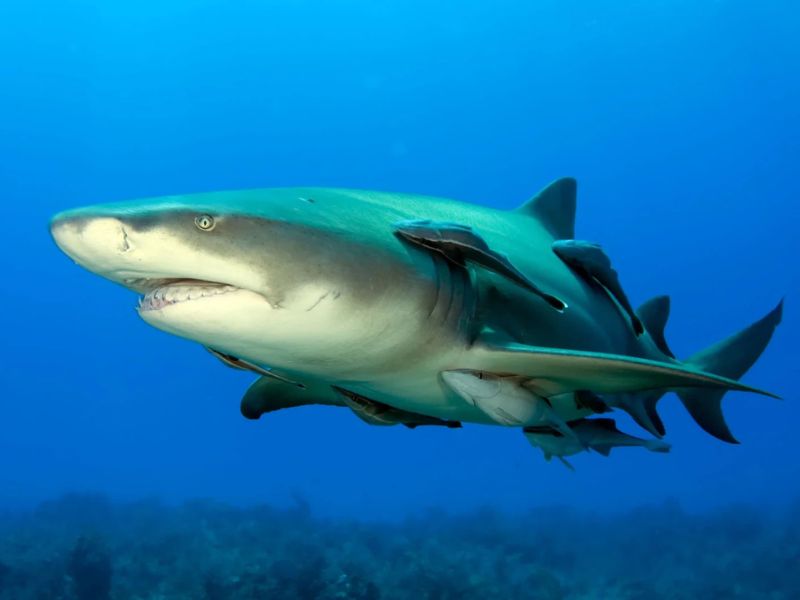
  • Remora, the ocean’s official hitchhiker. It literally attaches to the shark using a suction disc on its head.
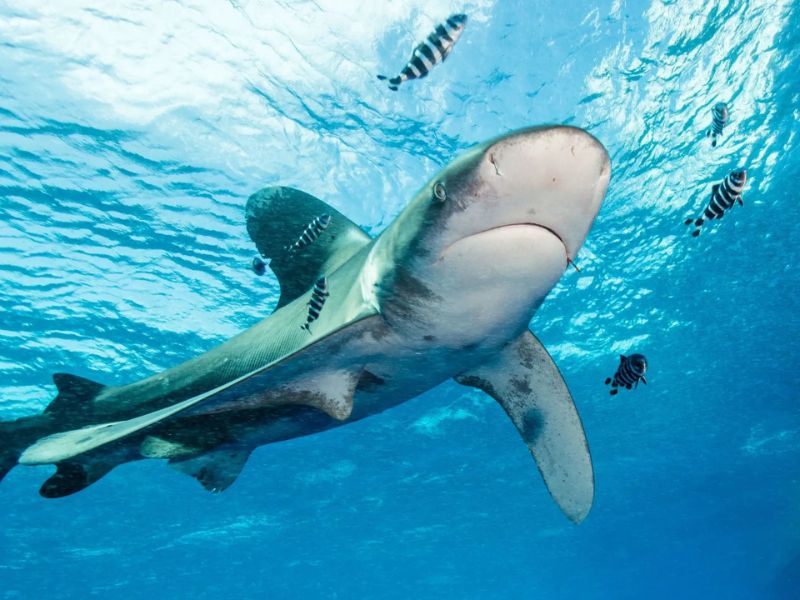
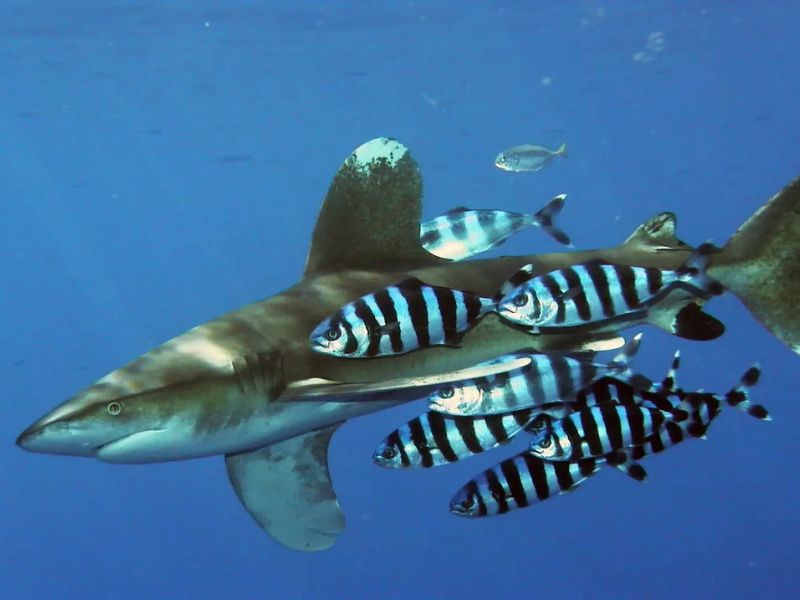
  • Pilot fish, swims in formation right in front of the shark’s snout, riding its pressure wave while barely burning any energy.
  • Cleaner wrasse, the reef’s dentist. It runs its own “cleaning station” and sharks’ line up to be serviced.
  • Jacks (trevally), predatory fish that use the shark as a shield while they hunt.
  • Baitfish, small schools that take shelter under the belly of sharks like the whale shark.

Each one has its niche. Nobody bothers anyone.

Common Name Family / Scientific Species Typical Size Primary Association Type Main Ecological Function
Remora (suckerfish) Echeneidae (e.g. Remora remora) 12–43 in Physical attachment via cranial suction disc Parasite removal, skin cleaning, scavenging food scraps
Pilot fish Carangidae (Naucrates ductor) 12–28 in Free-swimming within the shark’s boundary layer and bow wave Feeding on ectoparasites, mouth cleaning, scavenging
Cleaner wrasse Labridae (Labroides dimidiatus) 2–4 in Fixed cleaning stations; host-initiated visits General hygiene, skin cleaning, external parasite removal
Jacks / Trevally Carangidae (e.g. Caranx spp.) 12–39 in Dynamic formation around pelagic hosts Protection through shadowing, opportunistic hunting
Baitfish Various (e.g. Clupeidae) Under 6 in Tight grouping below or behind the host Predator protection and energy conservation


2. Why Do Fish Swim with Sharks?

The million-dollar question. Or better yet: evolution’s answer.

The open ocean is brutal. There’s nowhere to hide, no rocks, no caves, nothing.

So, what does a small fish do when it has no shelter?

It finds one with teeth.

The shark as a shield

It sounds crazy. But it works.

Mid-sized predators, barracuda, grouper, snapper, don’t go near a large shark.

So, if you’re swimming right next to one, you’ve got free bodyguards. The shark doesn’t eat you. And the ones that would eat you? They stay far away so they don’t get eaten themselves. Brilliant.

Free food

Sharks have terrible table manners. They tear into their prey, shaking it like a dog with a chew toy.

Result: chunks of protein scattered through the water. Feast time.

The fish that follow sharks simply collect the leftovers. No hunting. No energy burned. No risk.

Basically, a free catered meal.

Drafting behind a shark

Why do fish swim underneath sharks?

Because it’s like drafting behind a semi-truck on the highway.

The shark creates a moving water layer that travels with it. Fish that position themselves below or behind take advantage of that flow and use far less energy to swim.

The remora is a prime example. According to a computational fluid dynamics study published in Marine Engineering (Xu, 2022), the remora is a poor independent swimmer and relies on the shark to compensate for its low hydrodynamic efficiency. Alongside a shark, it can cross entire oceans with minimal effort.

The remora (Remora remora) actually can’t survive in still water, it needs water flowing over its gills to breathe. The shark’s constant movement solves that problem.

Fish That Swim with Sharks (9) Peces que nadan con tiburones

3. The Symbiotic Relationship Between the Shark and the Fish that Swim with

Not all relationships are equal. There are two main types:

Commensalism: one wins, the other doesn’t notice

This applies to more opportunistic fish. The fish benefits; the shark barely registers it.

Mutualism: both win

Shark + remora → a textbook symbiotic relationship.

  • The remora attaches to the shark. It eats its parasites, dead skin, and food scraps, and gets effortless swimming and breathing.
  • The shark gets clean, healthy skin, free of infection.
  • Both come out ahead.

How does the remora attach? With a suction disc on its head, literally a modified dorsal fin with lamellae that create a vacuum when slid backward. To detach, it slides forward.

Remoras don’t attach randomly. Nearly 40% attach to the belly, 27% to the back, and 20% to the pectoral fins, the zones with the least water resistance.

Shark + pilot fish, another mutualism classic

The pilot fish swims just ahead of the shark’s snout or alongside its fins, riding the pressure wave with minimal tail movement.

In return, it picks off parasites, and yes, it swims right into the shark’s open mouth to clean its teeth. Without getting swallowed or bitten.

Fun fact: when the pilot fish gets excited or stressed, its dark stripes disappear and it turns silver with three blue spots. This is believed to be a visual signal to communicate with the shark.

Shark + cleaner wrasse, running the reef spa

Something remarkable happens on coral reefs.

There are specific spots, “cleaning stations”, where sharks come to be groomed.

Reef sharks, nurse sharks, even whale sharks arrive at these stations and go still. They open their mouths. They open their gill slits. They adopt a completely relaxed posture.

And the tiny cleaner wrasses go to work.

They remove parasites. They eat dead cells. They clean the gills.

Why does this matter so much? Because those parasites are a serious problem. Some parasitic copepods latch onto the corneas of sharks like the Greenland shark and eat the eye tissue from the inside, leaving them nearly blind.

With a cleaning station: problem solved.

The wrasse eats well. The shark sees well. Everyone’s happy.


4. Will a Shark Eat the Fish Swimming with It?

Usually, no.

Sharks have complex brains. They recognize their companions. The calm, non-threatening, predictable behavior of pilot fish and remoras suppresses the shark’s predatory response.

The shark understands that keeping them alive is worth it.

That said, there are exceptions. Bull sharks and lemon sharks have been observed eating remoras during feeding frenzies. And if a fish gets in the way of an active feeding event… tough luck.

But these are rare cases. In general, this truce has been working for millions of years.

Fish That Swim with Sharks (6) Peces que nadan con tiburones

5. Shark vs. the Fish That Swim with It: Key Differences

Sharks are fish. But they’re very different from the rest.

The core biological differences:

  • Skeleton, Bony fish have bones. Sharks have cartilage, lighter, more flexible, more agile.
  • Swim bladder, Bony fish use one to control buoyancy. Sharks don’t have one. Instead, they have an enormous liver packed with squalene oil that can make up 25–30% of their total body weight.
  • Gills, Bony fish have a single gill opening covered by the operculum. Sharks have 5–7 exposed gill slits with no cover. Some must keep swimming to breathe (ram ventilation); others have spiracles to breathe while still.
  • Reproduction, Bony fish release thousands of eggs into the water. Sharks invest far more: internal fertilization, few offspring, highly developed at birth. Quality over quantity.
Feature Bony Fish (Osteichthyes) Cartilaginous Sharks (Chondrichthyes)
Skeleton Hard, calcified bone Flexible, lightweight cartilage
Buoyancy organ Gas-filled swim bladder Large liver with low-density squalene oil
Gill protection Single bony cover (operculum) Five to seven exposed gill slits, unprotected
Skin and scales Flat, overlapping scales (cycloid or ctenoid) Sharp dermal denticles, essentially tiny teeth (placoid scales)
Reproduction Mainly external fertilization (egg-laying) Internal fertilization; viviparous, oviparous, or ovoviviparous
Pectoral fin use Highly flexible; allow backward swimming Rigid, wing-shaped; generate lift, no backward swimming


6. Where to Dive with Sharks and See Their Fish Companions

Reading about this is one thing. Seeing it in person is something else entirely.

Playa del Carmen and Cozumel, Mexico

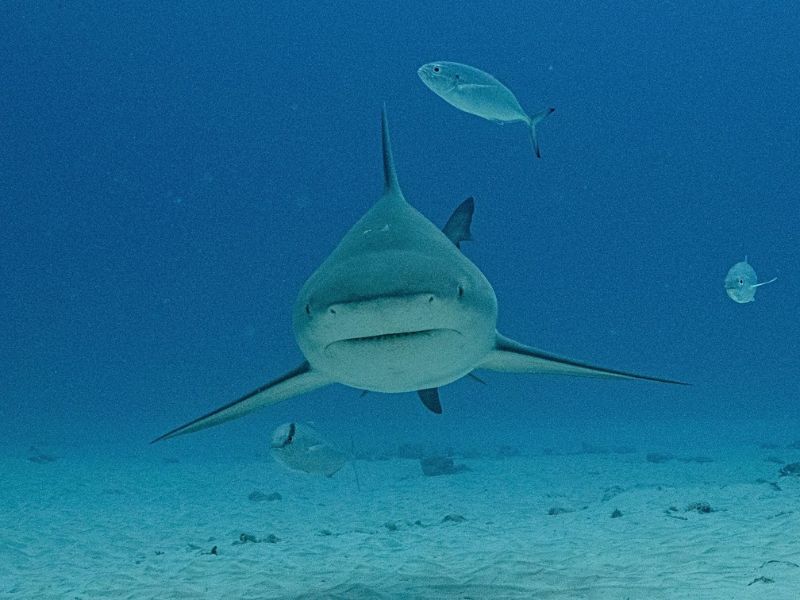
In Playa del Carmen, from November through March, female bull sharks migrate to these warm, shallow waters.

Divers descend to 65–100 feet, kneel on the sand, and watch the sharks pass just feet away.

Clinging to their bellies and flanks: remoras. Moving with them. Adjusting position with the current.

Tiger Beach, Bahamas

About 18 miles off the western tip of Grand Bahama. Crystal-clear water just 25–40 feet deep.

Tiger sharks up to 15 feet. Lemon sharks. Reef sharks. All at once.

The tiger shark’s dark stripes, surrounded by a halo of schooling jacks. Remoras detaching briefly to grab a scrap of food, then snapping back into place.

You can photograph it all from arm’s length.

The Maldives

In the South Ari Atoll, plankton-rich currents attract migrating whale sharks.

Swimming alongside one is like swimming next to a city bus with fins.

Out in front of its snout: pilot fish in formation, riding the pressure wave. Along its sides: schools of blue-striped snapper using its massive shadow as a shield. And at nearby cleaning stations: manta rays waiting calmly while wrasses clean their teeth.

7. Frequently Asked Questions about Fish That Swim with Sharks

Can sharks survive without the fish that swim with them? Yes. Cleaner fish are beneficial but not essential for survival. However, in reef ecosystems, sharks can accumulate more parasites without these cleaning interactions, which may shorten their lives.

What happens if a remora detaches from a shark? The remora looks for another host, or swims independently and feeds on plankton and small particles until it finds another animal to attach to.

Do all sharks have companion fish? No. It’s more common with large pelagic sharks such as tiger sharks, whale sharks, oceanic whitetips, and some reef sharks.

Are pilot fish loyal to one shark? Not permanently, but they can stay associated with the same shark for a long time if it provides enough protection and food.

Can remoras attach to divers? Yes, remoras can approach and briefly attach to diving gear. They’ve been known to stick momentarily to wetsuits, tanks, or exposed skin out of curiosity or confusion.

What’s the difference between a remora and a pilot fish? Remoras physically attach to the shark via suction. Pilot fish swim freely around the shark without any physical contact.

Are remoras parasites or helpers? Primarily commensal or mildly mutualistic. They benefit more from the relationship, though they do provide some cleaning service.

Which sharks have the most remoras? Tiger sharks, whale sharks, bull sharks, reef sharks, and great white sharks.

What predators eat remoras? Large fish, sea lions, and occasionally other sharks can prey on remoras when the opportunity arises.

Do remoras attach only to sharks? No. They also attach to whales, manta rays, sea turtles, dolphins, and even boats.

Can fish that swim with sharks predict their behavior? Experienced divers sometimes read the companion fish’s behavior as an indirect indicator of the shark’s movement or activity level.

Do sharks “communicate” with pilot fish? Not in any human sense. Their interactions are primarily behavioral and instinctive, not intentional communication.

Does climate change affect fish that swim with sharks? Yes. Reef degradation and rising water temperatures can disrupt cleaning stations and reduce the biodiversity that makes these interactions possible.

Conclusion

The ocean’s governing rule isn’t only survival of the strongest.

There are also systems of alliances, deals, and evolutionary compromises that have been working for millions of years.

The remora that attaches to a shark isn’t brave or stupid. It’s evolutionarily smart.

The pilot fish that swims into the open mouth of an oceanic whitetip isn’t crazy. It has an agreement.

And that agreement, cleaning in exchange for protection, transportation in exchange for hygiene, is one of nature’s most elegant examples of doing what it does best:

Finding the most efficient solution possible, even when it looks completely insane.

PLAN YOUR DIVE TRIP
TO COZUMEL TODAY

Ready to visit the best dive sites in Cozumel?
Need more information about Cozumel dive spots?

WE ARE HERE TO HELP

contact

    I consent to receiving commercial communications and promotions from Dressel Divers.