3. Why Does the Spotted Drum Move Like That?
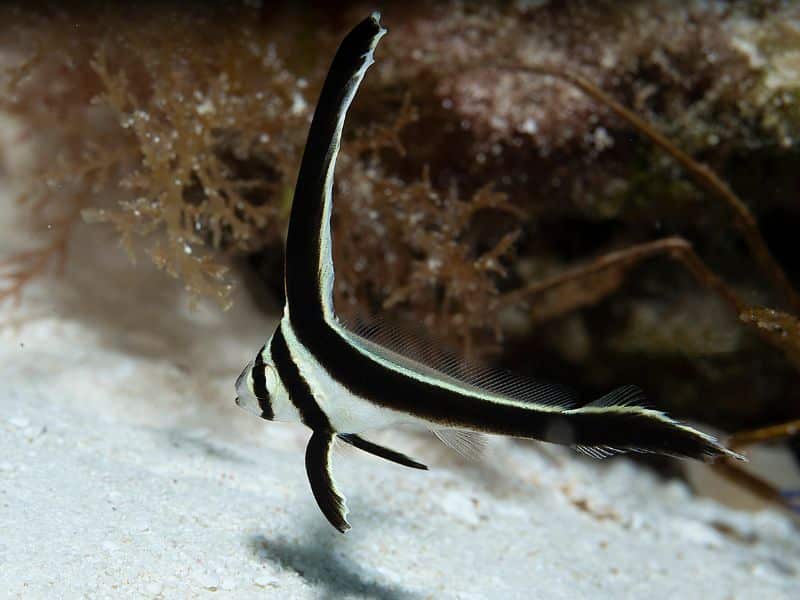
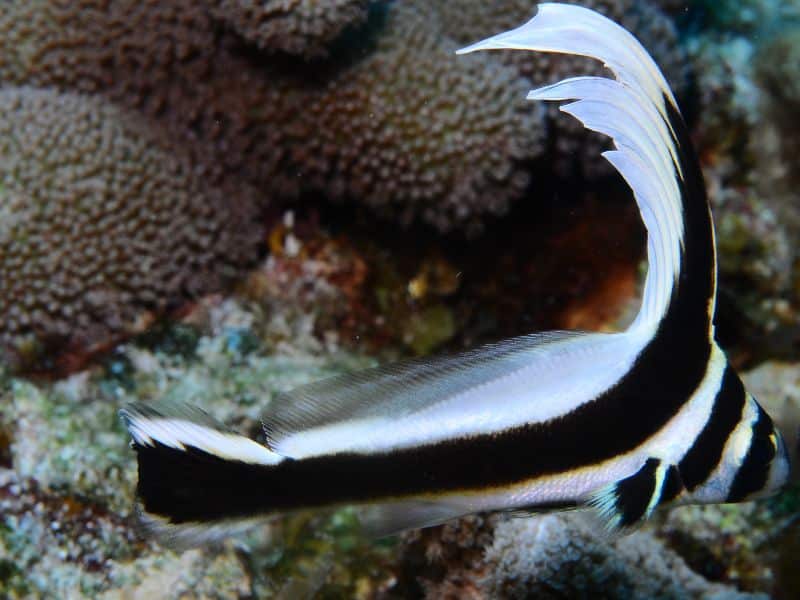
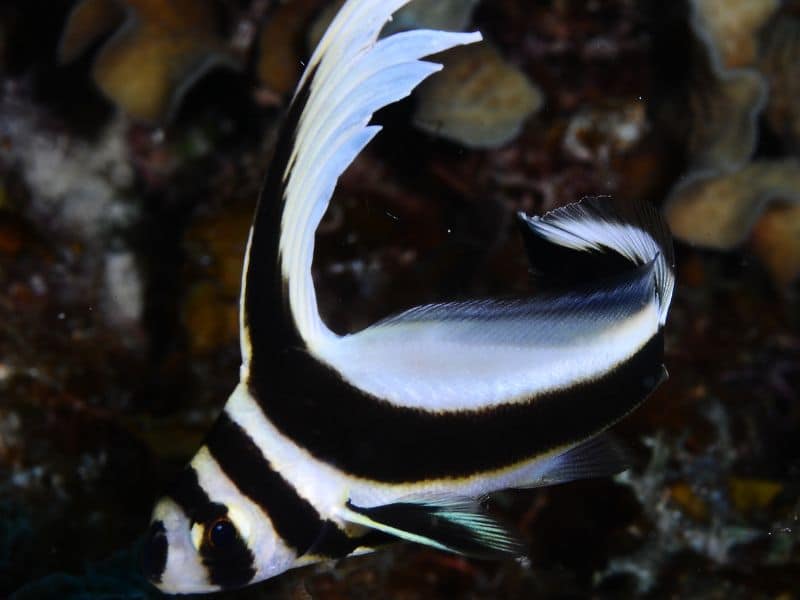
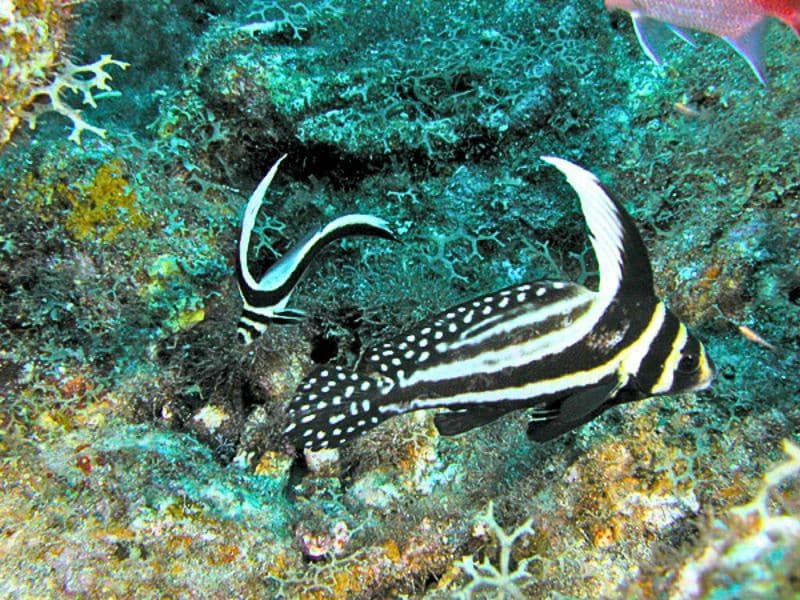
It’s the first question anyone asks when they see it for the first time. That slow, ribbon-like undulation. Almost ceremonial. It doesn’t look like a fish swimming. It looks like something else entirely. And that’s exactly the point.
The juvenile spotted drum doesn’t move that way by accident. It’s a finely tuned survival strategy.
Batesian Mimicry
The most widely accepted explanation is Batesian mimicry. By waving its long black-and-white fins in that erratic, repetitive pattern, the juvenile spotted drum fish closely resembles polyclad flatworms and certain nudibranchs, organisms that are toxic or simply taste terrible to predators.
On a reef where something is always trying to eat you, looking like something dangerous is one of the best defenses a small, vulnerable fish can have. No spines. No venom. Just a very convincing performance.
Disruptive Coloration
The black-and-white pattern does something else too. In the dappled light and shadow beneath coral overhangs, those bars break up the fish’s silhouette. A predator struggles to read its shape or predict which way it’s going to move next.
And the constant fin motion creates visual noise that confuses the lateral-line sensors of nearby predators. Essentially, it messes with their heads.
Common identification mistake: first-time divers regularly mistake a juvenile spotted drum for a flatworm, a nudibranch, or even a piece of floating debris. If you see something black-and-white undulating slowly near a coral crevice, look closer. You might be looking at one of the reef’s most sought-after sightings.
4. Where Can You See a Spotted Drum While Diving?
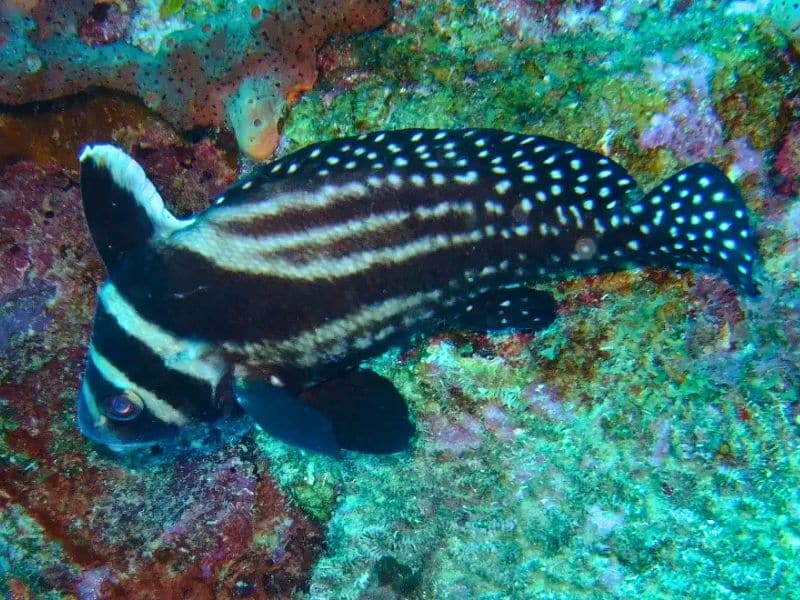
The spotted drum is not an open-water fish. You won’t find it cruising in the blue. It lives inside the reef itself, in caves, under overhangs, and at the base of large coral heads. It’s a specialist. It doesn’t wander far from home.
Geographic Distribution
The Caribbean drum fish ranges from southern Florida and the Bahamas, through the Gulf of Mexico and the entire Caribbean Sea, down to the northern coast of Brazil. It inhabits reef environments from 3 to 30 meters deep. Juveniles tend to show up in the shallower end of that range.
5. Best Places to See a Spotted Drum in the Caribbean
Cozumel, Mexico
Cozumel’s patch reefs — Palancar, Yucab, Tormentos — are world-famous for their healthy spotted drum fish populations. Juveniles are regularly found in shallow reef sections between 20 and 39 feet (6–12 meters), making them accessible to recreational divers and even snorkelers in some spots. Visibility is outstanding year-round. Best season: November through May.
Bayahibe, Dominican Republic
Sites like Catalina Wall offer ideal environments full of crevices where juveniles like to shelter. Experienced local guides often know the exact location of specific individual fish.
Depth: 16–39 ft (5–12 m).
Visibility: 49–82 ft (15–25 m).
Bonaire and Curaçao
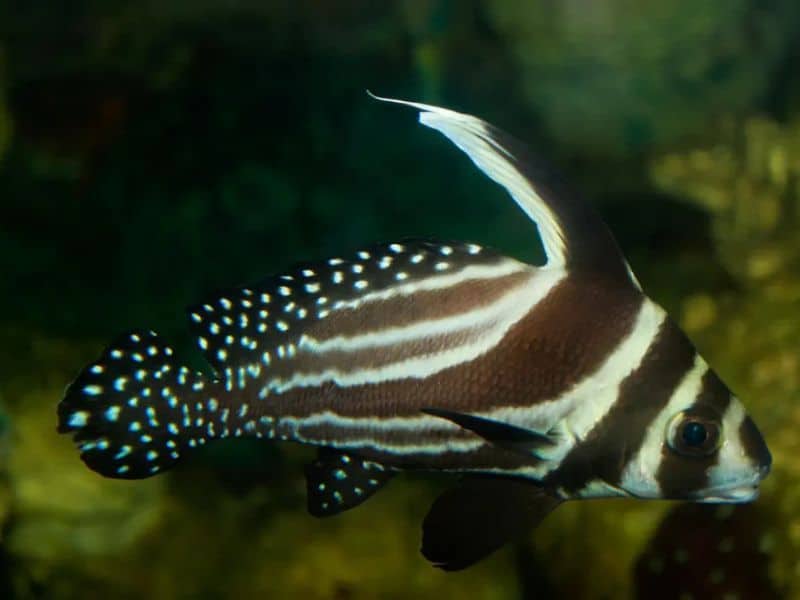
The coral walls and rocky overhangs of these islands are prime territory for adult spotted drum, which prefer the deeper, shadier sections of the fore-reef between 39 and 82 feet (12–25 meters). Easy shore diving access makes these islands particularly good for patient, go-at-your-own-pace observation.
Pro tip: before you get in the water, ask your dive guide whether they know a specific spotted drum location. These fish are highly territorial and can stay in the same crevice for weeks or even months at a time. Local guides often track individual fish. That one question can be the difference between seeing one and missing it entirely.
How to Find One on Any Reef
- Look in crevices and under overhangs, not in open water
- Juveniles prefer shallow, shaded reef patches (6–12 m)
- Stay completely still when you spot one and let it resume its pattern
- Never chase it. It will retreat into the deepest crevice and hide
- If it disappears and your group’s progress allows it, wait 2 or 3 minutes in the same spot. Curiosity often wins.