Find a Dive Buddy with Dressels
How to Find the Perfect Dive Buddy and Never Dive Alone Again
27/04/2026
Show all

Scuba Diving Etiquette: The Complete Guide to Diving Right

Scuba Diving Etiquette (5) etiqueta en el buceo

Let’s be honest for a second.

Most divers think scuba diving etiquette is about being polite. Saying “after you” before jumping off the boat. Not hogging the rinse tank. That kind of thing.

Wrong.

Scuba diving etiquette is the full behavioral system that keeps you — and everyone around you — safer and having a good time underwater. We’re talking safety protocols, how you interact with marine life, how you move as a group, how you handle your gear. All of it.

It’s not optional. It’s not “nice to have.” It’s the difference between a dive that runs like clockwork and one that turns into a underwater circus.

Here’s the uncomfortable truth: the Divers Alert Network (DAN) has found that a huge chunk of diving incidents aren’t caused by equipment failure. They’re caused by people failure — bad communication, losing track of your buddy, skipping the pre-dive briefing because you’ve done it a thousand times. You know, human stuff.

So whether you just got your Open Water card last weekend or you’ve been logging dives since before some of your instructors were born, this guide is for you.

Because knowing how to dive right isn’t just about skill. It’s about being the kind of diver that guides, crew, and fellow divers actually want in the water with them.

Let’s get into it.

Scuba Diving Etiquette (1) etiqueta en el buceo

1. Why Scuba Diving Etiquette Matters

Scuba diving has almost zero room for “Oops!” Surface too fast? You can’t undo that. A current? There’s no pause button.

That’s exactly why diving etiquette isn’t a list of polite suggestions — it’s the operational backbone that keeps a group of humans breathing at depth.

Here’s what good etiquette actually does: it reduces the mental load on every diver in the water.

When everyone uses the same signals, keeps predictable spacing, and follows the agreed ascent plan, nobody has to waste brainpower guessing what the person next to them is about to do. The group becomes more aware, emergencies get handled faster, and everyone surfaces smiling.

And for anyone who thinks this only matters in extreme conditions… Please, think twice!

In drift diving destinations like the Caribbean, the Red Sea, or Southeast Asia, air consumption affects the whole group’s dive time — which is why communicating your pressure early gives the guide the flexibility to manage the plan properly for everyone.

One diver who swims ahead of the guide breaks the visual chain and suddenly he could become a search-and-rescue problem.

Three things that proper etiquette consistently delivers:

  • Greater safety for the diver,
  • Respect for the reefs,
  • and a smooth operation that the guides and team enjoy managing.

Remove etiquette, and see how risk increases for everyone in the water. Simple as that.

Scuba Diving Etiquette, Group Experience and Reputation

The diver who ignores briefings, invades others’ space, and kicks up clouds of sediment like an excavator ends up being quietly known for poor diving etiquette—and their reputation suffers.

But beyond reputation, there’s a more immediate impact: the disruptive diver makes the dive worse for everyone.

Poor buoyancy? The ten divers behind you are now diving in a silt cloud.

Ignoring air protocols? The guide ends the dive early for the entire group.

Chasing marine life? That encounter is now gone for everyone else who was patiently watching.

Proper diving etiquette is, at its core, just respect for the people sharing the water with you. Nothing more complicated than that.

Scuba Diving Etiquette (6) etiqueta en el buceo

2. 10 Golden Rules of Scuba Diving Etiquette


Rule 1: Master Your Buoyancy — This Is Non-Negotiable

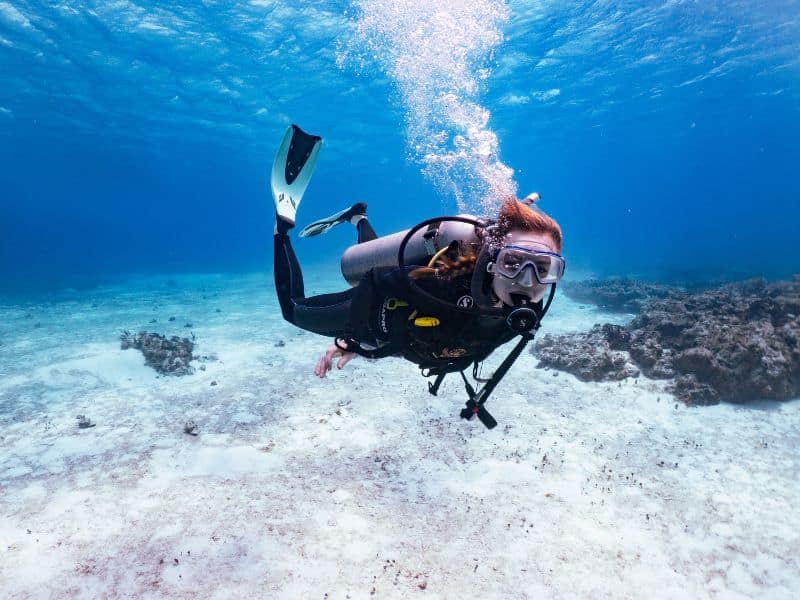
If there’s one skill that separates a genuinely competent diver from someone who simply passed an exam, it’s buoyancy. Period.

Poor buoyancy makes you a rude diver (the opposite of good diving etiquette). You’re touching coral. Stirring up sediment. Burning twice as much air because you’re constantly compensating. And none of that is good news for the people diving around you.

What does good buoyancy look like in practice?
• Neutral at your intended depth without constantly adjusting your BCD,
• a horizontal position that minimizes drag,
• and smooth depth changes controlled by your breathing.

Until that becomes completely automatic, treat every dive as a buoyancy practice session. No shame. The best divers still do.

Rule 2: Respect Personal Space Underwater

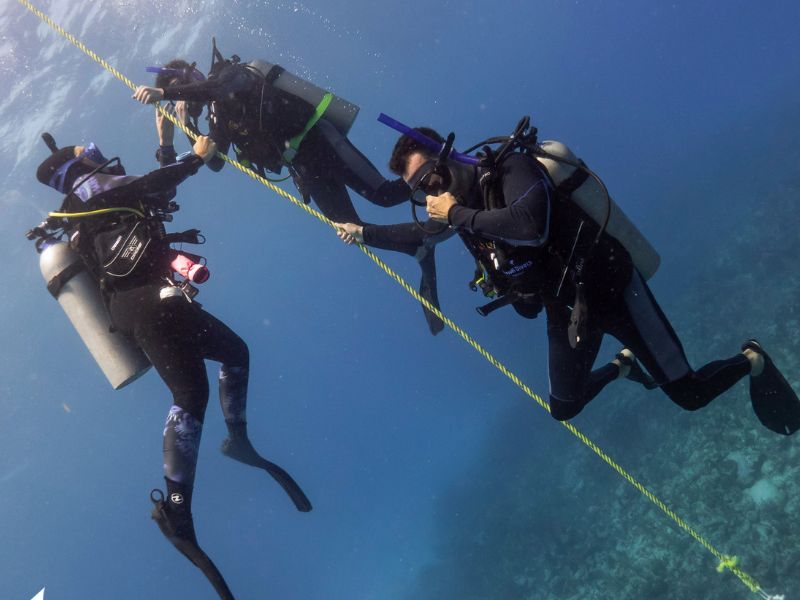
People need room underwater. Not just for comfort — for safety.

Every diver needs enough clear space to check their instruments, react to changing conditions, and move without colliding with the person next to them.

A practical rule of diving etiquette: keep roughly 1.5 to 2 meters (about 5 to 6.5 feet) of distance between divers under normal conditions. Increase that distance in currents or low visibility.

Special mention for underwater photographers: if you see a diver who has positioned themselves and is clearly waiting for a shot — a macro subject, a shy reef fish, a sleeping turtle — give them a wide berth. Seriously, just go around.

Swimming between a photographer and their subject after they’ve spent a while setting it up is the underwater equivalent of walking in front of someone’s camera at a wedding. Don’t be that person.

Rule 3: Always Follow the Dive Guide

The dive guide is not your personal tour operator. They are the safety officer for the entire dive.

They know the site. They know where the current goes. They know where the boat is positioned, what other groups are in the water, and what conditions have changed since the morning briefing.

When they signal to turn around, you turn around, not because they’re being authoritative, but because they’re working with information you probably don’t have.

Following the guide means staying behind or beside them, signaling clearly before changing position, and trusting their timing on depth and ascent even when you personally feel like you could stay longer.

Your comfort level is just one variable in a much bigger equation.

Rule 4: Environmental Protection: Take Nothing, Leave Nothing

Here’s something worth tattooing on the inside of your mask:

Zero impact. Always.

No touching. No collecting. No chasing. No disturbing anything — not the coral, not the fish, not the sandy bottom. Nothing.

This isn’t tree-hugger poetry. It’s basic ecology. Coral grows at roughly 0.5 to 2 centimeters per year (about 0.2 to 0.8 inches per year). One careless fin strike can destroy a structure that took decades to build.

And this doesn’t apply only to coral, it also applies to marine life.

If you see a turtle, a reef shark, or a shy octopus and you don’t respect its space, you’re not experiencing a connection with nature. You’re stressing an animal, forcing it to expend energy escaping from what it perceives as a threat.

If you feed them, you disrupt their feeding patterns, rest cycles, and natural behaviors. That is a long way from proper diving etiquette.

There’s also a very practical argument here: healthy reefs generate billions of dollars in dive tourism every year. The stunning sites you travel across the world to dive exist because previous divers protected them.

Rule 5: Maintain Proper Air Awareness

Air management is a group issue, not a personal metric.

The standard in most recreational operations: signal your pressure at 100 bar, 70 bar (half tank), 50 bar, and at whatever turn pressure the guide set. The biggest mistake divers make here is waiting too long to report low air, sometimes because the dive feels great and it’s hard to interrupt that; but early communication is always the right call.

Here’s the math: a diver who signals at 30 bar has forced a rushed ascent on everyone. A diver who signals at 70 bar has given the guide full flexibility to manage the plan properly. Reporting early isn’t weakness; it’s good operational behavior. The dive ends better for everyone.

Rule 6: Stay With the Group at All Times

Separation is one of the most common precursors to serious diving incidents.

In a drift dive, a separated diver can travel a significant distance in minutes. This is exactly what the buddy system and group formation are designed to prevent.

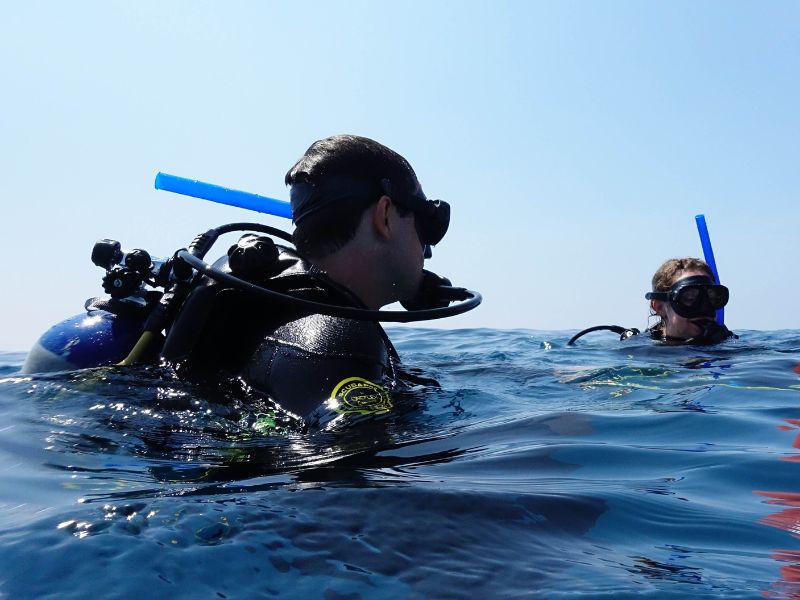
If you lose visual contact with the group: ascend to shallower depth, deploy your SMB, surface if needed. Don’t keep searching at depth. Up is the right direction when you’re lost.

Rule 7: Dive Boat Etiquette Starts Before You Enter the Water

Most organizational failures happen on the boat, not underwater.

The diver who boards the boat and then spends twenty minutes fumbling with their gear has already affected everyone else’s dive.

Good boat etiquette means arriving on time with your equipment organized, keeping your gear within your assigned space, and being fully set up and ready before the boat reaches the dive site.

Dive boats run on timing that accounts for current windows, tidal conditions, and other groups in the water. One diver who delays entry by five minutes can cost everyone the best window of the day. That’s a lot of weight on one person’s disorganization.

Rule 8: Listen Carefully During Dive Briefings

The dive briefing is the most information-dense five to ten minutes of your entire dive trip.

Entry and exit procedures. Site layout. Depth limits. Current direction. Hazards. Emergency protocols. Surface plan. All of it, delivered once, before you go underwater where nobody can hear you ask questions.

The standard is simple: sit down, be quiet, and pay attention. Don’t set up your gear during the briefing. Don’t have side conversations. And if something isn’t clear, ask at the end—on the boat, out loud, anywhere the guide can answer you.

A question asked is infinitely better than a misunderstanding proven at 25 meters (about 82 feet).

Rule 9: Enter and Exit the Water Efficiently

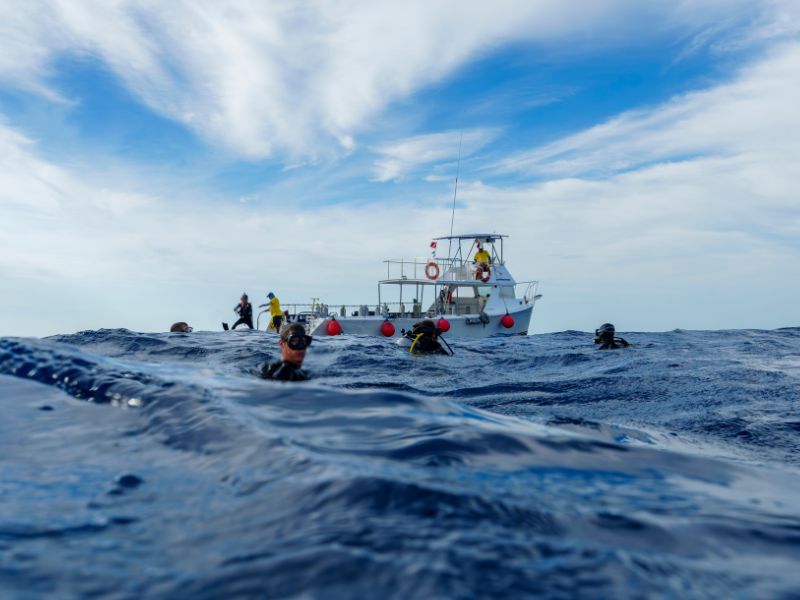
Entry delays leave divers floating in current while they wait for the group to assemble. A smooth exit keeps the ladder clear for everyone, especially those who’ve had a big dive and are ready to get back on board.

The drill: be fully ready before your spot in the entry queue, enter cleanly, and move immediately to the assembly point. On exit, fins come off before the ladder, equipment goes to the crew, and you clear the exit zone the moment you’re aboard.

Nobody’s asking you to rush. Just move clear of the ladder promptly so everyone can get back on board comfortably.

Rule 10: Respect the Dive Crew

The captain, divemaster, and crew are the operational foundation of every dive trip. Without them, none of this works.

Respecting them isn’t complicated: follow their instructions without argument, keep your gear organized in ways that make their job easier, use designated areas for rinsing and smoking, and accept that their operational decisions come from experience and site knowledge you likely don’t have yet.

A crew that isn’t being micromanaged or argued with runs a tighter, safer, more enjoyable operation. That efficiency flows directly to everyone on board.


Scuba Diving Etiquette (8) etiqueta en el buceo

3. Dive Boat Etiquette: Where Most Divers Fail

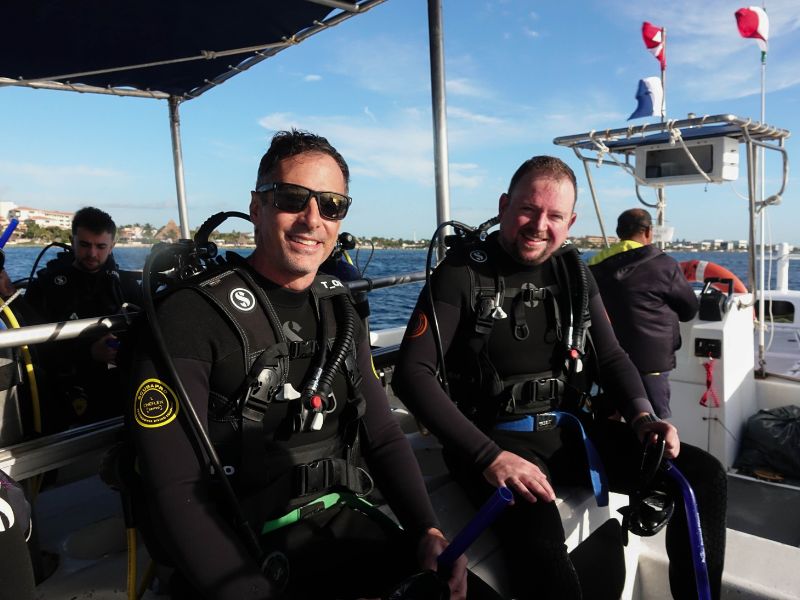
The dive boat is a small, shared, moving operational space. It has limited room, shared equipment, and zero tolerance for chaos.

Equipment discipline: Your gear lives in your assigned area. Not spread across the communal deck. Not propped against someone else’s tank. A cylinder left in a walkway on a moving boat isn’t an inconvenience — it’s a genuine tripping hazard.

Entry and exit management: Be ready before your turn. Move immediately once you’re in the water. Remove fins before the ladder on exit. Hand gear to crew rather than wrestling it up yourself. Clear the exit zone as soon as you’re aboard. These aren’t fussy rules — they’re the difference between a smooth operation and someone getting hurt.

Shared space awareness: Every square meter of deck is shared. Wet gear creates slip hazards. When the sea state changes, hold on to something fixed and be aware of who’s moving around you. A lurching boat plus an unaware diver plus a loose tank is a bad combination.


4. Common Mistakes That Identify Bad Divers

Experienced guides can read a diver within the first ten minutes. Here’s what they’re looking for, and what gives people away:

  • Coral contact through fin strikes or uncontrolled descents.
  • Surfacing without signaling buddy or guide.
  • Waiting until critically low pressure to report air.
  • Using the guide as a personal spotter or dedicated photographer.
  • Projecting experience that isn’t backed up by actual behavior.
  • Excessive tank banging for non-emergency communication.

The fundamental mistake is thinking that your own comfort or curiosity is more important than that of the group.

That way of thinking is strictly contrary to diving etiquette.


5. Advanced Diving Etiquette (Pro-Level Behavior)

Advanced divers don’t just monitor themselves — they run a continuous background scan of the entire group.

They’re tracking relative positions, reading behavioral cues that suggest stress or disorientation, watching how the current is shifting, and positioning themselves to be genuinely useful. It’s a qualitatively different level of awareness.

On air consumption: at the advanced level, gas management stops being a personal metric and becomes a team variable. Technical divers plan every dive around gas thirds — one third in, one third out, one third held in reserve for emergencies. That reserve isn’t paranoia. It’s the operational cushion that keeps a problem from becoming an incident.

Situational awareness expands too. Where a recreational diver monitors their own depth, pressure, and buddy, an advanced diver runs a continuous background scan of the entire group — tracking relative positions, reading behavioral cues that suggest stress or disorientation, and watching how current and visibility are shifting.

Communication at this level is precise, pre-agreed, and rehearsed before the dive — not improvised underwater. In technical, cave, or rebreather diving, an ambiguous signal in the wrong moment can turn a manageable situation into an emergency. The habit of clear, standardized communication starts at recreational level. That’s exactly when it should be built.

The governing philosophy is simple: every diver should be ready to assist any other diver, at any moment, without hesitation. Not as a hypothetical. As the actual standard.

Scuba Diving Etiquette (4) etiqueta en el buceo

6. When Not to Dive: Improving Safety Through Proper Decisions

This doesn’t get talked about enough.

Every certified diver has the absolute right to abort or cancel a dive — before entry, during descent, at depth, or mid-ascent — without needing to justify it to anyone. That right is not a social option. It’s a safety principle the entire diving community is obligated to support, without pressure and without judgment.

Equally important: no diver should ever pressure another diver to enter the water or continue a dive when that diver has expressed hesitation. Ever. Full stop.

The pre-dive self-check: Am I physically well today? Did I sleep properly? Am I nervous about conditions I’m not trained for? Have I had alcohol in the last 12 hours? Is my equipment functioning and familiar?

These aren’t bureaucratic questions. They’re the guardrails that prevent the category of incident DAN describes as “diver exceeded personal limits.”

Entering a compromised state means you’ve reduced your safety to a level that technique and etiquette alone cannot fully recover.


7. FAQ: Scuba Diving Etiquette

What is scuba diving etiquette?

It’s the complete set of behavioral standards that govern how divers act underwater and on dive boats — safety protocols, environmental interaction, boat discipline, and communication between divers, guides, and crew. Not optional. The operational framework that makes shared diving safer and sustainable.

What happens if you violate scuba diving etiquette?

It ranges from social consequences (reputation damage, losing access to advanced dives) to physical ones (increased incident probability from poor buoyancy or air mismanagement) to environmental ones (reef degradation, long-term site damage). Violations tend to cluster — one usually signals several more.

What’s the difference between dive etiquette and dive safety rules?

Safety rules are formal protocols from certification agencies — depth limits, ascent rates, no-decompression limits. Etiquette is the behavioral layer that makes those rules functional in a group: spatial awareness, communication habits, environmental respect, operational discipline. Rules define the technical limits. Etiquette is how disciplined divers operate within them.

What does diving etiquette say about tipping the staff?

Tipping varies significantly by region. In the U.S., the Caribbean, and Mexico, it is almost expected (it often forms part of the income), and the guideline is around $5–$10 USD per tank, or 15–20% of the charter cost. In the Red Sea, “baksheesh” is part of the culture; around €50–€100 per week on a liveaboard is commonly suggested. In Australia and Europe, tipping is not expected and is seen more as a bonus for exceptional service, such as buying the crew a round of drinks.

Is it acceptable to use the tank valve to dry the regulator cap?

No. This is considered irritating and poor etiquette for two reasons: the sudden loud noise is disruptive to everyone on deck, and technically it can damage equipment or force particles into the regulator.

Can I share the exact location (geotagging) of my photos on social media?Modern conservation-minded diving etiquette discourages precise geotagging, especially for sensitive species or “hidden gems.” Posting exact locations can lead to the “Instagram effect”, which stresses local wildlife, damages habitats through increased traffic, and can even assist illegal collectors. It is recommended to tag only the general region or state.

How long can I stay in front of an animal if I’m a photographer?If you found the animal yourself, you can spend as much time as you want. However, if the dive guide pointed it out, unwritten etiquette suggests limiting yourself to about one minute or three shots if other divers are waiting. You should always give priority to non-photographers so they can also observe before the animal becomes disturbed.

What should I do if I don’t feel comfortable diving but the rest of the group is ready?You should cancel the dive immediately. The golden rule is that any diver can cancel any dive at any time for any reason (fear, cold, ear issues, or simply “not feeling it”). A good buddy will always respect this decision; anyone pressuring you to dive against your will is considered unsafe.

Can I overtake other divers inside a wreck or cave?
You should never overtake other divers in an overhead environment unless it is an emergency or pre-planned. Physical contact or congestion in tight spaces can trigger claustrophobia or panic in less experienced divers. Respect the line and wait until open water before changing position.


Final Thought

The truly capable diver isn’t defined by depth records, air consumption stats, or the number of dives in their logbook.

They’re defined by this: when they’re in the water, things are calmer. The guide is less stressed. The group is more cohesive. The marine life is undisturbed. And the dive ends exactly the way it was planned.

Respect the ocean. Respect the group. Dive with intention. Follow scuba diving etiquette to the letter.

CONTACT US FOR
PERSONALIZED ASSISTANCE

Ready to improve your dive skills?
Need more information about the next certification level?

WE ARE HERE TO HELP

contact

    I consent to receiving commercial communications and promotions from Dressel Divers.