Back-Inflate BCDs (1) Chaleco de inflado trasero
Back-Inflate BCDs: Benefits, Comparisons, and Top Picks
28/01/2026
Neutrally buoyant (5) flotabilidad neutra
Neutral Buoyancy: The Skill That Will Change the Way You Dive
04/02/2026
Show all

Protect the Ocean: How Your Diving Can Save the Seas

protect the ocean - salvar los océanos

Loving the sea is not limited to gazing at it in awe, even when submerged within it. Loving the sea can also be about protecting the ocean.

This article is about that: how we, too, can protect the ocean, because the ocean is alive. Fill your world with colors, fish, and corals. And it depends on you to keep it that way more than you think. Every dive can be more than just observing. It can be an act that makes a difference.

You don’t need to be a scientist. You don’t need to wait for anyone. Every dive, every gesture, counts toward protecting the oceans. Yes, you can also do something to save our oceans. You just need to decide to start.

This article shows you how. From cleanups to sustainable dives. From volunteering to citizen science. All with one goal: to leave the sea better than you found it with every dive.

No excuses. Just action.

1. Why Protecting the Oceans Is Crucial

To answer this question, I’m not going to give you the typical documentary-style lecture that puts you to sleep on the couch. If you want to understand why protecting the oceans is crucial, you need to look at the numbers and the reality that most people prefer to ignore.

  1. The World’s Lungs Are Not Green, They’re Blue
    Many people think oxygen comes from forests. Wrong. If you want to breathe, you should thank the ocean.
  • More than 50% of the planet’s oxygen is produced by marine phytoplankton.
  • Every other breath you take is thanks to the ocean.
  • If we fail to protect the oceans, we are literally putting the air we breathe at risk.
  1. The Global Thermostat
    The ocean is Earth’s air conditioner. It absorbs 90% of the excess heat generated by carbon emissions and captures a third of the carbon dioxide we release into the atmosphere.
    Protecting the oceans, in reality, means protecting ourselves.
  2. A Global Supermarket
    One billion people rely on the ocean for their primary source of protein.
  • We’re not just talking about “going out for sushi.”
  • We’re talking about global food security.
  • When we work to save the seas, we are ensuring that millions of people can feed themselves.
  1. The Invisible Economic Engine
    The value of the ocean’s key assets is estimated at 24 trillion dollars. If the ocean were a country, it would be the seventh-largest economy in the world. From diving tourism to shipping routes, everything depends on our ability to protect the oceans.
  2. Nature’s Greatest Pharmacy
    The ocean is the new frontier of medicine. Many breakthroughs against serious diseases come from marine organisms that we are just beginning to understand.
  • Research: Compounds in sponges and corals have been discovered with anti-inflammatory and anti-tumor properties.
  • The opportunity: By protecting the oceans, we are keeping “the pharmacy of the future” open. Every species we care for is a potential life-saving medicine tomorrow.
  1. A Boost for Well-Being and Mental Health
    There’s something called the “Blue Mind.” Science has shown that being near, on, or under water lowers cortisol and increases dopamine.
  • Connection: The ocean is where we disconnect from digital chaos to reconnect with what really matters.
  • Saving our seas ensures that future generations will have this peaceful refuge to relieve the stress of modern life.
  1. The Stage for the Most Incredible Experiences
    If you dive, you know it. Nothing on land compares to the weightlessness and the explosion of colors in a healthy reef.
  • Beauty: Protecting the ocean ensures that the show goes on. It’s choosing tourism as a force for good, where your visit helps that underwater garden continue to thrive.
  • Protecting the oceans is, essentially, conserving the planet’s most spectacular playground.
  1. Resilience and Abundance
    Nature is incredibly generous when we give it some help. When we create marine protected areas or decide to save the ocean, life returns at astonishing speed.
  • Overflow effect: Fish multiply so much that they “spill over” outside protected areas, helping local communities.
  • It’s a virtuous cycle: if we take care of the ocean, the ocean gives us back double in resources and beauty.
protect the ocean - 3 - salvar los océanos

2. How Divers Can Help Protect the Ocean

If you truly care about protecting the ocean, there are real ways to make a difference. Your time is valuable. When you invest it in ocean protection, its impact multiplies.

This is the fun part. Forget fear-based speeches. Helping the ocean is actually one of the most rewarding things you can do as a diver. It makes you a better diver, a better observer, and above all, it gives you an incredible sense of purpose.

Why Most People Fail When Trying to Protect the Ocean

The problem is that we’ve been sold the idea that protecting the ocean is as simple as using paper straws. It’s not. The ocean is still in danger while you struggle with a straw that falls apart in your mouth.

Real ocean protection requires action.

Here are 10 concrete actions to help as an ocean protector, without losing your smile.

  1. Master Your Buoyancy (The Art of Touching Nothing)
    It sounds basic, but it’s the number one action. A diver who kicks the bottom with their fins or rests on coral for a photo can destroy years of growth in a single second. Perfect buoyancy control is one of the most effective ways to protect the ocean.
  2. Collect “Souvenirs” That Don’t Belong There
    Always carry a mesh bag in your BCD pocket. If you see fishing line, a bottle, or plastic, pick it up. If every diver removed just one piece of trash on every dive, the impact would be massive. That’s saving our seas in action.

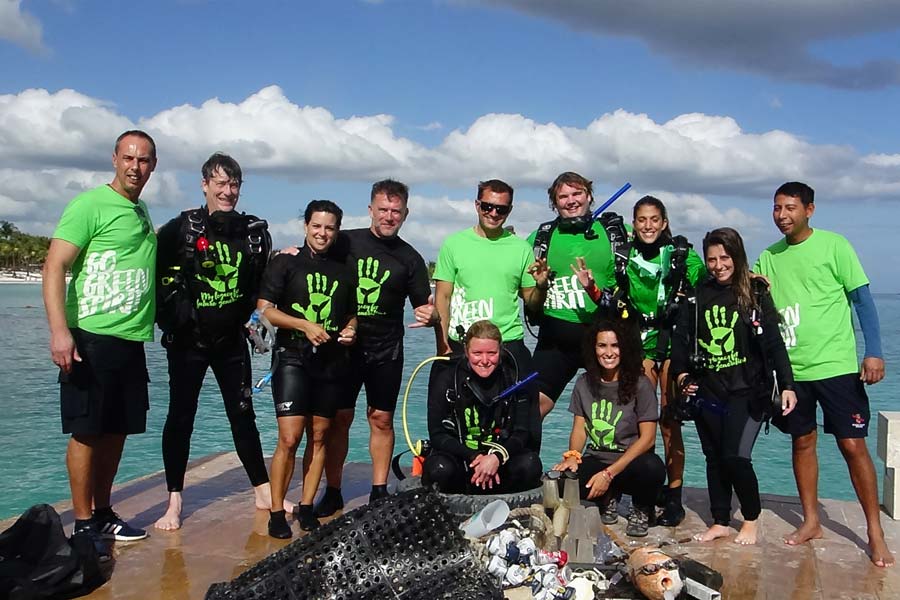
Another way to do this is by participating in reef and beach cleanups.
It’s not glamorous. It’s simple. Removing bags, bottles, and nets from the water. Every piece of plastic you remove is a win. This is saving our seas in its purest form.

  • Find local cleanup events.
  • Bring your gear and your motivation.
  • Every piece of plastic you remove is a victory.

Don’t wait for others to do it. Change starts with you.

  1. Say No to Chemical Sunscreens
    Many sunscreens contain oxybenzone, which is toxic to coral reefs. Switch to reef-safe, mineral-based brands (zinc or titanium). It’s a small gesture with a huge impact on ocean protection.
  2. Don’t Feed or Touch Marine Life
    Aggressive interaction or feeding animals alters their natural behavior and disrupts the ecosystem’s balance. Being an ocean protector means observing without interfering. The best interaction is the one that leaves no trace.
  3. Stop Just Looking, Start Counting
    Recreational diving is great. But diving to protect the ocean through citizen science is on another level.

Species identification. Coral monitoring. Data that scientists use to make real decisions. You can be an observer and a protector at the same time.

  • Apps and platforms like iNaturalist or Reef Check.
  • Report sightings in real time.
  • Participate in local coral and fish monitoring projects.

Monitoring reefs isn’t just helpful; it’s what allows organizations focused on saving our seas to gather real data and pressure policymakers. Without data, there is no ocean protection.

  1. Volunteer With Environmental Organizations
    Join the ocean protectors. There are dozens of environmental protection organizations that need hands, eyes, and passion.
  • Marine species monitoring.
  • Educational campaigns in schools and communities.
  • Participation in conservation projects.
  1. Report Illegal Activities
    If you see poaching, anchors dropped on coral, or illegal dumping, report it to authorities or your dive center. Your voice is the only one those living underwater have to help save our oceans.
  2. Practice Responsible Consumption of Marine Resources
    Making sustainable choices about the fish and shellfish we consume is critical. More than 3 billion people worldwide depend on the ocean as their main source of protein.

Some apps can help you determine whether the seafood you eat is sustainably sourced.
Choose small, mature fish, and avoid large species, which are more vulnerable to overfishing.
Opt for locally sourced seafood whenever possible.

  1. Demand Ocean Protection Through Your Vote
    “The good man is the friend of all living things.” , Gandhi

The people who represent us politically have the power to amplify your personal impact on ocean protection. Supporting environmentally committed policies is a way to speak up for our oceans.


protect the ocean - 2 - salvar los océanos

3. Frequently Asked Questions about Ocean Protection

  1. Why is protecting the ocean important for humans?
    It is vital because the ocean generates 50% of the oxygen we breathe and absorbs excess heat from the atmosphere. Without proper ocean protection, the climate balance would be disrupted, affecting our health, the air we breathe, and global food security.
  2. How can I help save the seas from home?
    You do not need to be at the beach to be an ocean protector. You can reduce the use of single-use plastics, consume seafood with sustainable fishing certifications, and reduce your carbon footprint. Every small action contributes to long-term ocean protection.
  3. What do organizations do to protect the environment?
    Organizations dedicated to environmental protection work on the creation of marine protected areas, the restoration of coral reefs, and advocacy in international policies to curb plastic pollution and overfishing.
  4. What is the most effective way to protect oceans today?
    The most effective approach is a combination of government policies, such as creating marine sanctuaries, and responsible consumption. As a citizen, supporting the circular economy and environmentally conscious companies is key to ocean protection.
  5. What does it mean to be an “Ocean Protector”?
    An ocean protector is anyone who makes conscious decisions to minimize their impact on the marine ecosystem. In the diving world, this means mastering buoyancy, not touching marine life, and participating in citizen science projects to save the ocean.
  6. How does climate change affect ocean protection?
    Climate change causes ocean warming and acidification, which leads to coral bleaching and alters migratory routes. That is why protecting the ocean today necessarily involves fighting global warming and protecting ecosystems that absorb CO₂.
  7. Can I participate in programs to save the sea without being a diver?
    Many projects to save the sea take place along the coast, such as beach cleanups, environmental education programs in schools, or volunteer work to protect sea turtle nesting sites.
  8. What is regenerative diving and how does it help protect the ocean?
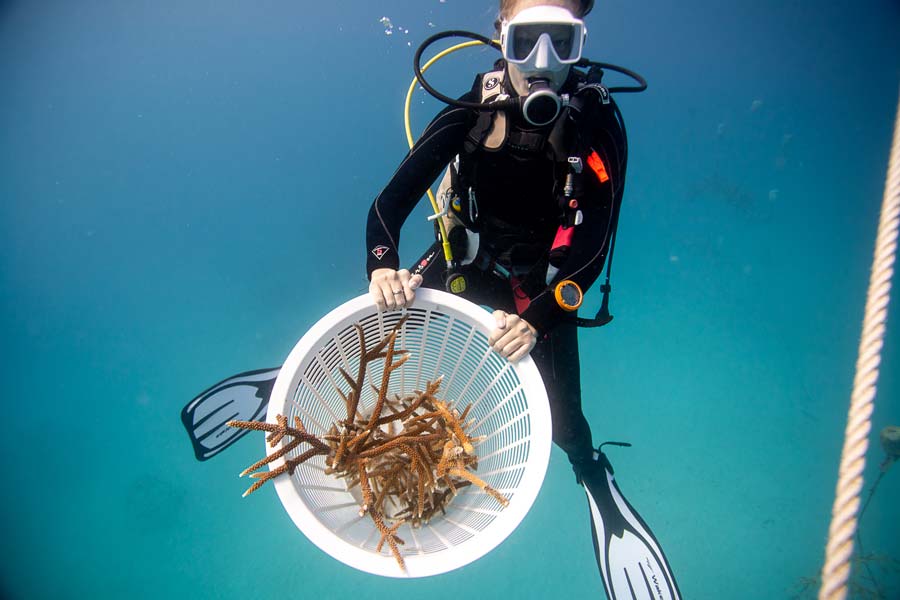
    Unlike traditional diving, regenerative diving aims to leave a place better than how you found it. It includes activities such as removing ghost fishing gear or planting corals, making it a fundamental tool to save the seas.
  9. Why is the ocean called the lungs of the planet?
    This is due to phytoplankton, marine microorganisms that perform photosynthesis. By protecting the ocean, we ensure that these organisms continue transforming CO₂ into the oxygen we need to live.
  10. What advice is there for tourists who want to save the ocean?
    If you travel, choose tour operators with sustainable certifications, use biodegradable sunscreen that does not harm coral reefs, and avoid buying handicrafts made from shells or starfish. Ocean protection begins with ethical tourism.
protect the ocean -4 - proteger el océano

At this point, you have two options.

The first is to close this tab, forget everything you’ve read about protecting the ocean, and carry on as if nothing happened.

The second is to accept that, now that you know how to save the oceans, you have the tools to make a difference.

Being an ocean protector is a silent commitment that happens every time you adjust your mask. It is deciding that you will protect the ocean by mastering your buoyancy, reporting what you see, and choosing committed dive centers like those of Dressel Divers.

See you down there, making every bubble count to protect the ocean.