Scuba Kit (1) kit de buceo
Scuba Kit: What Is It and What Does It Include?
22/09/2026
Show all

All the Shark Names: Species, Photos, and Identification Guide

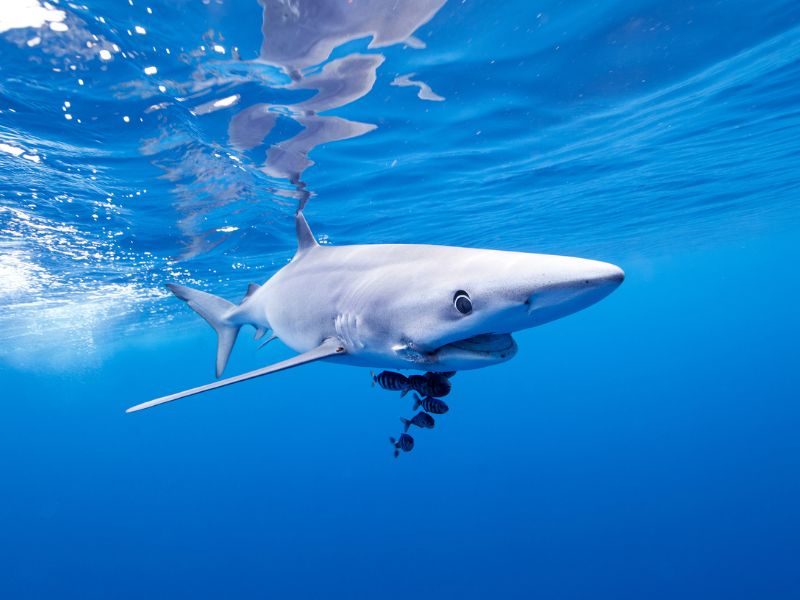
All the Shark Names - blue (2)

You’ve surely seen a shark swim past you at some point and thought: “okay, but WHAT is that?” And it’s also a safe bet that you’ve seen fish you didn’t know were sharks. That happens too. You’re not the only one.

From gentle giants like the whale shark to hammer-headed oddities and striped tigers of the sea, sharks come in wildly varied shapes, sizes, and personalities.

There are more than 500 known species out there. Some are famous. Others are unknown.

This guide is your one-stop shop for finding all the shark names you’ve been searching for. Names, photos, sizes, habitats, and the exact traits to look for to really identify what you saw.

We’ll also tell you where enthusiasts dive to come face to face with these animals (safety protocols in diving, respectful of both animals and divers 😉).

Ready? Let’s meet the sharks.

All the Shark Names - tigre

1. Quick Answer: What Are the Names of Sharks?

Sharks include more than 500 recognized living species, spread across eight taxonomic orders. The best-known names include the Great White Shark, the Whale Shark, the Tiger Shark, the Bull Shark, the Scalloped Hammerhead Shark, the Nurse Shark, the Caribbean Reef Shark, the Mako, the Basking Shark, the Lemon Shark, and the Oceanic Whitetip Shark.

A note before we dive in: no one has a perfectly fixed “final number” of shark species. Scientists keep finding new species in deep water, and genetics keeps reshuffling the family tree. So, treat any figure as a rough estimate, not an absolute truth.


2. All the Shark Names: Complete List of Species

Let’s start with the main characters. This table is your cheat sheet: common name, scientific name, family, size, where they live, and how easy they are to recognize and identify in the water.

Shark Name Scientific Name Size Habitat ID Difficulty
Whale Shark Rhincodon typus 26–39 ft (8–12 m) Open tropical ocean Very easy
Great White Shark Carcharodon carcharias 11–17 ft (3.5–5.2 m) Temperate coasts Moderate
Bull Shark Carcharhinus leucas 7–11 ft (2.1–3.4 m) Estuaries and rivers Moderate
Tiger Shark Galeocerdo cuvier 11–14 ft (3.25–4.2 m) Coastal and pelagic tropics Easy
Caribbean Reef Shark Carcharhinus perezi 6.5–8 ft (2–2.5 m) Coral reefs Moderate
Scalloped Hammerhead Sphyrna lewini 8–10.5 ft (2.5–3.2 m) Coasts and seamounts Easy
Great Hammerhead Sphyrna mokarran 11.5–15 ft (3.5–4.5 m) Reefs and channels Easy
Nurse Shark Ginglymostoma cirratum 7–9 ft (2.1–2.7 m) Shallow reefs and sand Very easy
Lemon Shark Negaprion brevirostris 8–10 ft (2.4–3.1 m) Mangroves and reefs Moderate
Mako Isurus oxyrinchus 6.5–10.5 ft (2–3.2 m) Open blue water Moderate
Basking Shark Cetorhinus maximus 20–28 ft (6–8.5 m) Temperate continental shelf Very easy
Oceanic Whitetip Carcharhinus longimanus 6–10 ft (1.8–3 m) Open sea Easy
Silky Shark Carcharhinus falciformis 6.5–8 ft (2–2.5 m) Open ocean and reef edges Difficult
Blacktip Reef Shark Carcharhinus melanopterus 3.5–5.5 ft (1.1–1.6 m) Reef flats and lagoons Easy
Whitetip Reef Shark Triaenodon obesus 4–5.5 ft (1.2–1.6 m) Reef caves and overhangs Easy
Sand Tiger Shark Carcharias taurus 6.5–10.5 ft (2–3.2 m) Reefs and wrecks Very easy
Pelagic Thresher Alopias pelagicus 10–12.5 ft (3–3.8 m) Oceanic drop-offs Easy
Epaulette Shark Hemiscyllium ocellatum 2.3–3 ft (0.7–0.9 m) Tide pools and reefs Very easy
Tawny Nurse Shark Nebrius ferrugineus 7.5–10 ft (2.3–3 m) Indo-Pacific reefs Easy
Goblin Shark Mitsukurina owstoni 10–13 ft (3–4 m) Deep continental slopes Very easy

3. Shark Names from A To Z

Want the complete list? Here’s an A-to-Z directory with all the shark names you’ll likely encounter, from the well-known to the downright strange.


Letter Shark Names
A Angelshark, Australian Blacktip Shark, Atlantic Sharpnose Shark, Angular Rough Shark
B Basking Shark, Blacktip Shark, Blacktip Reef Shark, Bull Shark, Blue Shark, Bonnethead Shark, Bali Catshark
C Caribbean Reef Shark, Cookiecutter Shark, Copper Shark
D Dusky Shark, Deepwater Spiny Dogfish, Daggernose Shark
E Epaulette Shark
F Frilled Shark, Freshwater River Shark
G Great White Shark, Great Hammerhead, Galapagos Shark, Goblin Shark, Greenland Shark, Ganges Shark
H Horn Shark, Honeycomb Izak, Hooded Carpet Shark
I Indo-Pacific Leopard Shark
J Japanese Bullhead Shark
K Kitefin Shark
L Lemon Shark, Longfin Mako, Leopard Shark
M Megamouth Shark, Milk Shark
N Nurse Shark, Night Shark, New Caledonia Catshark
O Oceanic Whitetip Shark, Ornate Wobbegong
P Pelagic Thresher, Porbeagle, Port Jackson Shark
R River Sharks
S Scalloped Hammerhead, Silky Shark, Shortfin Mako, Sandbar Shark, Smooth Hammerhead
T Tiger Shark, Thresher Shark, Tawny Nurse Shark, Tope Shark
V Velvet Belly Lanternshark
W Whale Shark, Whitetip Reef Shark, Wobbegong
Z Zebra Shark

4. All The Most Famous Shark Names and Their Photos

A name is fine. A name with a face is far more useful. Here are in-depth profiles of the sharks divers ask about most, with the exact traits to look for underwater.


Whale Shark

Rhincodon typus

All the Shark Names - whale-shark
Size 26–39 ft average (up to 62 ft / 18.8 m recorded)
Habitat Tropical and warm-temperate open oceans, coastal feeding bays
Diet Plankton, krill, fish larvae, small schooling fish
How to identify it Huge flat head, mouth spanning the whole snout, spotted pattern over a dark gray back
Where divers see it Isla Mujeres, Holbox, and Cozumel (Mexico), Ningaloo Reef, Maldives, Galapagos
Fun fact That gigantic body runs on an esophagus barely a few inches wide.

Great White Shark

Carcharodon carcharias

All the Shark Names - great white shark
Size 11–17 ft average, up to about 20 ft
Habitat Coastal and offshore waters, temperate and subtropical
Diet Seals, sea lions, large fish, other sharks
How to identify it Torpedo-shaped body, dark gray on top and clean white below with a sharp dividing line, large serrated teeth
Where divers see it Guadalupe Island (Mexico), southern Australia, Gansbaai (South Africa)
Fun fact Its electroreceptors can detect charges as tiny as a billionth of a volt.

Bull Shark

Carcharhinus leucas

Size 7–11 ft
Habitat Shallow coasts, estuaries, river mouths, and even freshwater rivers
Diet Fish, rays, smaller sharks, turtles
How to identify it Stocky, muscular body, short wide snout, no ridge between the dorsal fins
Where divers see it Playa del Carmen (Mexico) in winter, Bat Islands (Costa Rica), Beqa Lagoon (Fiji)
Fun fact Thanks to special kidneys, it can swim hundreds of miles upriver, as in the Amazon or Mississippi.

Tiger Shark

Galeocerdo Cuvier

All the Shark Names - tiger shark
Size 11–14 ft, sometimes over 18 ft
Habitat Coastal and pelagic waters, tropical and warm-temperate
Diet Almost anything: turtles, fish, marine mammals, sea snakes
How to identify it Wide, square snout, dark vertical stripes (more pronounced in juveniles)
Where divers see it Tiger Beach (Bahamas), Fuvahmulah (Maldives), Hawaii
Fun fact It’s the ocean’s ultimate scavenger — literally not picky at all.

Caribbean Reef Shark

Carcharhinus perezi

All the Shark Names - caribbean reef shark
Size 6.5–8 ft
Habitat Coral reefs and drop-offs of the tropical western Atlantic
Diet Reef fish, octopus, squid, crustaceans
How to identify it Sleek gray-brown body, underside of fins dark (not pure black), visible ridge between dorsals
Where divers see it Cozumel, Playa del Carmen, Bahamas, Belize, Jamaica, Dominican Republic
Fun fact It’s a creature of habit: it often stays on the same patch of reef for years.

Scalloped Hammerhead

Sphyrna lewini

All the Shark Names - Scalloped Hammerhead (2)
Size 8–10.5 ft
Habitat Coastal-pelagic zones, continental shelves, seamounts
Diet Pelagic fish, squid, octopus, rays
How to identify it Arched hammer-shaped head with a central notch, tall curved first dorsal fin
Where divers see it Galapagos, Cocos Island (Costa Rica), Malpelo (Colombia), Red Sea
Fun fact They gather in schools of hundreds during the day, then split off to hunt alone at night.

Nurse Shark

Ginglymostoma cirratum

All the shark names - nurse shark
Size 7–9 ft
Habitat Shallow reefs, sand channels, mangrove lagoons
Diet Lobsters, crabs, octopus, sea urchins
How to identify it Flat head, sensory barbels near the nostrils, small eyes, calm demeanor
Where divers see it Mexico, Belize, Jamaica, Dominican Republic, Florida
Fun fact It suctions prey out of coral crevices with very powerful suction.

5. Which Shark Did You See? Quick ID Guide

You’ve just finished a dive, adrenaline’s still pumping, and you have one big question: “what was THAT?” Let’s figure it out together. Start with size. Then head shape. Then fins. And finally, markings. In that order.

Identify sharks by size

  • Giant and slow (over 20 ft): Whale Shark, if it’s tropical and surface-feeding by filtering. Basking Shark, if the water is cold and it’s swimming with its mouth wide open.
  • Large predators (10–17 ft): Great White Shark (white belly, dark back), Tiger Shark (vertical stripes), or Great Hammerhead (huge, curved dorsal fin).
  • Medium reef sharks (5–8 ft): the classics divers see most: Caribbean Reef, Bull, Lemon, Nurse.
  • Small and hidden (under 4 ft): Whitetip Reef, Blacktip Reef, Epaulette Shark, Bamboo Shark.

Identify sharks by head shape

  • Hammer-shaped: it’s a hammerhead. Straight front edge? Great Hammerhead. Notch in the middle? Scalloped Hammerhead. Smooth curve, no notch? Smooth Hammerhead.
  • Short, wide, and blunt: the unmistakable signature of the Bull Shark.
  • Flattened with barbels: Nurse Shark, guaranteed.
  • Pointed, torpedo-shaped snout: think Great White or Mako.

Identify sharks by fins and markings

  • Rounded dorsal fin with a bright white spot on the tip: Oceanic Whitetip.
  • Two dorsal fins of nearly identical size: Lemon Shark or Nurse Shark.
  • Tail that’s basically a long whip: Thresher Shark, no question.
  • Marked black tips on all the main fins: Blacktip Reef Shark.


6. Types of Sharks: The Major Groups

“Types of sharks” can mean two things: scientific families, or simply the popular groupings divers use. Here are both, kept simple.

Hammerhead sharks (Sphyrnidae) That sideways head isn’t just for looks: it improves maneuverability, widens the field of vision, and adds more electroreceptors for locating buried rays. Includes the Scalloped Hammerhead, the Great Hammerhead, the Smooth Hammerhead, and the small Bonnethead.

Requiem sharks (Carcharhinidae) The classic “shark-shaped shark.” Round eyes, two dorsal fins, built for moving through coasts and open ocean. This family includes the Bull Shark, the Caribbean Reef Shark, the Tiger Shark, the Oceanic Whitetip, the Silky Shark, the Lemon Shark, and the Blacktip Reef Shark.

Lamniform sharks (Lamniformes) Many of them can warm their own blood above the water temperature, letting them thrive in cold seas. Includes the Great White Shark, the Mako, the Basking Shark, the Sand Tiger Shark, and the Thresher Sharks.

Carpet sharks (Orectolobiformes) Mostly bottom-dwellers or filter feeders, with small mouths and barbels on the snout. This group ranges from the giant Whale Shark to the calm Nurse Shark, including Wobbegongs and Epaulette Sharks.

Deep-water sharks and dogfish (Squaliformes) Cold, deep, and rarely seen by humans. Cylindrical bodies, short snouts, defensive spines. Includes the Dogfish, the Greenland Shark, and the Cookiecutter Shark.

Other notable groups

  • Angel sharks: ambush predators, flat like rays, that hide in the sand.
  • Sawsharks: long, toothed snouts used as a weapon.
  • Bullhead sharks: small bottom-dwellers with spines on their dorsal fins.

7. The Largest Shark Species

A quick note: “typical size” and “largest ever recorded” are two very different numbers. Here are both, so nothing gets oversold.

Shark Typical Size Max Recorded Feeding Method
Whale Shark 26–39 ft 62 ft Filter feeder
Basking Shark 20–28 ft 40 ft Filter feeder
Great White Shark 11–17 ft ~20 ft Apex predator
Greenland Shark 10–16 ft ~21 ft Scavenger/predator
Tiger Shark 11–14 ft 18+ ft Opportunist
Great Hammerhead 11.5–15 ft 20 ft Predator (rays, fish)


8. Sharks You Can See While Diving

Not every shark on our list is one you’ll actually run into in the water. In reality, it mostly comes down to depth and habitat.

  • Shallow reef sharks (3–100 ft deep): Caribbean Reef, Whitetip Reef, Blacktip Reef, Nurse. Reliable, resident, loyal to their reef.
  • Coastal and estuarine sharks (3–130 ft deep): Bull, Lemon, Sand Tiger — often tied to seasonal aggregations.
  • Open-ocean pelagic sharks: Oceanic Whitetip, Silky, Blue, Mako — seen at offshore pinnacles and blue-water drift sites.
  • Deep-water specialists (over 650 ft deep): Sixgill sharks and lanternsharks. Beyond recreational reach, submersible territory.


9. Sharks You Can Find in The Caribbean

The Caribbean is one of the best classrooms on the planet for shark watching. These are the ones that show up most.

Shark Where and when
Caribbean Reef Shark Year-round on coral walls — the region’s signature reef predator
Bull Shark Winter aggregations, especially in Playa del Carmen (Mexico)
Nurse Shark Year-round, resting on sand or under ledges
Lemon Shark Shallow mangrove cays and sand channels
Great Hammerhead Solitary, patrolling deeper drop-offs
Whale Shark Seasonal, roughly May to September off Quintana Roo, Mexico


Where can you dive with sharks?

Destination Main Species Best Season
Playa del Carmen (Mexico) Bull Sharks Nov–mid March
Cozumel (Mexico) Nurse and Caribbean Reef Year-round
Riviera Maya / Holbox Whale Sharks May–Sept (peak Jun–Aug)
Montego Bay (Jamaica) Nurse and reef species Year-round
Bayahibe and Punta Cana (Dominican Republic) Nurse and Caribbean Reef Year-round

10. Frequently Asked Questions About Shark Names

What are all the shark names? There are more than 500 recognized shark species. Among the best known are the Great White Shark, the Whale Shark, the Tiger, the Bull, the Scalloped Hammerhead, the Nurse, the Caribbean Reef, the Mako, the Basking Shark, the Lemon, and the Oceanic Whitetip.

How many shark species are there in the world? More than 500, and the number shifts slightly as scientists discover new deep-water species and reclassify existing ones through genetics.

What are the most common shark species? On tropical reefs: Caribbean Reef, Blacktip Reef, Whitetip Reef, Bull, and Nurse. In cold, deep waters, several dogfish species are actually the most abundant.

What are the largest shark species? The Whale Shark tops the list at up to 62 feet, followed by the Basking Shark, the Great White, the Greenland Shark, and the Tiger Shark.

Which sharks can divers see? Depending on the region and season: Caribbean Reef, Nurse, Bull, Whitetip and Blacktip Reef, Scalloped Hammerhead, Lemon, and Whale.

How do you identify a shark underwater? Look at its size, head shape, fin shape and color, body markings, and behavior — whether it rests on the bottom or swims in open water.

What sharks live in the Caribbean? Caribbean Reef, Bull, Nurse, Lemon, Great Hammerhead, Blacktip, Silky, Tiger, and, seasonally, the Whale Shark.

Can you identify a shark from a photo? Yes: compare fin position, snout shape, dorsal ridge, tail symmetry, and markings against a reliable identification guide.

Are all sharks dangerous? Short answer: no. Not even close.

The vast majority of shark species have no interest in people at all; some couldn’t even fit a human in their mouth if they tried.

Behavior, habitat, and a bit of common-sense underwater matter far more than the simple species label.

Ready to really meet them? You already know the names. You already know the faces. You can already tell a Bull Shark from a Caribbean Reef Shark at a glance.

Only one thing’s left: getting in the water.

Fill out the form and give yourself the chance to see some of these creatures for yourself.

CONTACT US FOR
PERSONALIZED ASSISTANCE

Ready to improve your dive skills?
Need more information about the next certification level?

WE ARE HERE TO HELP

contact

    I consent to receiving commercial communications and promotions from Dressel Divers.