7. Scuba Diving Tips to See a Yellow Stingray Without Scaring It Away
Buoyancy Control and Finning Technique
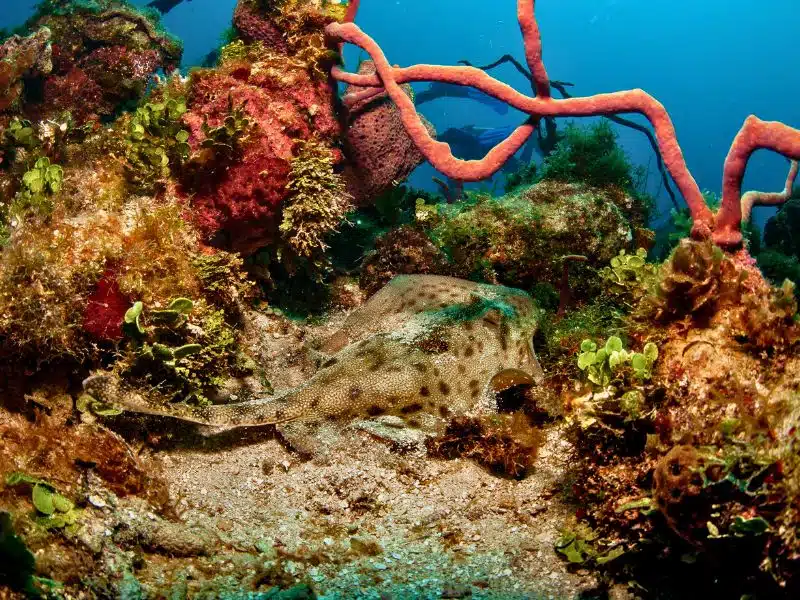
Don’t be that diver who flails around and kicks up clouds of sand. Neutral buoyancy is everything when approaching a yellow stingray. Use a gentle frog kick and keep your chest low and horizontal to the bottom. Good trim helps you observe yellow stingrays calmly and without disturbing them.
Distance, Body Position, and Use of Light
Approach slowly and from a low angle. Keep a respectful distance of at least 2 meters / 6,5 feet from the yellow stingray. If you are diving at night and using a torch, keep the beam soft and sweep it gently across the sand instead of shining it directly into the stingray’s eyes. This applies to any yellow ray or group of yellow rays resting on the seabed.
Safety and Responsible Interaction
Never touch, poke, or try to move a yellow stingray. Its barb is defensive, not an aggressive weapon, and it usually causes only mild injury.
In the unlikely event of a sting, the venom is thermolabile (protein-based and heat-sensitive). Immersing the affected area in hot water is usually enough to relieve the pain.
In any case, be calm, quiet, and keep your distance. Respectful behavior ensures that yellow stingrays remain relaxed and visible to divers.
Macro Photography Tips
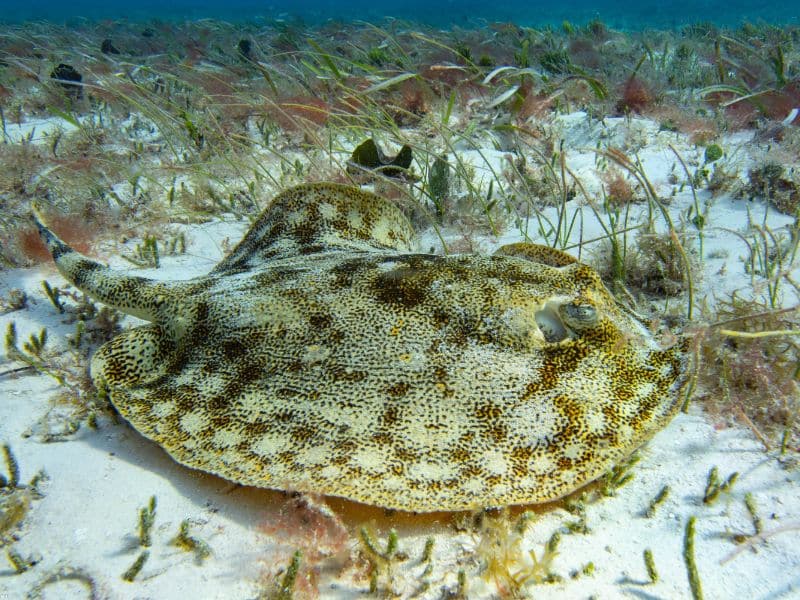
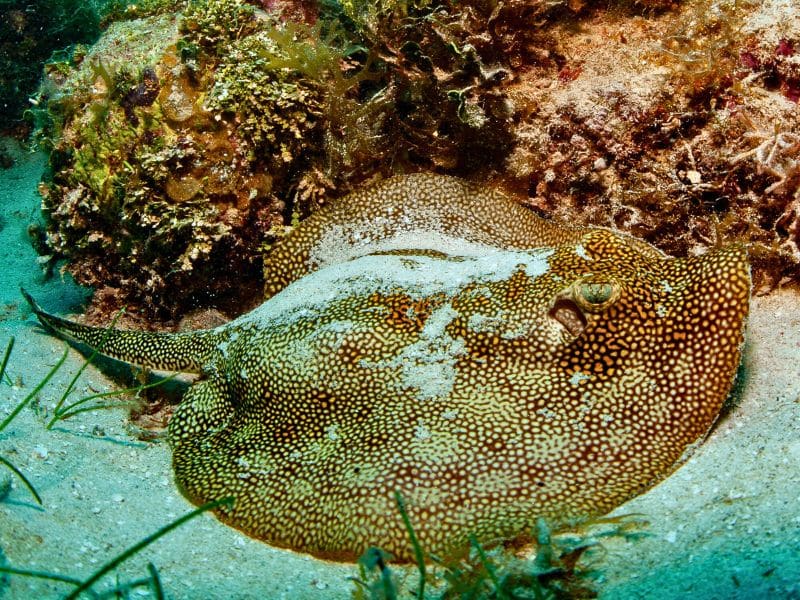
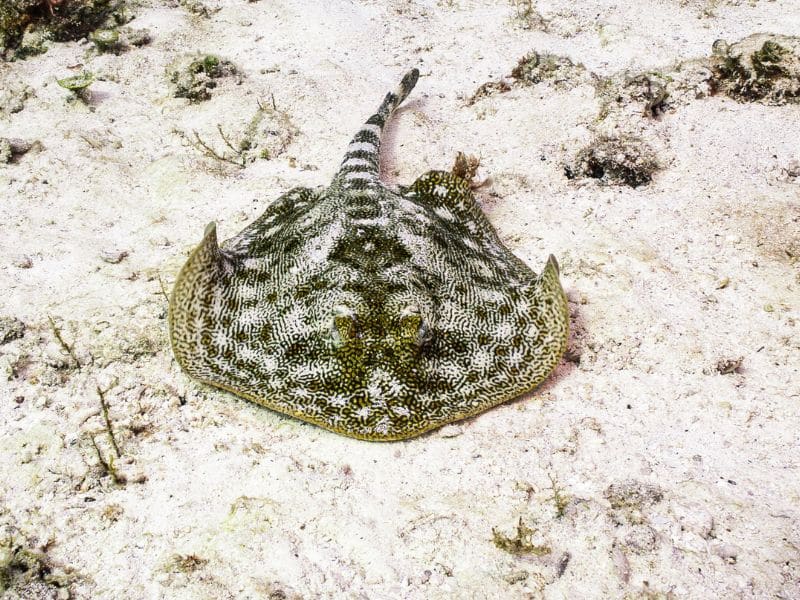
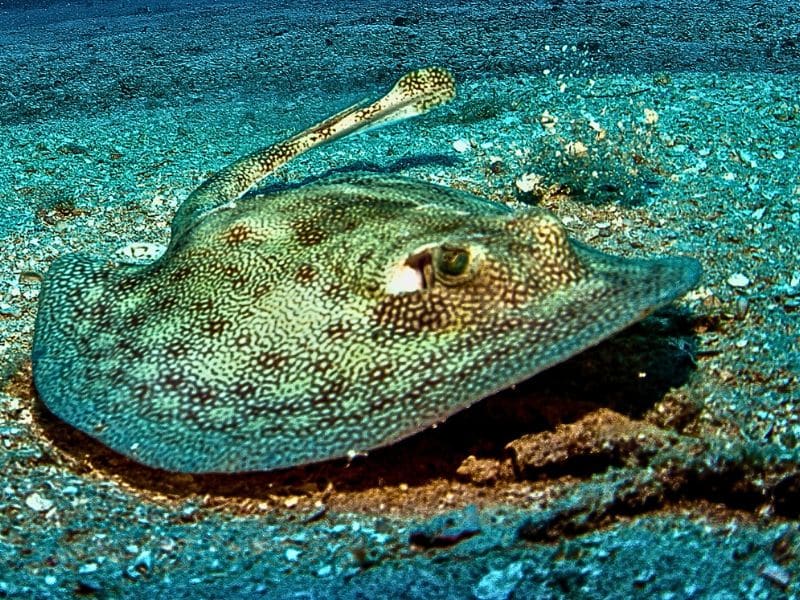
For texture hunters, the yellow stingray is an ideal subject. Its intricate skin patterns and periscope-like eyes offer endless opportunities for high-detail images.
To capture the fine details of a yellow spotted stingray, use a macro lens with small apertures between f/16 and f/22. This ensures that the entire curve of the disc stays sharply in focus, from edge to edge.
Avoid backscatter (lighting up particles in the water) by positioning your strobes wide and slightly angled inward. Side lighting will highlight the skin texture of the stingray yellow tones and the ridge along its dorsal spine.
And if it moves away, let it go. Never chase a yellow stingray.
Move slowly and stay low. A relaxed yellow spotted stingray will often remain perfectly still, allowing you to capture close-up shots of its spiracles (breathing openings) and its striking golden iris.
8. Fun Facts About the Yellow Stingray That Make Divers Smile
The yellow stingray is one of the most fascinating and charming marine animals divers can encounter. Whether you call it a yellow ray, yellow rays, or even a stingray yellow, these bottom-dwelling creatures are full of surprises. Here are some curious facts about the yellow stingray that never fail to impress underwater explorers.
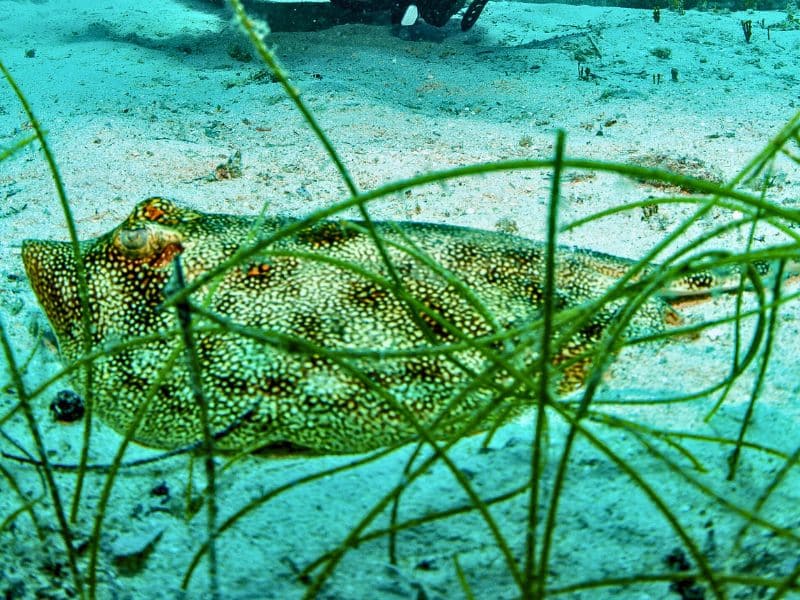
- “Spy” eyes: The eyes of the yellow stingray are located on the top of its body, allowing it to keep an eye on potential predators while remaining almost completely buried in the sand. This clever adaptation makes yellow stingrays masters of camouflage.
- Vital spiracles: Just behind the eyes, yellow rays have small openings called spiracles. These allow the yellow stingray to pump water to its gills while resting on the seabed, preventing sand from entering their respiratory system.
- Suction hunters: A yellow spotted stingray doesn’t usually bite its prey right away. Instead, it uses its body to pin the prey against the bottom and then sucks it in. This hunting technique is common among yellow spotted stingrays.
- Teeth structure: The teeth of the yellow stingray are one of the most intriguing parts of its anatomy. Rather than tearing, they are designed for crushing. Arranged in tightly packed rows, they form a pavement-like dental plate that looks more like coarse sandpaper. These teeth are continuously replaced throughout the life of the yellow stingray.
- Adult males: During mating season, male yellow stingrays develop sharper, more pointed teeth. This change isn’t related to feeding but helps them gently bite and hold the female’s fins during copulation, which is challenging in open water.
- Conservation status: The yellow stingray is currently classified as Least Concern, meaning its populations are considered stable at this time.
- Lifespan: In the wild, a yellow stingray can live between 15 and 25 years, depending on environmental conditions and the presence of predators such as hammerhead sharks, which are known to prey on yellow stingrays.
From yellow ray sightings on sandy bottoms to encounters with multiple yellow rays resting together, observing a yellow spotted stingray is always a highlight for divers who appreciate marine life behavior up close.