7. How To Find a Smooth Trunkfish While Diving or Snorkeling
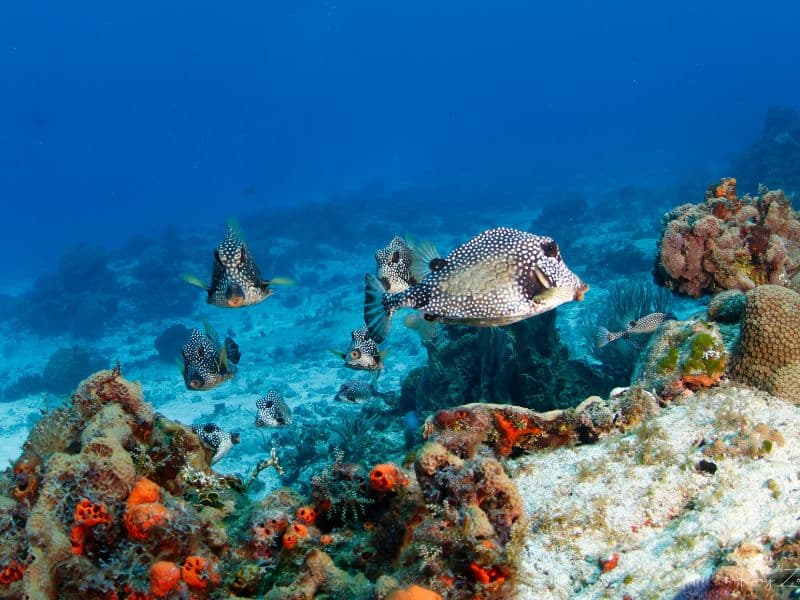
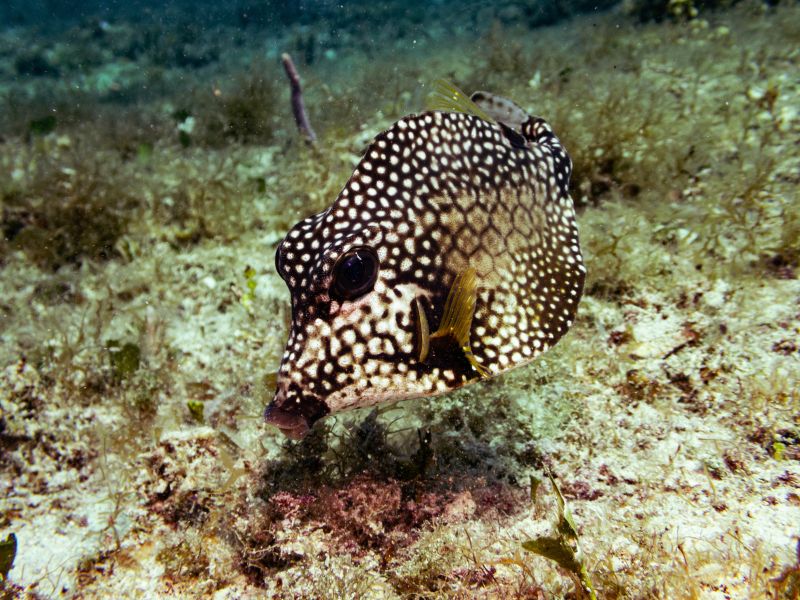
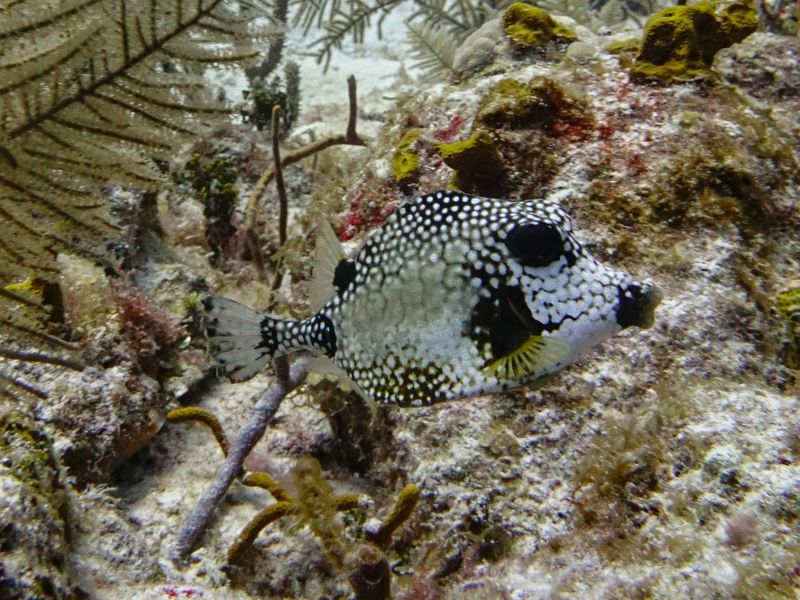
The smooth trunkfish doesn’t hide. It doesn’t flee. It doesn’t camouflage particularly well. And yet, some divers complete an entire dive without seeing one.
The reason is always the same: they move too fast.
Go slowly—very slowly.
This fish doesn’t make sudden movements. It doesn’t draw attention. It moves with almost offensive calm between coral and sand. If you swim like you’re in a hurry, you’ll miss it again and again.
The technique is simple:
• Go to the edge where the reef meets the sand. That’s where it feeds, spends the day, and lives.
• Slow down. Stop every two or three minutes. Look.
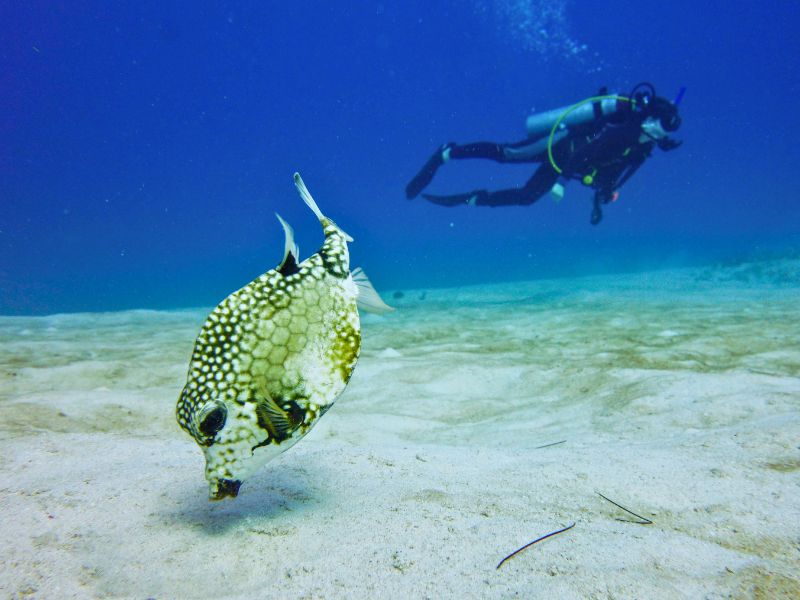
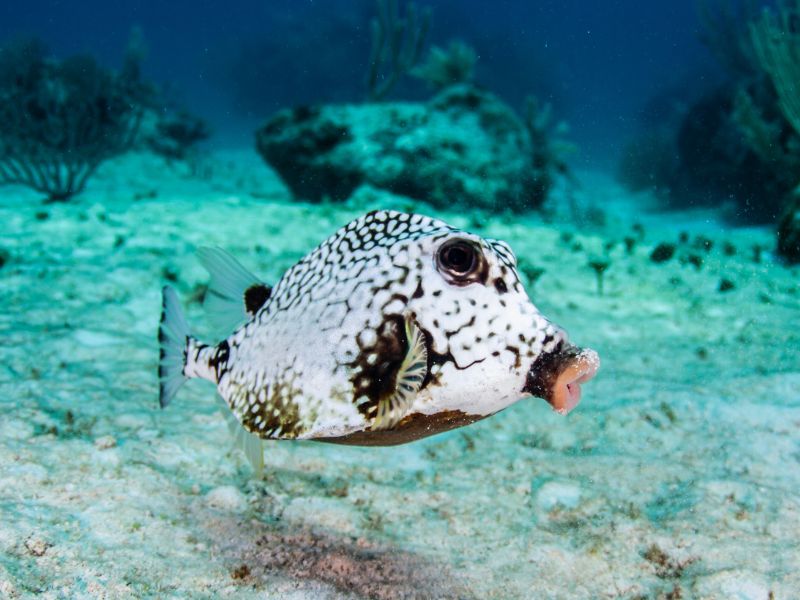
• Look for small clouds of sand near the bottom with no apparent current. That’s it, blowing to uncover its meal.
It will watch you—stay still too
When you find it, something predictable happens: it will remain completely still, watching you. Assessing you. Deciding whether you’re a threat or just a minor annoyance.
Don’t move. Maintain perfect neutral buoyancy. Breathe slowly.
After a few minutes, if you don’t do anything strange, it will go back to its routine as if you didn’t exist—blowing sand, feeding, continuing its day. And there you are, half a meter away, watching the reef in action. That’s priceless.
Timing matters
The smooth trunkfish is strictly diurnal. At night, it sleeps in reef crevices—you won’t see it. Period.
The ideal window is morning. Light penetrates directly into sandy areas, the fish has been active for hours, and photography conditions are at their best.
- Early morning: perfect light, active fish, illuminated sand. The moment.
• Afternoon: still works, though with less light at the bottom.
• Night: don’t disturb it. It’s sleeping.
8. Frequently Asked Questions About the Smooth Trunkfish
What is its mating behavior like?
Its social system is fascinating. Males are believed to maintain a “harem” of several females within a large territory. During courtship, the male performs a “mating dance,” moving its fins rhythmically and displaying dramatic color changes to attract the female. Spawning typically occurs in pairs at dusk, releasing fertilized eggs into the water column.
How long does a smooth trunkfish live?
The exact lifespan of Lactophrys triqueter is not well documented, but closely related species in the boxfish family typically live between 6 and 12 years. In general, members of this family tend to live less than a decade in the wild.
How do they sleep without eyelids?
Like most bony fish, the smooth trunkfish has no eyelids and cannot close its eyes. Being strictly diurnal, it enters a state of rest at night, reducing activity and metabolism. It usually shelters in reef crevices or remains motionless near the bottom, staying alert to predators.
What’s the difference between a boxfish and a cowfish?
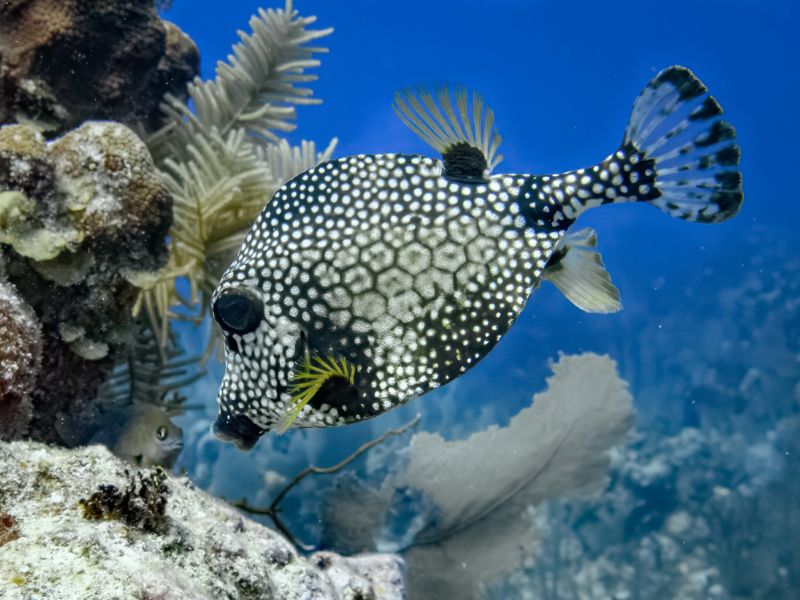
Both belong to the same family (Ostraciidae) and have box-shaped bodies. The key difference lies in facial “spines.” Cowfish have long horn-like protrusions above their eyes, while the smooth trunkfish lacks any spines near the eyes or anal fin, giving it its “smooth” appearance.
Is it safe to eat smooth trunkfish?
In some Caribbean regions, it is consumed and considered a local food. However, like many tropical reef fish, there is a potential risk of ciguatera poisoning—a toxin that is not destroyed by cooking and accumulates through the reef food chain. Caution is advised, and it should only be prepared by knowledgeable locals.
At what depth do they usually live?
They typically inhabit depths from the surface down to 50 meters (164 feet). They are especially common in shallow coral reefs and nearby sandy areas where sunlight supports their daytime activity.
Can I photograph them while diving?
Yes—they are excellent photography subjects due to their slow swimming and confidence in their bony armor. For best results, approach calmly and capture their sand-blowing feeding behavior, which creates dynamic action shots. In areas with current, wide-angle lenses are recommended.
The smooth trunkfish is not the biggest fish in the Caribbean. It’s not the fastest or the most colorful. But it has something others don’t: charisma.
That touch of geometric oddity, that almost cartoon-like face, that behavior straight out of a science fiction documentary.
The best part? You can come see it. Write to us—we’ll meet on the reef.