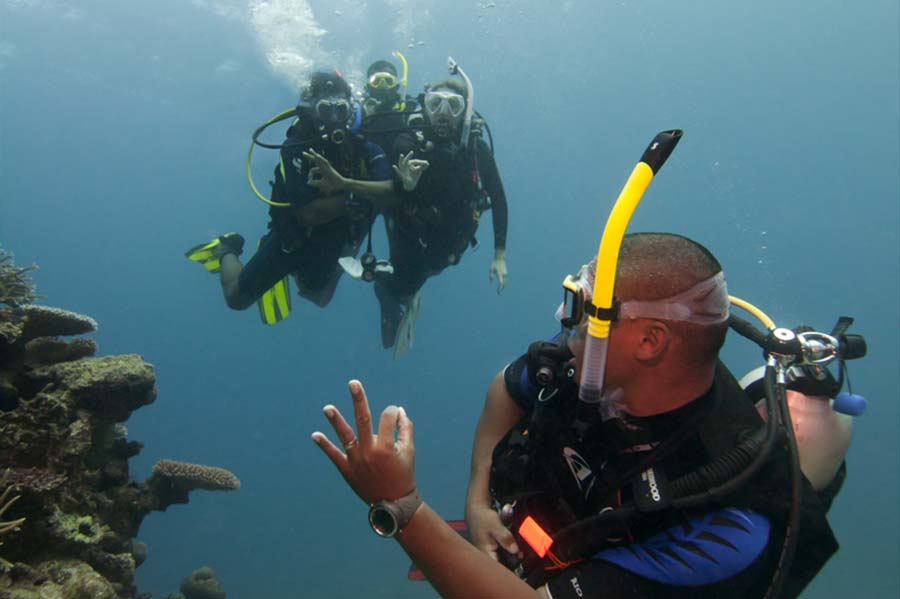
5. Scuba Diving Safety Equipment: The Gear That Really Matters
When we talk about scuba diving safety equipment, it’s not about having the latest gadgets, it’s about checking what really matters before every dive. Following these steps boosts your diver safety and helps you enjoy the underwater world with confidence.
Quick Checklist Before Hitting the Water
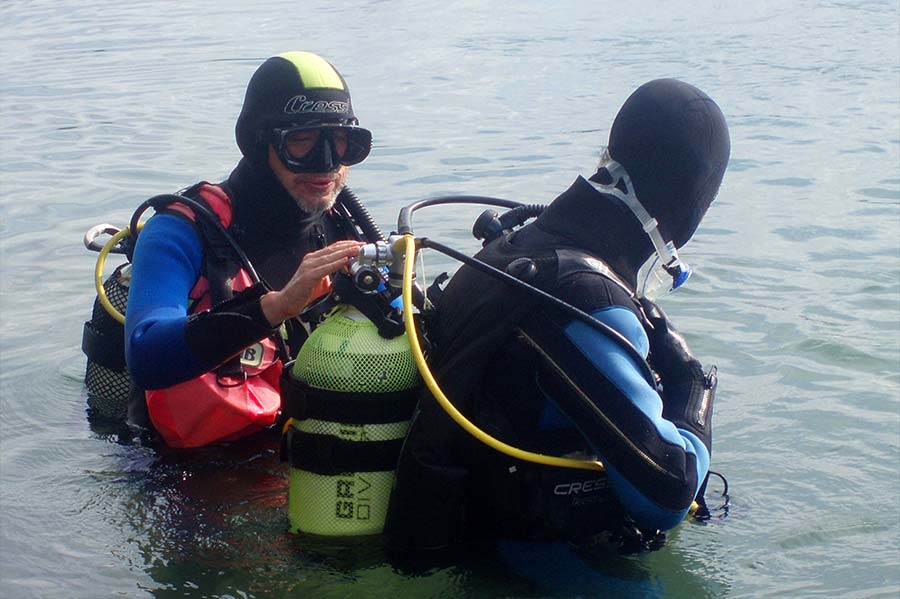
- Regulator & Octopus
- Make sure there are no leaks and that it’s working properly.
- Common mistake: forgetting to test the secondary regulator.
- Pro tip: always give it a quick purge before entering the water.
- BCD & Inflator
- Check that it inflates and deflates smoothly.
- Mini tip: make sure all straps and buckles are snug.
- Dive Computer / Depth Gauge
- Ensure the battery is charged and the screen is readable.
- Tanks & Valves
- Check the pressure and make sure valves open and close without issues.
- Mask, Fins & Snorkel
- Check for cracks, ensure silicone seals are correct, and straps are properly adjusted.
- Mini warning: a loose mask = water in your face = instant distraction.
Other Accessories That Matter
- Whistle (or Air Horn): Often underrated, this tool helps you communicate at close range underwater and can be heard for hundreds of meters on the surface in waves or low visibility, potentially life-saving. Keep it attached to your inflator hose or BCD. But please, don’t blow it constantly, it’s for emergencies.
- Knife / Cutting Tool: You don’t need a machete, just a sharp tool that can free you if you get snagged. It should be easily accessible with either hand. Test it before diving to ensure it can be quickly deployed for scuba dive safety.
- Compass: Don’t just carry it, calibrate it on land to make sure the needle isn’t sticking.
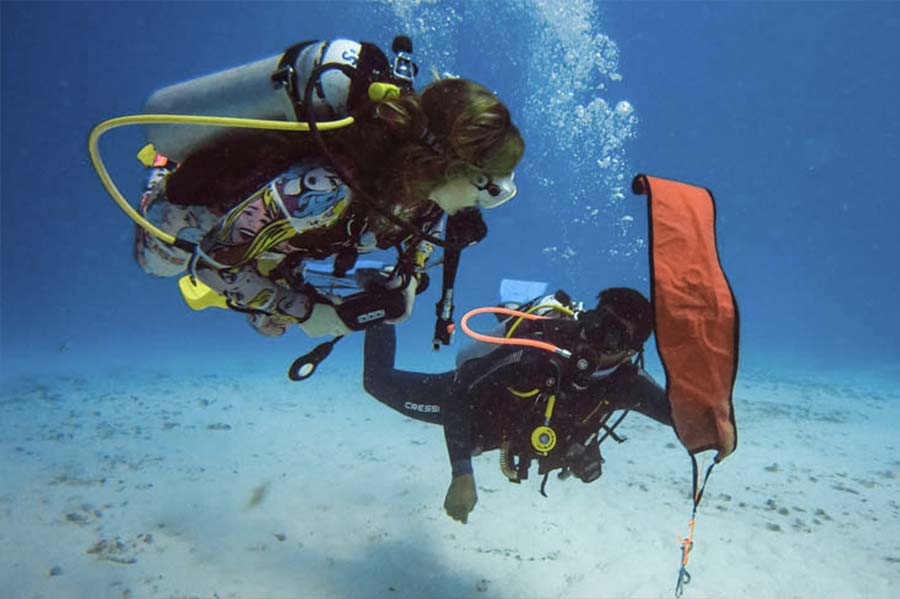
- Surface Marker Buoy (DSMB or “Sausage”): The average diver assumes the crew sees them. A pro diver carries a DSMB and actually uses it.
With this quick review of your scuba diving safety equipment, your diver safety will be maximized, letting you focus on what really matters: enjoying your dives without surprises.
6. Scuba Diving Safety Mistakes
Safety isn’t broken by a single mistake; it’s the accumulation of small errors that pressure turns into serious problems. These are the mistakes instructors see again and again.
Scuba Diving Safety Mistake #1: Overconfidence (The “I’m an Expert” Effect)
The most dangerous mistake isn’t underwater; it’s in your head. After 50 dives, we tend to skip steps or get carried away by our accomplishments.
For example: maximum depth should always be justified by the dive’s purpose.
With proper training and certifications, the mistake isn’t going deep, it’s going deep without a clear reason. If you can’t describe in one sentence what you’ll see or do at 40 meters (130 feet), the dive isn’t justified.
Scuba Diving Safety Mistake #2: Inefficient Air Consumption
Poor air consumption isn’t a lung capacity problem; it’s about stress management and buoyancy control. There are several common mistakes:
- Shallow, rapid breathing. This prevents efficient gas exchange, keeps CO₂ levels high, triggers shortness of breath, and raises heart rate.
Pro Tip: Focus on slow, complete exhalations. This forces your body to relax and lowers your breathing rate.
- Over-kicking. Every unnecessary or abrupt movement wastes oxygen. If you’re struggling to hover or move forward, it’s usually a weighting and trim issue, not a lung issue.
Pro Tip: Perfect your trim. Underwater, you should move primarily with your breath and minimal fin adjustments.
- Cold is a major air killer. If you’re cold, your body works harder, your air consumption skyrockets, and your decompression risk rises. If you’re cold, ascend or abort the dive, don’t try to be a frozen hero.
Scuba Diving Safety Mistake #3: Poor Buoyancy Control (The “Yo-Yo Diver”)
Inability to maintain a constant depth is the hallmark of an unsafe diver.
- Most divers add air to their BCD too late (when they’re already sinking) or vent too late (when they’re already ascending).
Pro Tip: Add air in half-second pulses before you need it, for example, as you approach deeper bottom or start a slow ascent. Action should be preventive, not reactive.
- 90% of divers are over-weighted, forcing them to add air at depth to compensate. This makes you float too much, which then requires venting, adding more air, and so on. With less weight, you’ll use less air to stay buoyant and achieve better trim. This is a scuba diving safety fact.
- Diving vertically (like a seahorse) creates ridiculous drag, makes you kick wildly, and burns air. The goal is horizontal trim. If you see your knees, hips, or fins when looking down, your trim is off, and it affects diving safety more than you think.
Scuba Diving Safety Mistake #4: Losing Your Reference (The Disoriented Diver)
The most common navigation mistake is not checking your compass and time simultaneously. If you swim 5 minutes on a 90° heading, you must swim 5 minutes on a 270° heading to return without drift. Forget the time, and your heading is useless.
Don’t ignore your pressure gauge. Average divers only check their gauge when they think it’s time to ascend. Pros check their gauge and dive computer every 5 minutes, like a wristwatch. If you don’t know your air consumption per minute, you’re at the mercy of chance.
Losing sight of your reference line (anchor or guide line) during safety stops. It may seem trivial, but on uneven bottoms, visually anchoring to the bottom or a stationary object is essential to avoid an inadvertent ascent.