2. Common Mistakes and How to Correct Your Scuba Diving Position
First, let’s talk about Center of Gravity (COG) and Center of Buoyancy (COB). These are the magic points that decide whether you float flat and stable—or spin like a top.
- COG: where the weight of your body and equipment is concentrated.
- COB: where the water pushes you up, usually around your chest due to your lungs and your BCD.
If these two don’t line up, your scuba diving position falls apart: legs sink, torso rises. The result? Constant finning, faster fatigue, and poor breathing. Not good.
Even experienced divers can make mistakes that compromise their diving position. Identifying and correcting them is essential to maintaining technical excellence.
Excess Weight: The Biggest Enemy of a Good Diving Position
Too much weight is the number one barrier to achieving proper trim. Many divers, out of insecurity or lack of technique, add extra lead to make the initial descent easier. Later, at depth, they’re forced to add large amounts of air to the BCD to compensate.
That air migrates toward the shoulders, while the weight belt pulls downward. The result is an unstable rotational axis that destroys horizontal trim.
The solution is a proper buoyancy check at the end of the dive, with 30–50 bar (500–700 psi) left in the tank—when your gear is at its most buoyant.
A good scuba diving position starts with the correct amount of weight. A simple check: with an empty BCD and normal breathing, you should float at eye level. If you do, you’re weighted correctly.
The “Seahorse Effect”: Poor Weight Distribution
When weight is poorly distributed—heavy at the waist, light up top—you sink with your legs and float with your chest. The result is constant finning, excessive air consumption, and unnecessary stress.
This overly vertical posture, often called the seahorse effect, is frustrating because the diver feels forced to pedal nonstop just to stay off the bottom.
A very effective self-assessment trick used by professionals is this: tuck your chin to your chest and look backward between your legs.
- If you can see your fins or knees, your trim is off (your legs are too low).
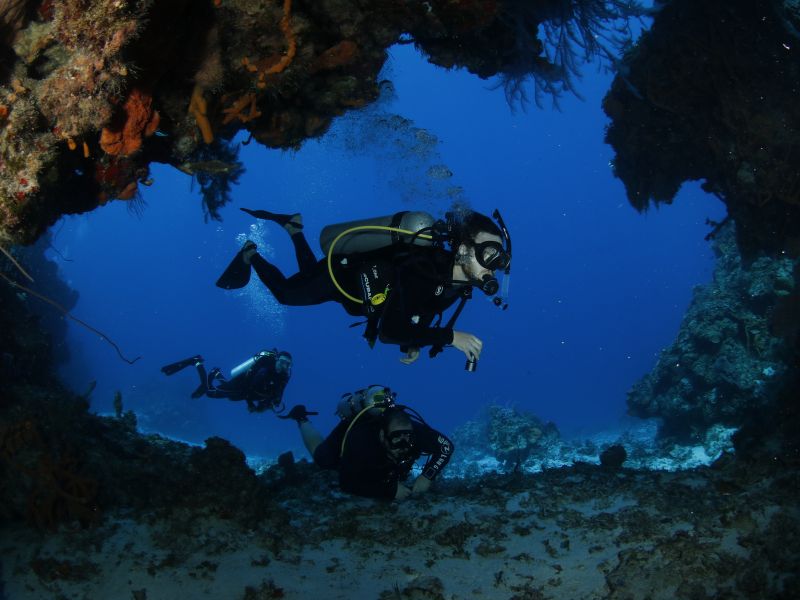
- If you only see blue water or the seabed behind you, your position is horizontal and correct.
- To fix “heavy legs,” raise the tank in the harness, use lighter fins, or move some weight to upper trim pockets.
How do you fix it? By distributing your weight correctly.
The Weight Belt
The classic weight belt works—but relying on it alone can ruin your scuba diving position. Concentrating all the weight at the waist can drop your hips and force you into a vertical posture.
The fix? Spread it out.
Use trim pockets on the upper tank bands or on the shoulders of the BCD. This shifts your center of gravity upward and counterbalances those heavy legs dragging you down.
Tank Position Matters
Many divers set up their gear and forget about it. That’s a mistake. Tank height in the harness is a critical variable for your diving position.
- Tank too low? It acts like a lever that drops your lower body.
- Tank higher? It moves weight upward and helps you flatten out.
Raising the tank just a few centimeters can be the difference between fighting the water and gliding effortlessly through it.
Using Propulsion to Hide a Bad Position
If you’re finning just to avoid sinking, you’re using brute force to compensate for poor scuba diving position. It works for a moment—but as soon as you stop, you drop.
Worse, your fin wash kicks up sand and destroys visibility. In caves or wrecks, that’s a serious problem. And the diver behind you will not be happy.
The frog kick helps. It pushes water backward, not downward.
After the kick, stop. Glide. If you start to tilt or sink during that glide, your diving position is off. Use that calm moment to identify where you have too much weight or not enough air.
Shallow or Poor Breathing
The BCD is for coarse adjustments. Your lungs are for fine-tuning your scuba diving position.
Bad breathing ruins all positional control.
Breathe deep, slow, and from the diaphragm. Every inhalation changes your buoyancy.
- Inhale deeply: you rise.
- Exhale: you sink.
But here’s the key: water has lag. It takes 2–3 seconds to feel the effect. Divers who don’t understand this add air to the BCD, then dump it, and end up exhausted.
Breathe slowly and deeply from the diaphragm. That’s what gives you real, precise control over your scuba diving position.