1. Neutrally Buoyant: What It Really Means
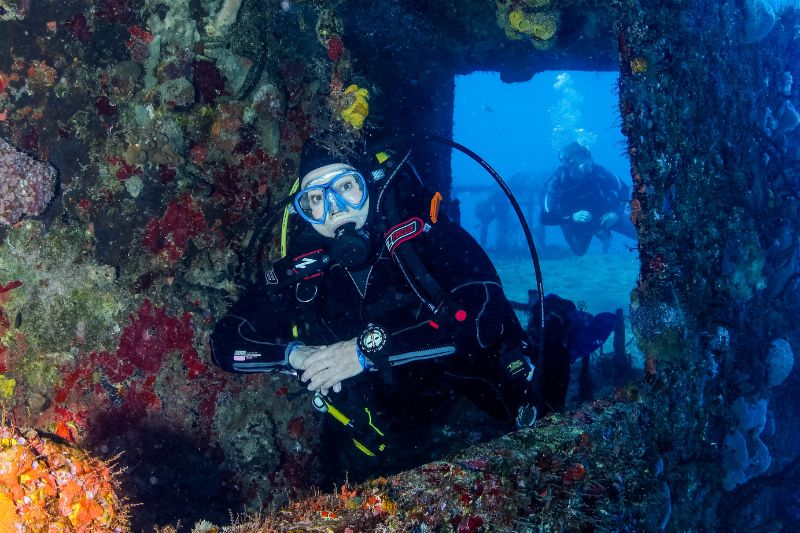
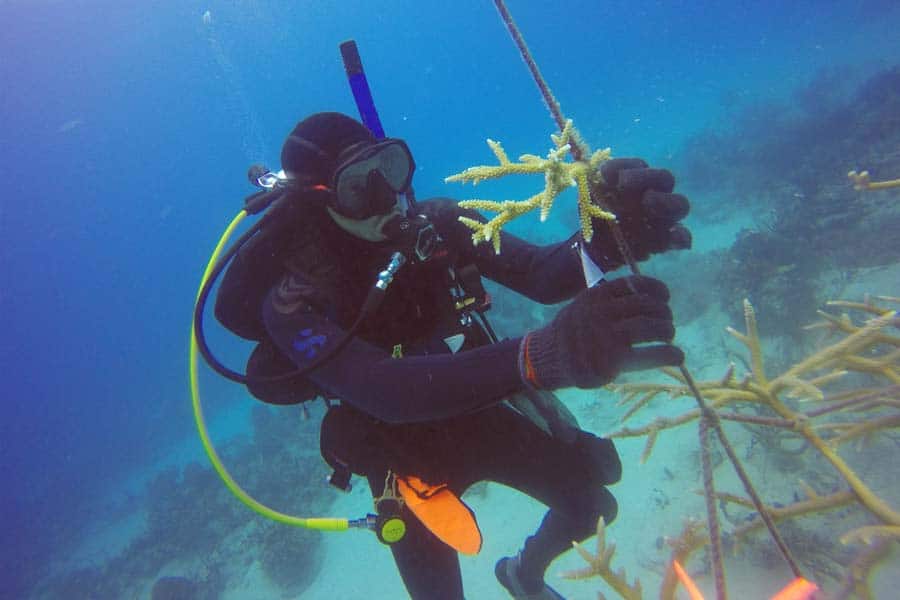
It’s when you’re underwater and you neither rise nor sink.
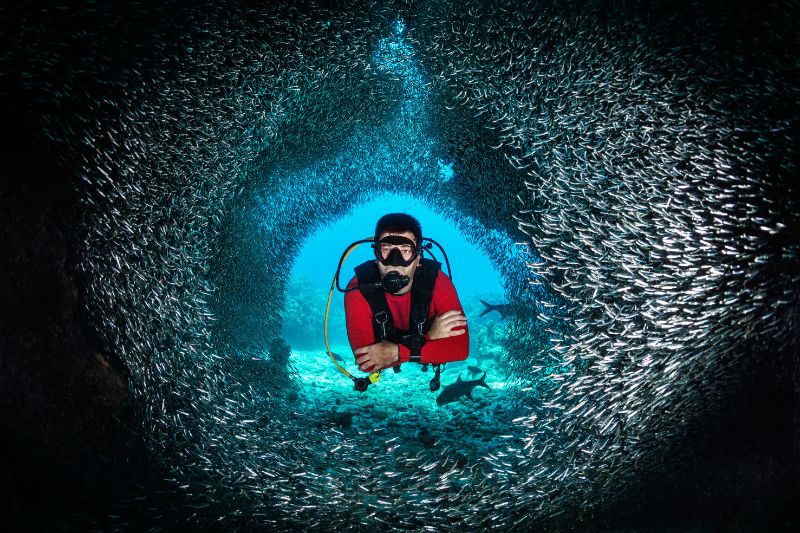
You just hang there, still, suspended, like you’re held by invisible strings. That’s neutral buoyancy.
If you want the physics version: it’s when the weight of your body with all your gear is exactly equal to the weight of the water you displace.
Archimedes said it centuries ago (though as far as we know, he didn’t dive): every body submerged in a fluid experiences an upward force equal to the weight of the displaced fluid.
For a diver, this means that when the forces balance, you stop fighting. You don’t need to kick constantly. You don’t have to inflate or deflate your BCD every few seconds. You just… stay exactly where you want to be underwater.
But here’s the interesting part: unlike a rock or a piece of wood, your volume underwater isn’t constant. The air spaces in your body (lungs) and your gear (BCD) compress and expand with depth. That’s why neutral buoyancy isn’t something you set once and forget.
It’s a continuous dance with pressure.
2. Benefits of Being Neutrally Buoyant
Let’s be honest.
If you’re struggling with your buoyancy, you can’t focus on anything else. You can’t enjoy that manta ray gliding by. You can’t take great photos. And definitely, you can’t help your buddy if something goes wrong.
Neutral buoyancy isn’t just a nice-to-have for advanced divers. It’s the operating system. Everything else—navigation, photography, exploration—is just an app running on that system.
Air Consumption: The Immediate Effect
When you’re not neutrally buoyant, your body compensates with extra effort.
If you’re carrying too much weight, you’re constantly kicking up to avoid crashing into the bottom. Too little weight, and you’re struggling to descend. In both cases, your heart rate spikes, your breathing speeds up, and your tank empties ridiculously fast.
The diver who masters neutral buoyancy eliminates that unnecessary work. Balanced in the water, they can breathe slowly, deeply, and rhythmically. The result: more time underwater. More marine life. More enjoyment.
Protecting the Reef
Corals grow slowly. Really slowly.
Some just a few millimeters a year. A single fin kick, a brush of your knee, or bumping your console can destroy decades of growth—in a second.
And that’s not all. Kicking near the bottom to hold your position stirs up sediment, which falls onto coral polyps. It smothers them, blocks photosynthesis, and makes them more prone to disease.
Being neutrally buoyant lets you keep a consistent distance from the substrate—typically five to six feet. You become almost invisible. You observe without disturbing. Just as it should be.
Control and Trim: The Difference Between Amateur and Pro
If you’ve ever watched a senior Divemaster or a technical diver, you’ve noticed something.
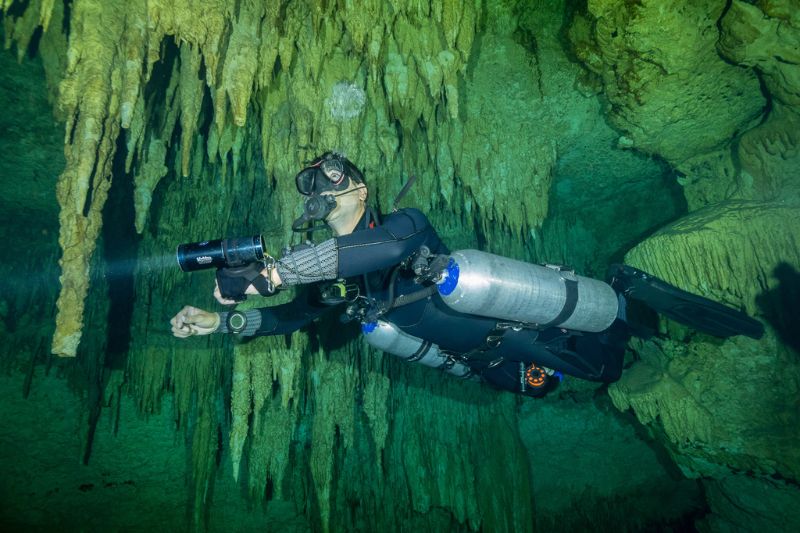
They don’t dive vertical. They’re perfectly horizontal, like human torpedoes gliding through the water. That’s trim.
Trim is the ability to stay neutrally buoyant in a horizontal position, minimizing water resistance (drag). You present the smallest profile possible. You move with less effort. You use less air. And you look infinitely more graceful.
In professional diving, performing skills like mask clearing or air sharing while perfectly horizontal and neutrally buoyant is the ultimate mark of true competence.