2. Types of Scuba Diving Lights: Find the One That’s Right for You
Not all scuba diving lights are the same.
And not all of them are designed for the same purpose.
Here’s a clear breakdown of what you actually need to know.
2.1. Primary Lights: Your Main Beacon
Primary lights are the real workhorses.
Powerful. Durable. Reliable.
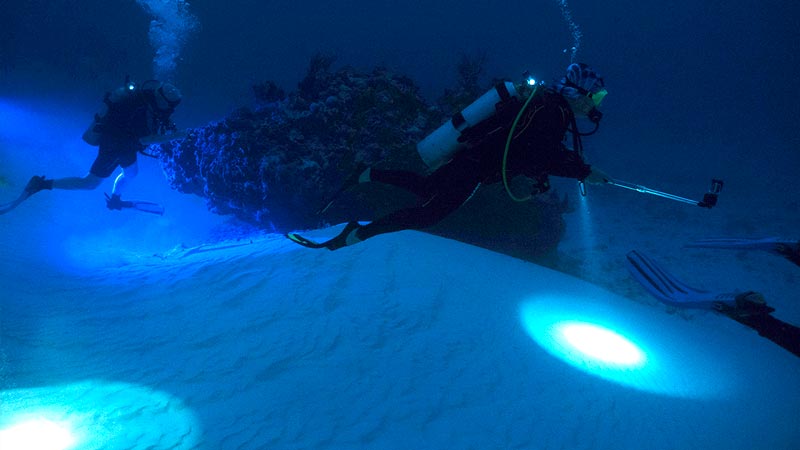
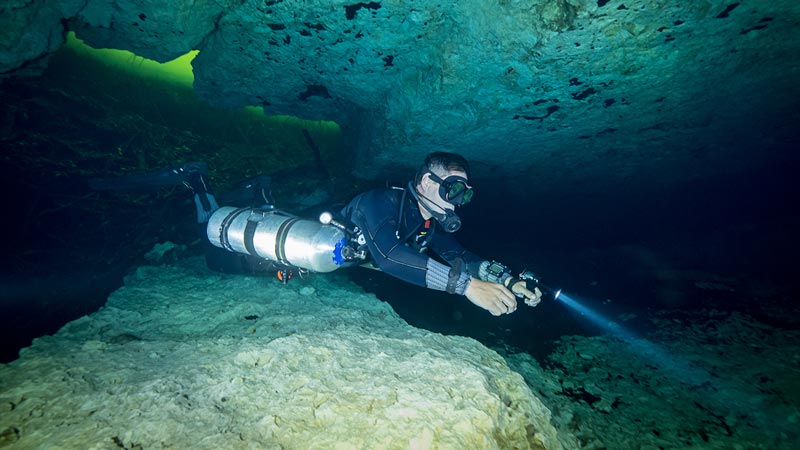
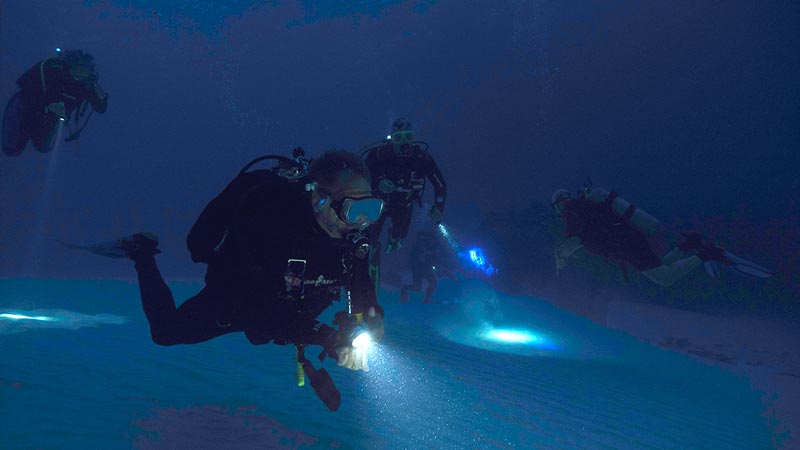
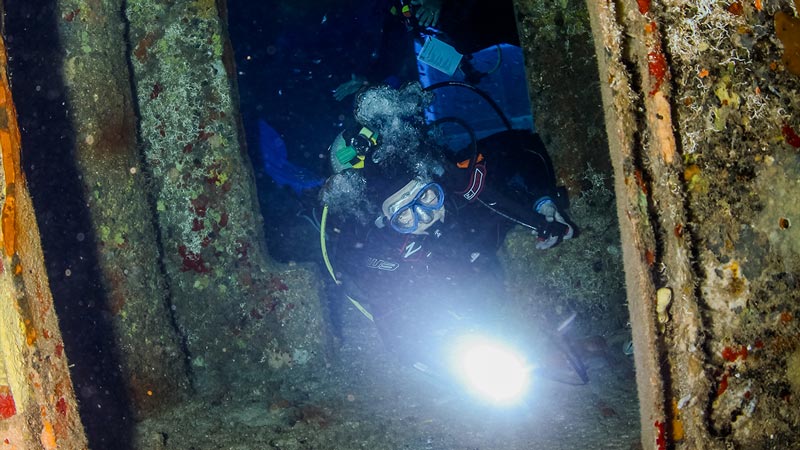
These are the scuba dive lights you rely on as your main tool for night dives, wreck penetration, or deep dives where sunlight is nothing more than a distant memory.
We’re talking about 1,000 to 3,000 lumens of output.
What does that mean in plain English? You can light up an entire reef as if it were midday.
A good primary scuba dive light should have:
- A battery that lasts the entire dive (at least 90 minutes)
- A switch you can operate while wearing gloves
- Balanced weight that doesn’t throw off your trim
2.2. Backup Lights: Your Non-Negotiable Plan B
Pay close attention to this.
Always. Always. ALWAYS carry a backup light.
It doesn’t matter how expensive or reliable your primary is. Murphy’s Law is always waiting for the worst possible moment.
Backup lights are smaller. Simpler. Less sexy.
But they can save your life.
A solid backup scuba diving torch should:
- Fit in a BCD pocket
- Be operable with one hand
- Be so reliable it feels boring
It doesn’t need 17 light modes or strobe effects. It just needs to turn on when you need it. Period.
2.3. LED Scuba Diving Lights: The Present and the Future
LED lights have taken over the market.
And for good reason.
Compared to old halogen models, LED scuba diving lights are:
- More efficient (less battery consumption, more light)
- Longer-lasting (up to 50,000 hours of lifespan)
- Safer (they don’t fail suddenly; they gradually lose intensity)
Bottom line: if you’re buying an LED scuba dive light today, you’re making the right choice.
Most models use SMD or COB technology. Don’t stress over the acronyms. What matters is this:
SMD LEDs produce a more focused beam (perfect for cutting through darkness), while COB LEDs deliver a softer, more even light (ideal for video).
How Many Lumens Do You Really Need?
Here’s the million-dollar question.
And the answer might surprise you: probably less than you think.
Check out this guide to clear things up:
| Dive Type |
Recommended Lumens |
| Daytime diving (exploring cracks) |
400–800 lumens |
| Recreational night diving |
1,000–1,500 lumens |
| Wrecks and caves |
1,500–3,000+ lumens |
| Macro photography |
500–1,200 lumens |
| Wide-angle video |
2,500–10,000+ lumens |
Notice the pattern?
More lumens isn’t always better. In clear water, a 3,000-lumen light can scare the fish and blind your dive buddy.
But in murky water with sediment, that extra power is exactly what you need to “cut through” the haze.
The key is versatility. Look for underwater lights for scuba diving with adjustable modes—so you can switch from 3,000 lumens down to 300 lumens depending on the situation.
This way, you save battery and tailor your lighting to the environment.