
Biggest Animals in the Sea - Los animales más grandes del mar (3)
The 10 Biggest Animals in the Sea
21/01/2026
Show all

Back-Inflate BCDs: Benefits, Comparisons, and Top Picks

Back-Inflate BCDs (1) Chaleco de inflado trasero

For many divers, moving from a traditional jacket-style BCD to a back-inflation buoyancy control device (BCD) is like trading a family sedan for a sports car.

Classic jacket BCDs are great for floating on the surface while waiting for the boat, but a back-inflate BCD gives you complete freedom and trim control that will make you feel like a hydrodynamic superhero.

But beware—there are myths floating around.
Will it push your face into the water when you surface? Is it only for advanced divers?

Here, we’ll break down why back-inflate BCDs are more efficient, compare them to traditional systems, and explore what the market has to offer in 2026.

Welcome to the dark (and comfy) side of the back!
1. What Exactly Is a Back-inflate BCD?

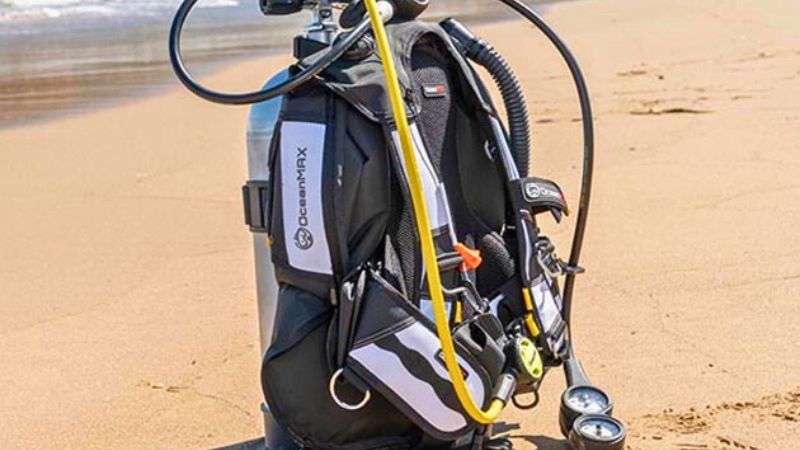
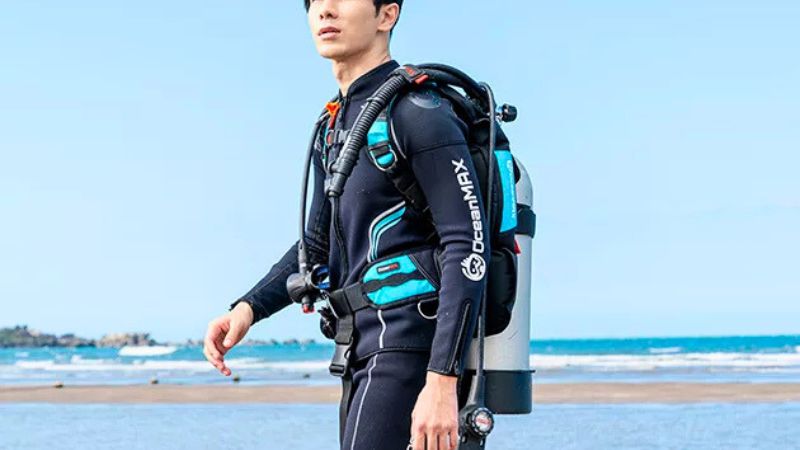
A back-inflate BCD is a buoyancy device where the air bladder sits entirely behind you. Unlike traditional jacket-style BCDs, which have “floats” around your sides and chest, a back-inflate BCD keeps everything out of the way.

It’s minimalism taken underwater.

The Science of Trim: Why Back Inflation Works Better

Physics doesn’t lie.

By placing the air behind you, your center of buoyancy aligns with the weight of your tank.
The result? Minimal “pivot effect,” putting you in a nearly perfect horizontal position almost effortlessly. Good trim means less drag, less effort, and, of course, significantly lower air consumption. Plus, your fins stay clear of the coral. Everyone wins.


2. Back-inflate BCD vs. Wing and Backplate

Don’t confuse them, even if they look similar:

  • Back-inflate BCD: A recreational “all-in-one” system.
    The harness and bladder come together (think Zeagle Ranger). It has the comfort of a jacket with the soul of a wing.

Wing System: The Lego of technical diving.
A metal backplate, a simple harness, and a removable wing. Fully modular.

Back-Inflate BCDs (2) Chaleco de inflado trasero

3. Back-inflate BCD vs. Jacket: The Ultimate Showdown

1. Center of Buoyancy vs. Center of Gravity
This is the key to how you feel underwater.
In a jacket-style BCD, the air surrounds you. It’s stable vertically, but underwater, the air rises to your chest, lifting your torso and breaking your horizontal position.
With a back-inflate BCD, the lift sits right over your tank. You level out naturally.
It’s the difference between fighting the water and slicing through it like a knife.

2. Freedom for Chest Expansion
Ever feel like you can’t take a full breath because your BCD is too inflated? That’s the “corset effect” of a jacket.
In back-inflation models, the air expands backward, away from your body.
Your harness doesn’t constrict you, and remember—deep, relaxed breathing is the key to making your tank last longer.

3. Access to Gear
Jackets have air bladders on the sides, so the front space is crowded.
Pockets are usually large, but once the BCD is inflated, it’s tricky to get items in and out.
A clear front on a back-inflate BCD is a paradise for:

  • Photographers: They can keep cameras close to the body without obstruction.
  • Technical Divers: Deploying deco buoys or handling lights is easy with no bladders in the way.

4. Lateral Stability (Rolling)
Here’s the catch: back-inflation vs. jacket has trade-offs.

  • Jacket: Like training wheels on a bike. Air on the sides acts as stabilizers, keeping you upright. If you tilt, the side bladders help prevent rolling.
  • Back-Inflation: Requires more core control to avoid rolling too much, since all the air is behind you. But once you master it, that initial “instability” turns into agility.

5. Ascents and Descents

  • Jacket: Air is distributed more evenly, so purging is intuitive via the shoulder dump or inflator.
  • Back-inflate BCD: Sometimes air can get “trapped” to one side if the diver tilts too much. You learn to slightly shift your shoulders to move air toward the dump valve. It’s an easy skill but a real operational difference.
Feature Jacket Back-inflate BCD
In-Water Position Tends to be vertical Perfectly trimmed
Comfort While Inflating Can press on chest No pressure (expands away)
Surface Stability Very stable Requires technique (lean forward)
Hydrodynamics Wide profile Sleek, fast profile
Pocket Access Hard when inflated Clear front, smaller pockets

4. Pros and Cons of a Back-inflate BCD

Advantages

  • Outstanding Trim: Achieve a horizontal position effortlessly.
  • Less Drag: Low profile helps you move faster through the water.
  • Total Comfort: Chest remains free from pressure.
  • Travel-Friendly: Often more compact and lighter than jackets.

Disadvantages & Myths

  • On the Surface: Yes, it can tip you slightly forward. Solution: Don’t over-inflate and lean back a little.
  • Learning Curve: It may take a couple of dives to feel completely comfortable.
  • Pocket Space: Slimmer design can sometimes mean less storage.


5. Is a Back-inflate BCD Right for You?

Perfect For:

  • Advanced recreational divers who value trim control and efficiency.
  • Frequent divers or travelers who prioritize lightweight gear and streamlined movement underwater.
  • Underwater photographers and divers who need unrestricted mobility.
  • Divers who enjoy tweaking their setup and experimenting with more advanced configurations.

Less Suitable For:

  • Completely new divers or those with little experience managing buoyancy.
  • Divers who prefer stable, vertical flotation without actively adjusting trim.
  • Anyone who prioritizes large pockets and front storage space.
Back-Inflate BCDs (3) Chaleco de inflado trasero

6. Transitioning: From Jacket to Back-Inflate

If you decide to make the switch, do it smart:

  • First dive in a pool or calm water: Don’t debut your back-inflate in strong currents or on that deep wreck you’ve been planning for months. Get familiar in controlled conditions first.
  • Adjust your weight: You’ll likely need to redistribute your weight. Back-inflation shifts your center of gravity slightly.
  • Practice at the surface: Before descending, float for a bit and get used to how it feels. Experiment with different air volumes.
  • Be patient: The first dives may feel awkward. That’s normal—your brain is relearning patterns it once had automated.
  • Consider a refresher with an instructor: Not mandatory, but an experienced instructor can speed up your learning curve significantly.


7. How to Choose Your First Back-inflate BCD

Before reaching for your credit card, consider these factors:

  • Type of Diving You Do: Pure recreational diving? Underwater photography? Dipping your toes into technical diving? Each discipline has different requirements.
  • Travel Frequency: If you live out of a suitcase, weight and packed size are critical. If you mostly dive at the same local center, you can afford something a bit bulkier.
  • Realistic Budget: The top back-inflate BCDs on the market can cost as much as an entire dive trip. Decide which features you truly need versus which ones just look cool.
  • Compatibility with Your Current Gear: Some back-inflate BCDs work better with certain tanks or weight systems. Check before you buy.
  • Try Before You Buy: Many dive shops rent different models. Testing them first is like test-driving a car—specs on paper only tell part of the story.
Back-Inflate BCDs (5) Chaleco de inflado trasero

8. Top Back-inflate BCDs Recommended by Our Experts

If you’re looking for the best back-inflate BCDs in 2026, here’s the “Dream Team”:

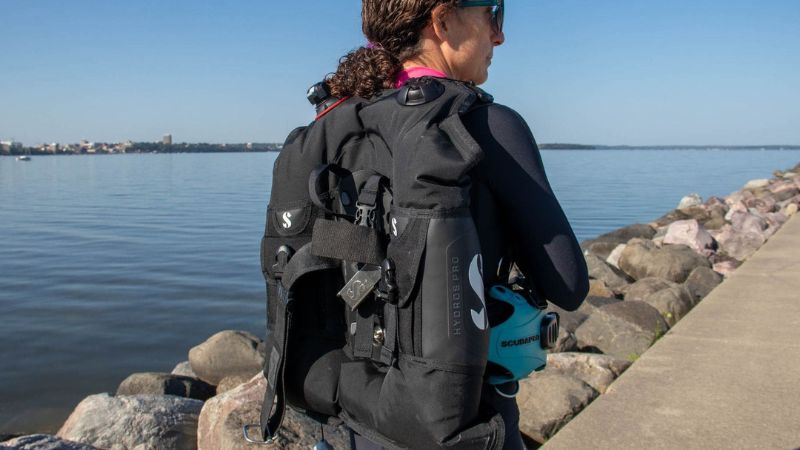
  1. Scubapro Hydros Pro: The undisputed king. Made from Monprene (a water-resistant gel), it dries faster than you can take off your wetsuit. Modular, ergonomic, and with the 2026 Hydros Pro 2 fine-tuning the buckles, it’s built for serious divers.
  2. Apeks ExotecA gem of ergonomics. Its BioReact system allows the BCD to move with you—bend, twist, stretch, and it follows your body. Ideal for cold water and dry suits.
  3. Zeagle Ranger: A tank of a BCD. Made from ballistic nylon, this is your go-to if you like exploring wrecks or caves. Tough, long-lasting, and powerful.
  4. Oceanic Biolite / Scubapro Litehawk: Travel-friendly champions. The Biolite weighs just 5.5 lbs (2.5 kg), and the Litehawk packs down small enough to fit anywhere.
  5. Cressi Patrol / Scorpion: Best value for money. If you want to try back-inflation without breaking the bank, the Patrol is your entry point.

9. Back-inflate BCDs Maintenance and Durability

A well-maintained back-inflate BCD can last for decades. Literally.

  • Rinse after every dive: Sounds obvious, but many divers forget. Salt and chlorine are deadly to any material.
  • Proper storage: Hang your BCD in a ventilated area; never store it wet. Mold does not forgive.
  • Regular valve inspection: Inflator and dump valves are the weak points of any BCD. Check them periodically.
  • Annual professional service: If you dive frequently, a yearly professional check prevents unpleasant surprises 100 feet down.

Top back-inflate BCDs come with solid warranties, but no warranty covers neglect.

Back-Inflate BCDs (4) Chaleco de inflado trasero

10. Frequently Asked Questions About Back-inflate BCDs

  1. Does a back-inflate BCD really push your face into the water at the surface?
    This is myth number one. If you inflate it like a birthday balloon, yes—the air behind you wants to rise and will tip you forward. But the solution is basic diving 101: don’t overinflate at the surface and lean back slightly, as if you were reclining on a sofa. Problem solved!
  2. Why do people say back-inflate BCDs improve air consumption?
    It’s not magic—it’s pure physics. By naturally positioning yourself in perfect horizontal trim, you create less resistance in the water. If you flow with the current instead of fighting it, you use less effort, your heart rate drops, and your air lasts much longer.
  3. Is it hard to switch from a jacket to a back-inflate BCD?
    Not at all. Most divers adapt within a couple of dives. The “weird” part is feeling your chest free and noticing how the air behaves differently on your back. Once you do your first controlled ascent with a hydrodynamic profile, you won’t want to go back.
  4. Can beginners use a back-inflate BCD?
    Absolutely! While courses usually use jackets for vertical stability, learning on a back-inflate BCD from the start helps you develop better posture. Just make sure to practice dumping air, which requires a bit more body awareness.
  5. What are the comfort differences between a back-inflate BCD and a jacket?
    The big difference is “pressure.” Jackets, when inflated, hug your ribs—sometimes too tightly. Back-inflate BCDs expand backward, away from your body.
  6. Is the Aeris EX200 back-inflate BCD still a good choice?
    It’s a classic that prioritizes simplicity. If you want something functional, without extra bells and whistles, but that keeps you in good trim, it’s a solid option. That said, 2026 models like the Hydros Pro have taken materials and weight to another level.
  7. Do back-inflate BCDs have fewer pockets?
    Usually, yes. By removing side bladders, there’s less room for huge pockets. However, this is offset by D-rings for accessories or using weight pockets, which can also store small surface markers. Less clutter, more agility.
  8. Is It Worth the Investment?

Let’s be honest. The price of an inflatable BCD is not pocket change. It’s worth it if you dive regularly.

Is it worth it? If you dive regularly—more than 20 dives per year—and plan to continue for years, absolutely yes.

In short, back-inflate BCDs improve trim and chest freedom, though they do require more surface technique.

Bottom line: Back-inflate BCDs improve trim and chest freedom, though they require more surface technique. The choice depends on your experience and priorities.

CONTACT US FOR
PERSONALIZED ASSISTANCE

Ready to improve your dive skills?
Need more information about the next certification level?

WE ARE HERE TO HELP

contact

    I consent to receiving commercial communications and promotions from Dressel Divers.